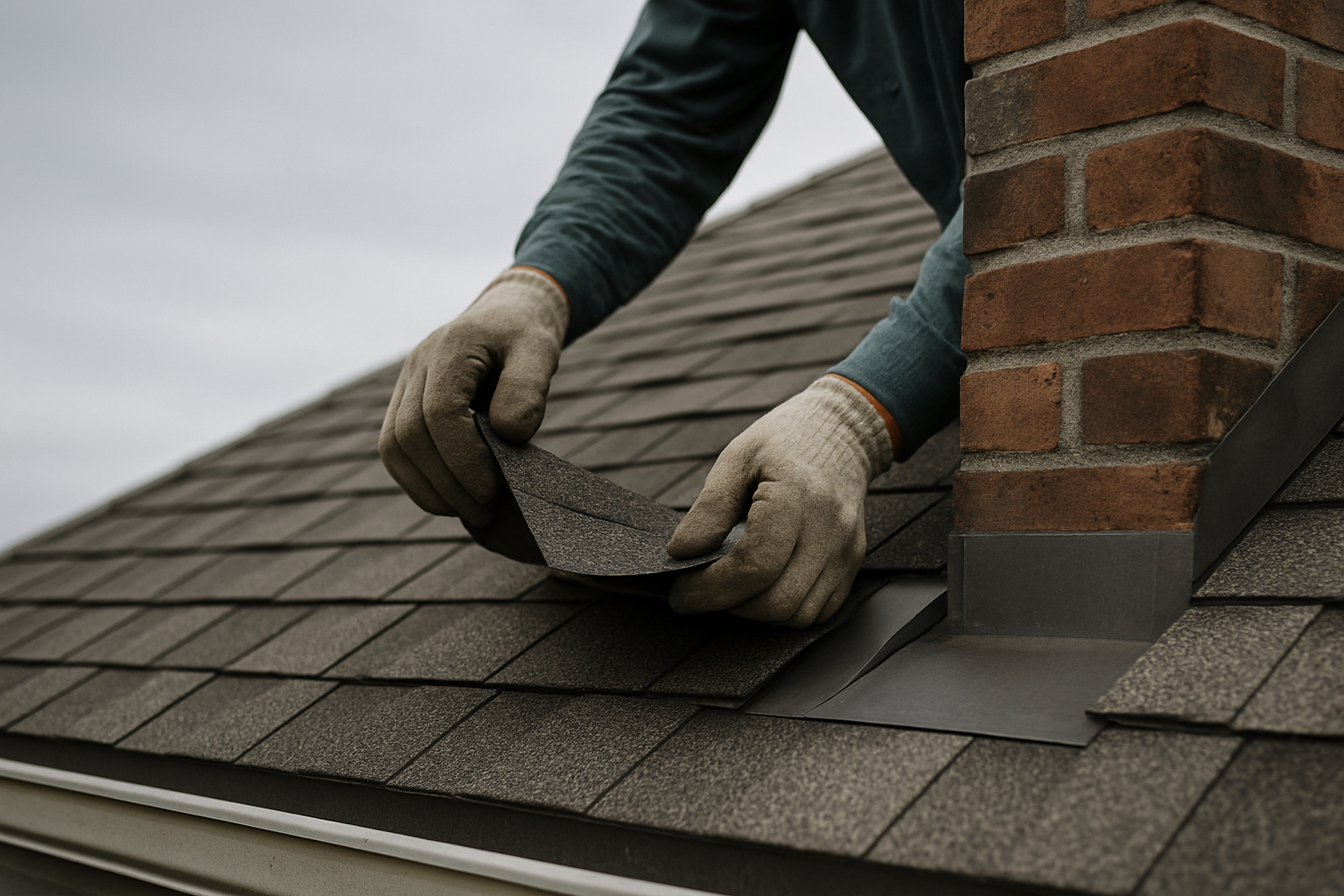
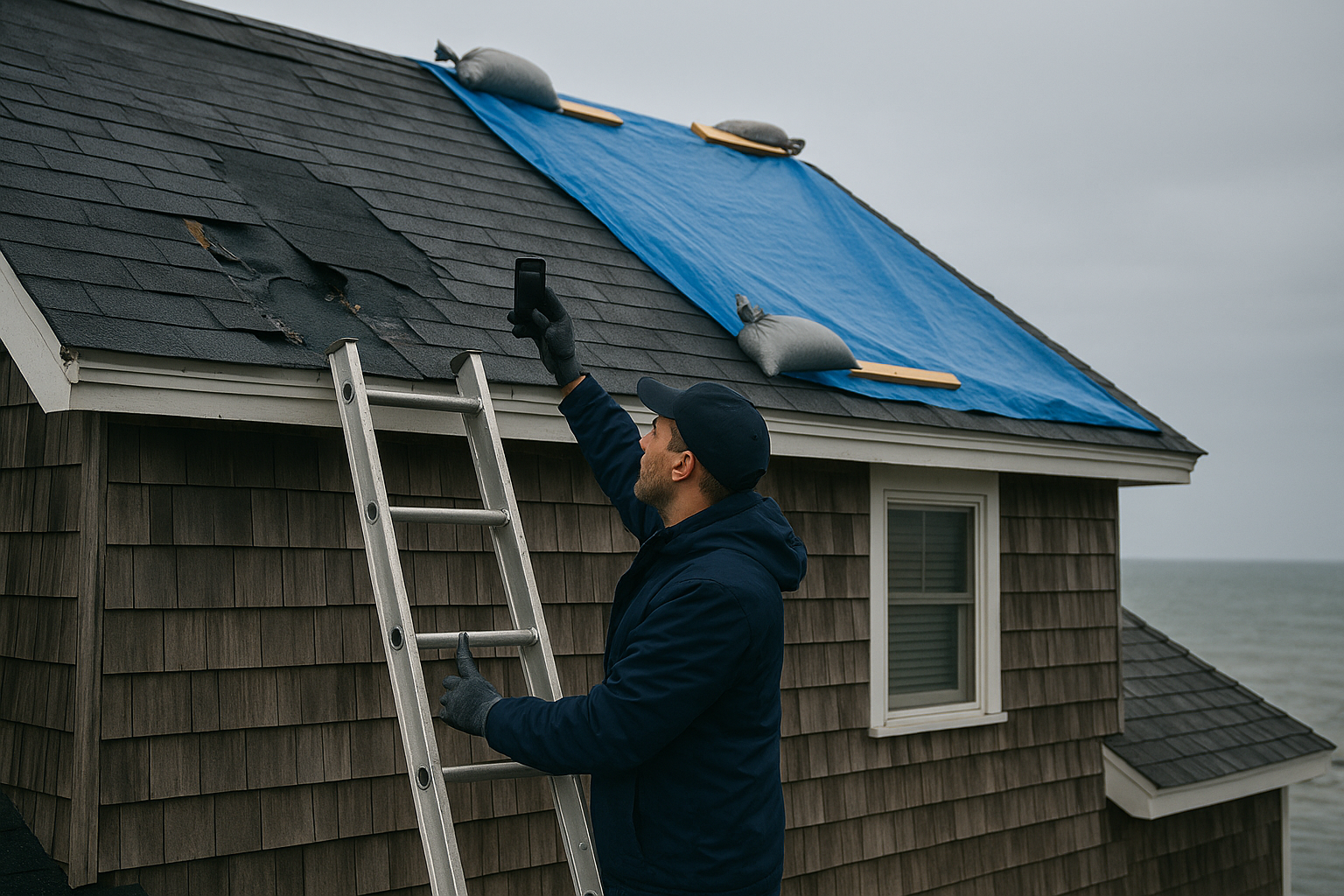
File a roof storm damage insurance claim in Atlantic County, New Jersey when the damage is sudden and storm-caused, the written repair scope clearly exceeds your deductible, and you have dated photos plus a mitigation record. If it is age or barely clears the deductible, pay out of pocket. No contractor may lawfully waive your deductible in New Jersey.
The decision comes before the claim
Most storm-damage advice starts with the claim form. That is backwards. The first decision is whether to file at all, and it is a financial decision as much as a roofing decision.
A roof storm damage claim in Atlantic County is worth filing when the net recovery is real and the evidence is strong. It is a poor trade when the repair cost barely clears the deductible, when the damage is mostly age, or when the file cannot show a sudden, storm-caused loss. Filing a weak claim costs time, can put your claims history in play, and can still end in a denial that makes the next legitimate claim harder to file.
The rest of this page runs the decision in order: what real Atlantic County storm damage looks like, how to judge whether the numbers justify filing, the deductible rule that cannot be bent, the evidence an adjuster needs, and what happens after you file.
Should I file a roof storm damage insurance claim in Atlantic County, New Jersey?
Three tests decide it. Run them in order.
- Sudden and caused. Did a specific weather event produce the damage — a nor'easter, a squall line, a named storm, a high-wind day — or is it accumulated wear on an aging roof? Storm damage has a signature: creased shingle tabs, a concentrated pattern of missing shingles on the windward slope, displaced flashing, and fresh interior staining. Age has a different signature: widespread brittleness, granule loss, curling, and stains with old rings.
- The numbers clear the deductible. Your deductible is the portion of the loss you pay. If the written repair scope sits only a few hundred dollars above the deductible, the claim's net benefit is small, and you would be carrying the non-financial costs of filing for that small benefit. You cannot know the number until someone writes a scope. Your policy's declarations page shows your deductible and whether the policy applies a separate wind or hail deductible; a written repair scope shows the repair cost. Only the gap between the two is what a claim can pay.
- The evidence exists now. Dated photographs, a written scope, and a mitigation record separate a claim an adjuster can approve from one they have to guess at. If the scene has already been repaired, painted, or cleaned without documentation, the evidence is gone and the claim starts weak.
If all three hold, filing is usually the right call. If the first two are marginal and the third is missing, the honest answer is usually to pay for the repair and skip the claim.
| Test | File when | Pay out of pocket when |
|---|---|---|
| Cause | Sudden storm signature: creasing, missing-tab pattern, fresh stains | Diffuse age: brittleness, granule loss, curling, old stains |
| Numbers | Written scope clearly above your deductible | Scope near or below your deductible |
| Evidence | Dated photos, written scope, tarp and mitigation record | Scene already repaired or undocumented |
What is the real cost of filing beyond the deductible?
The deductible is the visible cost. The invisible costs are why the decision deserves more than a glance at the repair bill.
A filed claim becomes part of your claims history. Carriers weigh that history when they price a renewal and when they decide whether to keep writing the policy. A pattern of small, repeated claims can matter more than a single large one, and a claim that is filed and denied still lands on the record. This is not a scare tactic; it is how underwriting works.
That does not mean you should never file. It means the claim has to clear the bar by enough to be worth it. A claim that funds a real roof replacement after a nor'easter is a different trade than a claim that nets a few hundred dollars over a deductible on an aging roof. Before you file, ask your agent or carrier directly how a filing could affect your premium or renewal. They can give the answer that applies to your policy. A roofing contractor cannot, and a contractor who pretends otherwise is guessing at numbers that belong to your carrier.
What does a real Atlantic County storm signature look like?
Nor'easters and high-wind events in Atlantic County leave a specific damage signature. Wind hits the roof and uplift tries to pull the covering off the deck. Damage concentrates on the windward slope, at the edges, and around anything that interrupts the surface: ridges, rakes, valleys, pipe boots, chimneys, and walls.
What uplift leaves behind is often subtle at first: a shingle tab lifted past its seal, a crease folded back along the seal line, a nail line exposed, a piece of step or counter flashing displaced. Wind-driven rain then follows the openings the wind created, which is why interior staining appears days later, sometimes far from the obvious missing shingle.
Salt air and coastal exposure do not cause storm damage by themselves, but they shape the baseline. A bayfront roof in Margate is specified differently from an inland subdivision roof, and that aging becomes the background the adjuster compares against the storm signature. The claim is stronger when the file separates new, storm-caused creasing and missing tabs from older, weather-related wear. That separation is harder when the roof is already near the end of its service life, which is why how Atlantic County roof age and inspection history are read matters before a storm ever does.
Does the type of storm change the claim?
The evidence rules are the same, but the timing and the damage signature differ enough to matter for documentation.
A nor'easter is a prolonged event. Wind-driven rain can fall for hours, and interior staining may not show until days later, after water has traveled from the opening. The exterior signature — creased tabs, displaced flashing, exposed nail lines — is the anchor, and the interior stains are the confirmation.
A summer squall is shorter and more intense. Uplift is sudden, and the damage is often concentrated in a few obvious places: a section of ridge, a valley, a pipe boot. The windward slope still tells the story, but the event may be over before anyone climbs a ladder.
For the claim file, the event type matters because it goes into the documentation: the date, the named storm or the squall line, and the direction of the weather. The adjuster is reconstructing a specific event, not "bad weather generally," and the note that ties the damage to the right event is part of what makes the file legible.
What if the roof was already old before the storm?
An older roof does not make a storm claim invalid, but it changes the fight.
Depreciation is the carrier's reduction for age and condition. An older roof carries more depreciation, so the actual cash value payment is smaller relative to replacement cost, and the recoverable depreciation is larger. The claim can still fund a replacement, but the homeowner's share of the total is bigger, and the carrier will look harder at whether the loss was the storm or simply the end of the roof's life.
That is why the storm signature matters so much on an older roof. A creased tab folded by uplift is a storm signature. A field of brittle, granule-bare shingles that finally let go is an age story, and the carrier will argue the age story every time. The file has to show the sudden, storm-caused part separately from the old wear, and that separation is what the photographs and the written scope are for.
This is also where the decision gets sharper. If the roof was already due for replacement and the storm added a few missing shingles, the claim may not be worth the fight. If the storm opened the roof and the interior is wet, the claim is about preventing further loss, not just replacing an old roof. The evidence decides which one the file tells.
How do you estimate whether the repair clears the deductible?
The only number that matters for the decision is the written scope against the deductible. Nobody can give you that over the phone before looking at the roof.
A free inspection with photos should end in a written repair scope: the damaged slope, the flashing, the underlayment, the interior work, each as a line. With that scope and your declarations page, the decision is arithmetic: repair cost minus your deductible equals the maximum the claim can pay, before the carrier applies its own coverage and depreciation decisions. The scope supports the replacement-cost side of the math; the deductible, coverage decision, and depreciation schedule belong to the carrier.
Storm scopes are rarely just shingles. Wind commonly opens flashing at chimneys, valleys, and pipe boots while leaving the field intact, and that work has to be in the scope or the claim undercounts the loss.
The deductible rule that cannot be bent
After every significant storm, contractors appear in Atlantic County neighborhoods offering to "take care of" the homeowner's deductible, "work with" it, "eat it," or "build it into the estimate." The phrasing changes from door to door. The proposal underneath does not.
Your deductible is the portion of the loss your policy requires you to pay. It is not a contractor's line item to discount. A contractor who waives the deductible and then bills the insurer the full amount is submitting a claim for a price nobody actually charged. That is insurance fraud under New Jersey law, and the homeowner who signs the paperwork is a participant, not a bystander.
The fraud is not in the repair. The fraud is in the paperwork. If the carrier pays a full-price claim and the homeowner paid nothing, the invoice does not describe a real transaction.
New Jersey law treats this as insurance fraud. A contractor willing to falsify a document to get your signature is also a poor predictor of workmanship.
There is a practical test that exposes most of these offers. If the deductible is not coming out of your pocket, it is hidden somewhere in the numbers. Either the estimate is inflated to cover it, the scope is padded with work the storm did not cause, or the work is cut in ways that are invisible once the roof is closed. None of those is a favor.
For the decision, the rule matters in one specific way: if the only way the numbers work is a waived deductible, the claim was never worth filing. A dirty file gives the carrier a reason to question every photograph, every line of scope, and every supplement that follows. Walk away.
What should you photograph before anyone touches the roof?
Sequence is everything in wind damage roof documentation. The most valuable photographs in a New Jersey claim are the ones taken before a tarp, a repair, or a cleanup changes the scene. Once shingles are moved, a tarp is fastened, or a wet ceiling is painted, the adjuster can no longer see the condition the storm left behind.
Work through the loss in layers, from the outside in.
The property and the storm context. Start with wide shots that establish the house, the slope orientations, and the date. Photograph each roof slope separately, then the gutters, downspouts, and siding. Note the date and the weather event: a nor'easter, a squall line, a named storm, or a high-wind day. A note held in the frame or a phone timestamp both work.
The roof surface. Move to the damage. Photograph missing shingles, lifted or unsealed tabs, shingles creased back along the seal line, exposed nail lines, and displaced flashing at valleys, walls, chimneys, and pipe boots. Use close-ups with a reference object for scale, and photograph the windward slope more heavily than the sheltered one.
The interior. Document stains on ceilings and walls, wet insulation, water at light fixtures, and active drips. Photograph every stain before you wipe, dry, or paint anything. Note the room and the roof area directly above it.
The goal is not a pretty photo set. It is to let an adjuster who was not there reconstruct the scene and see that the loss was sudden and storm-caused rather than gradual and age-related.
How do you connect an interior stain to the roof opening?
The interior stain is only half the evidence. The other half is the connection between the stain and the opening above it.
Water travels. A stain on a first-floor ceiling may not sit directly under the damaged shingle; wind-driven rain can enter at a flashing point, run along a rafter or duct, and show up feet away. The documentation job is to map the path: photograph the stain, note the room and ceiling position, and trace up to the roof area above and slightly upslope.
Photograph the attic side if access exists: wet sheathing, a wet rafter, a drip line, daylight through the deck. The attic view often shows the actual entry point better than the roof surface does.
This mapping matters because the adjuster is not looking for "a stain." They are looking for a storm-caused opening that plausibly produced that stain at that time. A stain with no roof-side explanation reads as an old leak; a stain paired with creased shingles and displaced flashing on the slope above reads as the storm.
What should emergency tarping accomplish for the claim?
Emergency tarping does two jobs at once. The first is physical: keep rain and wind out of the opening. The second is evidentiary: show the carrier that the homeowner met the policy's duty to prevent further damage once the loss was known.
Most property policies require the policyholder to mitigate further damage. If a roof is open to the sky and nothing is done, and a second storm turns a small interior stain into a collapsed ceiling, the additional damage can fall outside the covered loss. The tarp is the mitigation record, and the record matters as much as the cover.
A post-storm tarp should do more than lie over the ridge:
- Cover the compromised slope, flashing, or penetration completely.
- Be secured against uplift so the wind that opened the roof does not open the tarp.
- Keep water from traveling under the tarp and into the affected rooms.
- Be photographed in place, with the date and time noted.
- Be supported by receipts for the tarping, the materials, and any water extraction or drying done inside.
Emergency tarping documentation works because mitigation is part of the claim file, not a side errand. The policy rewards the homeowner who stopped the bleeding and can prove when and how. A contractor who gets out quickly after a storm will usually tarp before writing a full repair scope, because the opening cannot wait for the paperwork.
Why photograph the tarp itself?
The tarp is not something you do and forget. The photograph of the tarp in place is separate evidence from the photographs of the damage, and it answers a different question.
Damage photos show what the storm did. Tarp photos show what you did in response. An adjuster reviewing the file wants both: the opening, and the cover that stopped it from worsening.
Photograph the tarp from the ground, from a ladder if it is safe, and from inside the attic or affected room if access exists. Show the fasteners, the overlaps, and the area the tarp covers. Keep the invoice and note the date and time the tarp went up.
This record supports the claim in a specific way. If the carrier later questions whether interior damage came from the original storm or from the homeowner's delay, the dated tarp photos are the evidence that the delay did not happen. A tarping invoice with a date is a timestamp on your mitigation duty. Without it, the file has a gap between the storm and the repair, and gaps are where gradual-damage arguments grow.
What is actual cash value versus replacement cost?
Two terms decide how much money arrives and in what order.
Actual cash value (ACV) is the replacement cost of the damaged property minus depreciation. Depreciation is the carrier's reduction for age and condition. An older roof carries more depreciation than a newer one, so the ACV payment on an older roof is smaller relative to replacement cost.
Replacement cost value (RCV) is what it costs to replace the loss with material of like kind and quality at current prices, without the age reduction. RCV is the number most people think of when they think of "what the roof costs."
Many residential policies pay replacement cost value, but they do not pay it all at once. They pay in two installments:
- An initial actual cash value payment — replacement cost minus depreciation, minus your deductible.
- A recoverable depreciation payment — the withheld depreciation, released after the work is completed and documented.
The sequence matters for planning. The first check is rarely the entire cost of the roof. The balance is recoverable, but only if the work is actually completed and documented. If the roof is never replaced, the recoverable depreciation is typically not released, and the ACV payment is all the claim pays.
| Payment stage | What it contains | When it arrives |
|---|---|---|
| Initial ACV payment | Replacement cost minus depreciation, minus your deductible | After the covered scope is approved |
| Recoverable depreciation | The withheld depreciation amount | After the work is completed and documented |
The ACV-versus-RCV question is not academic. It determines how much of the job you can fund before work starts and how much depends on finishing the job and submitting the paperwork. The carrier calculates depreciation on its own schedule, based on age, condition, and policy terms. The contractor's written scope supports the replacement-cost side of the math, but the coverage decision, the deductible, and the depreciation schedule all belong to the carrier.
This is also where material choice becomes part of the decision. A replacement after a claim should be specified for the coastal exposure, not just priced. Standing seam metal and architectural asphalt behave differently in Atlantic County wind and salt air, and the scope you hand the adjuster should reflect the right one for the house, not whichever was cheapest to quote.
What evidence should you show the adjuster?
The adjuster's central question is the same on every roof: was this damage sudden and storm-caused, or gradual and age-related? Three categories of evidence carry most of the weight.
Wind-created creasing. Wind uplift can fold a shingle tab back along its seal line, leaving a visible crease or broken seal. A creased shingle is different from a shingle that is simply old and curled. Photograph the crease at an angle that shows the fold, and point it out during the roof walk. Creasing is a storm signature because it requires a force that pulled the tab up and folded it, not years of exposure.
Missing shingles. A shingle that blew off in a storm usually leaves a readable pattern: exposed nail lines, missing tabs concentrated on one slope, and matching shingles in the yard or gutter. Document the count, the slope, and the pattern. A single missing tab at the ridge is a different claim from a whole field lifted on the windward side.
Interior staining. Stains on ceilings and walls connect the exterior opening to the interior loss. Photograph each stain before cleaning, note the room, and trace the likely path to the roof area above. Fresh staining after a storm reads differently from an old, ringed stain that has been drying for years, so the date on the photograph is part of the evidence.
Hail damage, if the event included hail, shows up as impact marks, bruising, or granule loss concentrated at the point of impact. The same rule applies: photograph it before it weathers, and note the date.
You do not need to be an expert to collect any of this. You need to be systematic, and you need the file organized before the adjuster arrives.
How should you prepare for the adjuster meeting?
The adjuster meeting is where documentation becomes a scope, and a scope becomes a payment. Preparation is what makes the meeting productive instead of one-sided.
Before the meeting, build the file:
- Your claim number and the date you reported the loss.
- Dated exterior photos, interior stain photos, and tarp photos, in order.
- Receipts for tarping, materials, and any interior drying.
- The written repair scope from your contractor, ready to hand over.
- A note on which slope faces the weather and where each interior stain sits relative to the roof above.
A written repair scope matters more than a conversation. It gives the adjuster a line-by-line starting point: the damaged slope, the flashing, the underlayment, the interior work. An adjuster can ignore a verbal description. A written scope has to be answered line by line.
During the meeting, walk the roof if you can. A roofing contractor can meet the adjuster at the property and walk the roof with them, pointing out creased shingles, missing tabs, and displaced flashing in person. Take notes on what the adjuster measures, photographs, and leaves out of the scope. Ask for the adjuster's scope in writing before the meeting ends.
After the meeting, compare the two scopes side by side. If the adjuster's scope omits something real, the contractor submits a supplement with photographs and documentation asking the carrier to revise. The adjuster meeting is not a negotiation over feelings; it is a comparison of two scopes against the same evidence.
Where does the contractor's documentation role end?
A roofing contractor can do a great deal for a claim file without becoming a public adjuster, and the line between those roles is worth keeping clear.
What the contractor can do:
- Photograph wind, hail, and impact damage and organize it for a claim file.
- Produce a written repair scope you can hand directly to the adjuster.
- Meet the adjuster at the property and walk the roof with them.
- Submit a supplement with photographs and documentation if the adjuster's scope omits something real.
- Give a straight answer about what is storm damage and what is ordinary wear before you file.
What the contractor should not do:
- Act as a public adjuster. A public adjuster is a separate licensed role that represents a policyholder in negotiating the claim. A roofer documents physical condition; a public adjuster argues the coverage position.
- Interpret the policy as a final answer. Coverage decisions belong to the carrier and depend on the policy language, the deductible, and what the evidence shows.
- Promise a particular settlement. No contractor's documentation can change what the policy says.
The distinction is simple in practice. The contractor's evidence supports the claim. The carrier decides the claim. If the scope fight becomes complex or the claim is disputed, that is a coverage and representation question, not a roofing question, and the homeowner should keep the roles separate rather than asking the roofer to become an advocate in a role the roofer is not licensed to fill.
How does the supplement process actually work?
A supplement is not an appeal and not an argument. It is a documented request to revise a scope that omitted something real.
When the adjuster's scope comes back, compare it line by line against the written contractor scope. If a slope, a flashing detail, a section of underlayment, or an interior repair is missing, the contractor submits a supplement: photographs of the omitted item, a description of where it sits in the loss, and the basis for the repair. The carrier then accepts, revises, or rejects the supplement based on the policy and the evidence.
Supplements are normal. They are not a sign the claim is failing. The adjuster cannot always see every creased shingle or every displaced piece of flashing from the ground, and a supplement is the mechanism that puts an omitted item back in front of the carrier with documentation attached.
There is no guarantee the carrier will accept a supplement. Coverage decisions belong to the carrier and depend on the policy language, the deductible, and what the evidence shows. But an item that is real and photographed has a path, and an item that was never documented does not.
How does a roof storm damage claim pay out?
The payment sequence for a typical replacement cost claim runs in stages, and most of the money does not arrive on day one.
- Report the loss to the carrier promptly and get a claim number.
- Mitigate further damage: tarp, dry, protect. Keep every receipt and photo.
- The adjuster inspects and issues a scope.
- The carrier issues an initial actual cash value payment: replacement cost minus depreciation, minus your deductible.
- Complete the work.
- Submit completion documentation: final invoices, photographs, and the written scope.
- The carrier releases the recoverable depreciation payment.
If the adjuster's scope omits something real, the process does not stop at step four. The contractor submits a supplement with photographs and documentation asking the carrier to revise the scope, and the supplement either gets added to the file or it does not.
None of this guarantees any particular outcome. Coverage decisions belong to the carrier and depend on the policy language, the deductible, and what the evidence shows. Documentation does not force a payment. It removes the easy reasons for a denial or underpayment, and it gives every real item in the loss a path back into the file through the supplement process.
For the replacement itself, the scope should be built for Atlantic County conditions, not a generic roof. An Atlantic County asphalt shingle replacement carries wind-rating, nailing, and underlayment requirements that a written scope should reflect.
When should you not file a roof storm damage claim?
Knowing when not to file is as useful as knowing when to file. Skip the claim when:
- The documented repair scope is near or below your deductible. The claim has nothing meaningful to pay, and it still goes on your record.
- The damage is age, not storm. Widespread brittleness, granule loss, curling, and old stains do not become a storm claim because a storm happened to blow through.
- The evidence is already gone. If the shingles were already replaced, the stain painted, and the tarp thrown away without photos, the adjuster has nothing to reconstruct.
- Your claims history already carries several recent filings. Each new filing is weighed against the last, and a marginal claim can cost more in premium and insurability than it pays.
- The only way the numbers work is a contractor waiving the deductible. That is a fraud signal and a reason to walk away, not a reason to file.
The most common mistake is not a hostile adjuster. It is a file with gaps. The storm happened and the homeowner remembers it, but nothing on paper connects the date, the wind event, the opening in the roof, and the stain on the ceiling. If the file cannot show that, the adjuster is left to infer, and inference usually favors wear and age.
A decision checklist before you file
Run this before you call the carrier:
- Note the date and the weather event that caused the damage.
- Photograph every slope, the damage close-ups, and every interior stain before anything is moved.
- Get a written repair scope, not a verbal number.
- Compare the scope total against the deductible on your declarations page.
- Ask your agent or carrier how a filing could affect your premium or renewal.
- Confirm the scope reflects Atlantic County conditions, including flashing work and coastal specification if the house is near the bayfront.
Frequently asked questions
Should I file a roof storm damage insurance claim in Atlantic County?
File when the damage is sudden and storm-caused, the written repair scope clearly exceeds your deductible, and you have dated photos plus a mitigation record. If the damage is age-related or barely clears the deductible, paying out of pocket is usually cleaner. The deductible is yours to pay; no contractor may lawfully waive it in New Jersey.
Is a contractor allowed to waive my deductible in New Jersey?
No. Your deductible is the portion of the loss your policy requires you to pay. A contractor who waives it and bills the insurer the full amount is submitting a claim for a price nobody actually charged — insurance fraud under New Jersey law, and the homeowner who signs is a participant.
How do I know if roof damage is from the storm or just age?
Storm damage has a signature: creased or broken shingle seals, missing tabs concentrated on the windward slope, displaced flashing, and fresh interior staining. Age shows as widespread brittleness, granule loss, curling, and old ringed stains. Dated photos taken before cleanup are what let an adjuster tell the difference.
What should I photograph before anyone touches the roof?
Photograph every roof slope, the gutters, and the siding; missing or creased shingles; displaced flashing at valleys, walls, chimneys, and pipe boots; and interior stains before cleaning. Note the date and the weather event. Do this before tarping, repair, or cleanup changes the scene, because those photographs are the record the adjuster will rely on.
What is the difference between actual cash value and replacement cost?
Actual cash value is replacement cost minus depreciation. Replacement cost value is the cost to replace with material of like kind and quality at current prices. Many residential policies pay replacement cost in two parts: an initial actual cash value payment, then a recoverable depreciation payment released after the work is completed and documented.
What happens if the adjuster's estimate misses damage my roofer found?
Your contractor submits a supplement with photographs and documentation asking the carrier to revise the scope. There is no guarantee the carrier accepts it, but a real, documented item has a path back into the claim, and an item that was never documented does not.
What to do next
If a storm has come through and you are not sure whether you have damage, get it looked at before the evidence ages. HappyRoof provides free roof inspections with photos, emergency tarping for active leaks, and written repair scopes you can hand to an adjuster. The documentation is yours whether or not you file, and the evidence is easiest to establish while it is fresh. Call (609) 525-4521.