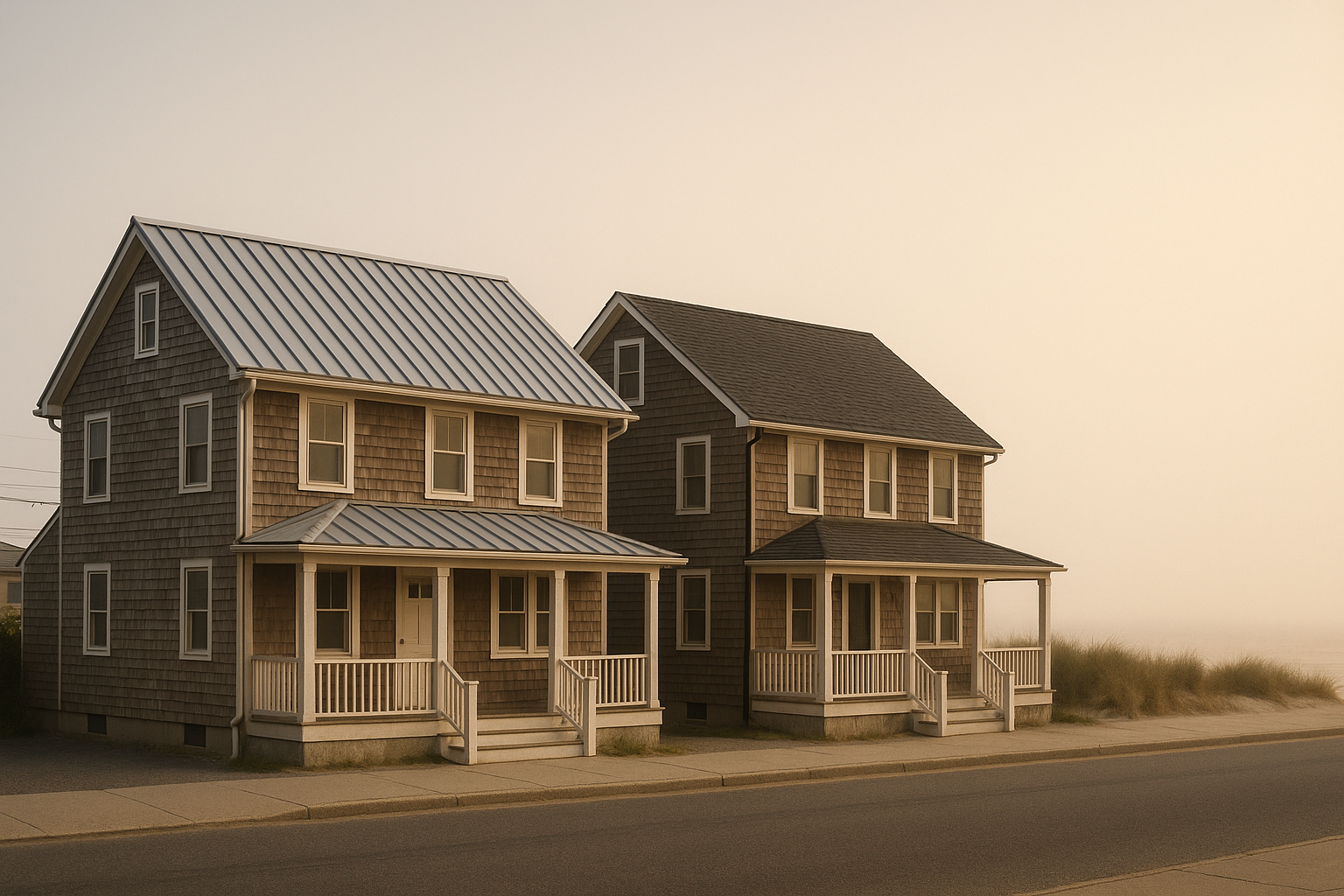
For an Atlantic County homeowner, the metal roof vs. shingles decision comes down to one test: is your street taking sustained salt aerosol and days-long onshore wind? On the barrier islands and bayfront, salt air corrodes exposed shingle fasteners years early, so standing seam metal earns its premium. Inland and mid-county, architectural asphalt shingles remain the rational default.
The two price anchors are $9,000 to $25,000 for a complete architectural asphalt replacement on an average Atlantic County home, and $18,000 to $45,000 for standing seam metal. Flat and low-slope porch and addition roofs are a separate tier: EPDM or TPO membrane, generally $8,000 to $18,000 depending on area and how much substrate needs rebuilding. Decide the material after you know which exposure your street actually is, not before.
The street test: metal roof vs. shingles, decided by exposure
| Your street setting | Correct default | What the quote must prove |
|---|---|---|
| Barrier island and bayfront (Atlantic City, Ventnor City, Margate City, Longport, Brigantine) | Standing seam metal if you intend to stay; a wind-rated shingle only with a coastal fastener and flashing spec | Fastener and flashing corrosion resistance; tested uplift assembly |
| Mid-county mainland | Architectural asphalt shingles | Wind-rated line, manufacturer's fastening pattern, full tear-off to inspect decking |
| Pinelands edge | Architectural asphalt shingles, with drainage and ventilation doing the real work | Gutter capacity, attic ventilation, leaf-load inspection |
That table is the decision. Everything below explains why each row holds and where the exceptions are.
The exposure map: salt, wind, and leaf load are three different roofs
Atlantic County is not one exposure. The right material changes as you move from the surf to the Pinelands, and a homeowner should know which setting their street is before comparing quotes.
The barrier islands and bayfront run through Atlantic City, Ventnor City, Margate City, Longport, and Brigantine. Here the loads are sustained onshore wind and salt aerosol, and they work together. Wind works the adhesive seals and laps for days at a time, and salt eats the fasteners that hold everything down. This is the setting where standing seam metal earns its premium, and where a shingle roof needs the strongest wind-rated line, installed to the manufacturer's requirements, just to be a fair fight.
The mid-county band is the inland bulk of the county, away from direct salt deposition. Wind still matters because nor'easters reach inland, but the corrosion load drops and the failure mode shifts toward age, deck condition, and installation quality. Architectural asphalt shingles are the rational default here. The money saved over metal is better spent on a full tear-off and the details underneath.
The Pinelands edge adds a different load: tree cover and the Pine Barrens leaf load that packs gutters every autumn. Wind and salt are not the primary enemies, but trapped moisture and organic debris are. The material matters less here than drainage, ventilation, and whether the roof is inspected before the leaf load hides a problem.
A quote should not be judged until the homeowner knows which of these three settings the house is actually in. The same price can mean two different things: a correct roof for a mid-county street, or an under-specified roof for a bayfront one.
Where standing seam metal is the correct roof
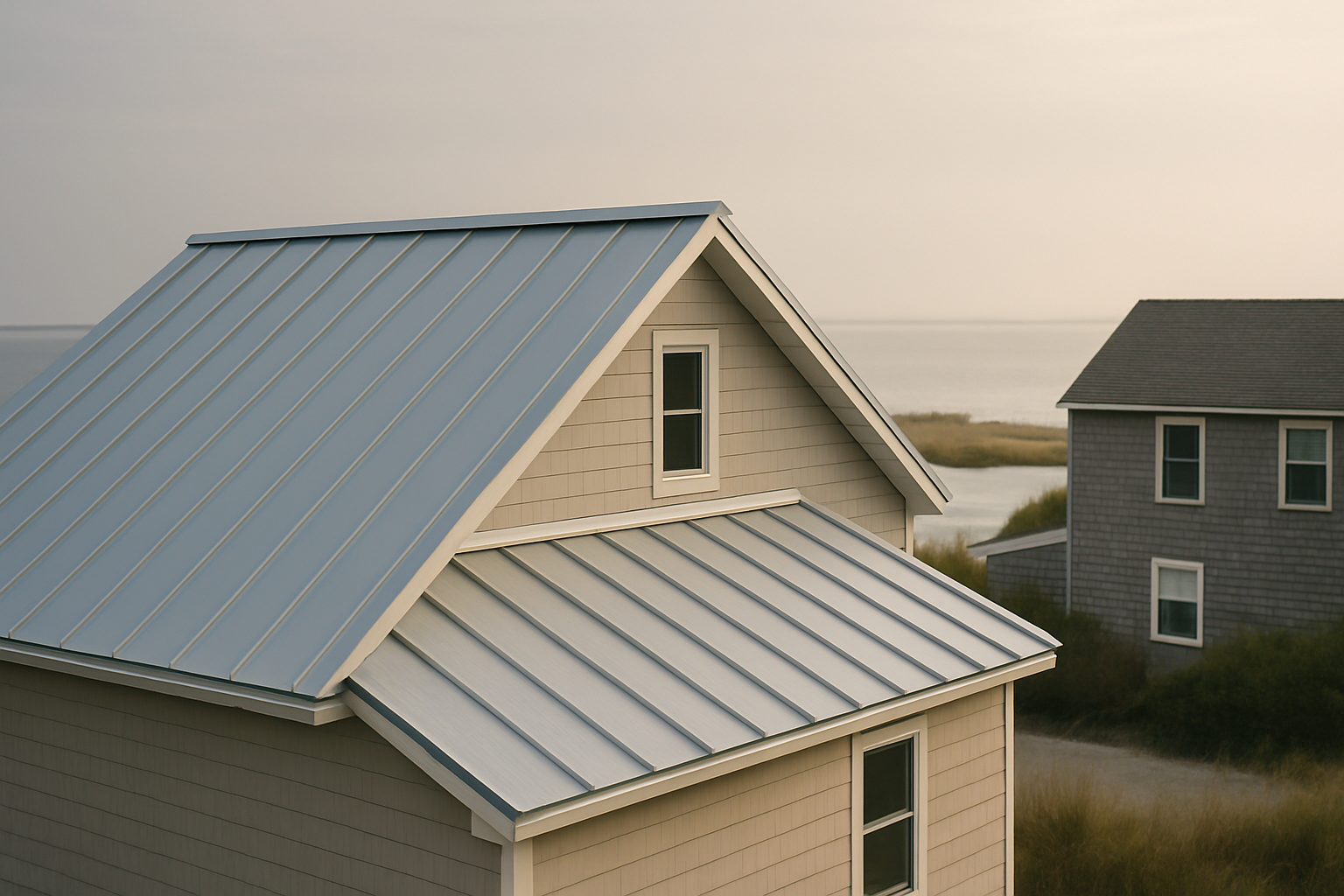
Standing seam metal is the durability tier. It sheds snow and wind-driven rain beautifully, resists the salt corrosion that eats fasteners on the barrier islands, and typically costs $18,000 to $45,000 installed. That price only makes sense when the exposure and the ownership plan both point the same direction.
The first case is the bayfront or barrier-island home. In Atlantic City, Ventnor City, Margate City, Longport, and Brigantine, salt aerosol is a cumulative load that does not show up in a single storm report. It settles on every exposed metal surface and attacks fastener heads, drip edge, vent hoods, gutter hangers, and flashing. A standing seam system removes the biggest target by concealing the fasteners under the panel and replacing dozens of exposed laps and seal points with continuous metal. On those streets, the corrosion resistance is not a luxury feature. It is the main reason to choose the material. This is the same specification logic laid out in the bayfront and barrier-island specification guide.
The second case is the long-ownership home. The metal premium is easiest to justify when the homeowner intends to stay long enough for the durability advantage to accrue. A roof is one of the largest repairs a homeowner will ever pay for, and paying for a second full replacement within a planned ownership window is worse than paying for one correct roof the first time.
The third case is the low-slope section. Standing seam makes the most sense on low-slope sections where shingles struggle, and on architectural styles that suit it. Many older shore houses have porch and addition roofs at a pitch where shingle drainage is marginal and wind-driven rain can work uphill. If the section is truly flat, it goes to EPDM or TPO membrane instead. If it is low-slope but still drained, metal is often the better detail than shingles. The line between the two is exactly what low-slope and flat roof repair covers.
Standing seam metal cost in New Jersey is not a per-square number a homeowner should accept blindly. The $18,000 to $45,000 range tracks panel profile, seam type, trim count, and the condition of the deck underneath. A quote should separate labor, materials, and disposal so bids can be compared on the same scope.
None of this means metal is automatically correct for every coastal home. It means metal is the material that answers the specific failure order on the barrier islands: fastener corrosion, then seal fatigue, then shingle loss. A homeowner who is not facing that failure order should not pay to answer it.
Where architectural asphalt shingles are the correct roof
Architectural asphalt shingles are what goes on the overwhelming majority of homes in Atlantic County, and the reason is structural: the price-to-performance ratio is hard to beat, and wind-rated lines handle coastal exposure well when they are installed to the manufacturer's requirements.
For an average Atlantic County home, most homeowners pay somewhere between $9,000 and $25,000 for a complete asphalt replacement. The spread is that wide because it tracks square footage, roof pitch, the number of stories, how many valleys and penetrations exist, how much decking needs replacing, and whether the old roof is one layer or two. That range leaves budget for the parts of a roof that actually determine longevity: full tear-off, sheathing inspection, underlayment, ice-and-water shield, ridge ventilation, and flashing. The details are laid out in the asphalt shingle replacement guide.
The mid-county and mainland home is the clearest win. Away from the sustained salt aerosol and days-long onshore wind of the barrier islands, the corrosion argument for metal weakens. A wind-rated shingle line installed to the manufacturer's requirements for the specific street's exposure is a correct roof, and it does not carry the metal premium.
The shorter-ownership home is another win. If a homeowner is likely to sell before the durability advantage of metal would have paid for itself, spending $9,000 to $25,000 on a proper asphalt system is the rational allocation. The next buyer gets a wind-rated roof with a valid manufacturer warranty, and the seller has not overcapitalized the house.
The resale and aesthetics case matters too. Architectural shingles fit the overwhelming majority of South Jersey housing stock without a design debate, and a shingle replacement does not require the homeowner to commit to a metal panel profile they may not love for the life of the roof.
The correct shingle spec at the coast is not the lowest-priced shingle. Wind-rated lines are chosen for the exposure a specific street gets, and installation to the manufacturer's requirements is what keeps the shingle warranty valid. A low bid that skips the required installation details has bought a less expensive roof, not a less expensive correct roof.
What salt air actually does to a shingle roof
Homes in Atlantic City, Ventnor City, Margate City, Longport, and Brigantine take a category of damage that does not appear in a single storm report: cumulative corrosion. Salt aerosol carried inland from the surf settles on every exposed metal surface, and it attacks fastener heads, drip edge, vent hoods, gutter hangers, and flashing.
The mechanism is slow and then sudden. Corroded fasteners lose holding power, which means the same wind event that a mainland roof shrugs off can lift shingles on an island roof of identical age and specification. The roof did not fail because the shingle was weak. It failed because the fasteners that held it were eaten from the outside in.
This is the reason the metal-versus-shingle comparison cannot be copied from a generic national guide. A roof that was specified for a subdivision in central Jersey is not specified for a bayfront house in Margate. The exposure changes the failure order. On a mainland roof, an asphalt shingle usually fails by age or impact. On an island roof, it often fails by fastener corrosion first, and the shingle loss is the symptom.
Any asphalt shingle lifespan figure for salt air has to be corrected for that fastener problem before it means anything. The manufacturer may rate a line for a certain service life, but the installed system on a bayfront includes fasteners, drip edge, vent hoods, gutter hangers, and flashing that the salt load is working on continuously. A homeowner should ask not just how long the shingle lasts, but how the fastener and flashing details were specified for that distance from the surf.
On an island home, inspection is not a one-time event. The failure order is fastener, then flashing, then shingle, so a periodic or post-storm look at exposed metal is worth more than waiting for a leak. A free inspection with photos of what is actually up there is the only way to see corrosion before it becomes a lifted shingle.
How to tell whether your street is a salt street
- Look at the outdoor HVAC condenser. If the coil fins and cabinet are showing white bloom or pitting, the same salt aerosol is hitting your roof fasteners.
- Look at gutter hangers and downspout straps. Rust streaks at the fasteners mean salt is winning there too.
- Note whether the house takes direct onshore wind, not just whether it has an ocean view. Salt aerosol rides the wind inland.
- Ask for a photo inspection of exposed roof metal: drip edge, vent hoods, pipe boots, and flashing. Corrosion shows up there first.
The metal and coating decision: what a salt-air quote must name
"Metal roof" is not one material, and the salt-air corrosion resistance of a metal roof lives in the coating and the fastener spec rather than in a single marketing name. Different metals and coatings resist salt differently, and the places that fail first are the cut edges, fasteners, and trim details — not the broad face of the panel.
The main advantage of a standing seam system on a salt street is that the clip and fastener sit under the panel, so the fastener is not continuously wetted by salt aerosol the way an exposed fastener is. That is not the same as maintenance-free: seams, penetrations, and transitions still need inspection because those are the places water can sit and a coating can fail.
When a quote arrives, ask which metal and coating it specifies, what the manufacturer's approved fastener and sealant are, and whether the product is rated for the distance-to-saltwater exposure of the specific street. A quote that cannot answer those questions is not a salt-air metal quote; it is a metal quote with a coastal zip code.
Wind uplift is an assembly test, not a material property
A wind uplift roof rating is an assembly test, not a property of the panel or shingle alone. That distinction is the single most important thing to understand before any salesperson starts quoting numbers.
For architectural asphalt shingles, uplift resistance depends on the shingle line and the installation: the adhesive seal that holds the tab down and the fastening that holds the shingle to the deck. Wind-rated shingle lines are chosen for the exposure a specific street gets. A shingle rated for high wind speeds only achieves that rating when it is installed with the manufacturer's enhanced fastening pattern, driven in the specified nailing zone. Get the fastening wrong and the tested rating is void as a practical matter, whatever the wrapper says. The coastal failure mode is not usually a shingle tearing in half. It is the seal releasing and the shingle lifting until wind-driven rain gets underneath and the next gust peels it away.
For standing seam metal, uplift resistance depends on the tested assembly: the clip type, the clip spacing, the panel width, the seam profile, and the fastening schedule into the deck. Panels shed wind-driven rain well because water runs down continuous metal instead of across exposed laps, but a panel is only as strong as the clip holding it to the deck. That is why uplift is quoted per manufacturer assembly, not as a generic "metal roof rating."
The nor'easter matters more here than the hurricane. A nor'easter is in some ways harder on a roof than a hurricane because it lasts longer. Where a tropical system passes through in a matter of hours, a nor'easter can sit off the coast for days driving sustained onshore wind and rain into the same elevations of the same houses without pause. That duration is what defeats roofs. A shingle that would survive a brief gust fails under sustained lifting force working the same adhesive seal.
The same duration logic applies to metal, but at a different point. The failure in a metal system under prolonged wind is not a lifted tab; it is a clip or seam working loose if the assembly was under-specified. So the comparison is not "metal beats shingles in wind." It is "both systems have a tested assembly, and the coastal buyer needs to compare those assemblies, not the materials."
When comparing bids, ask for the tested uplift value of the specific assembly. For shingles, ask which wind-rated line and which installation details the quote assumes. For metal, ask for the clip spacing, panel width, and seam profile. A number without the assembly behind it is not a comparison.
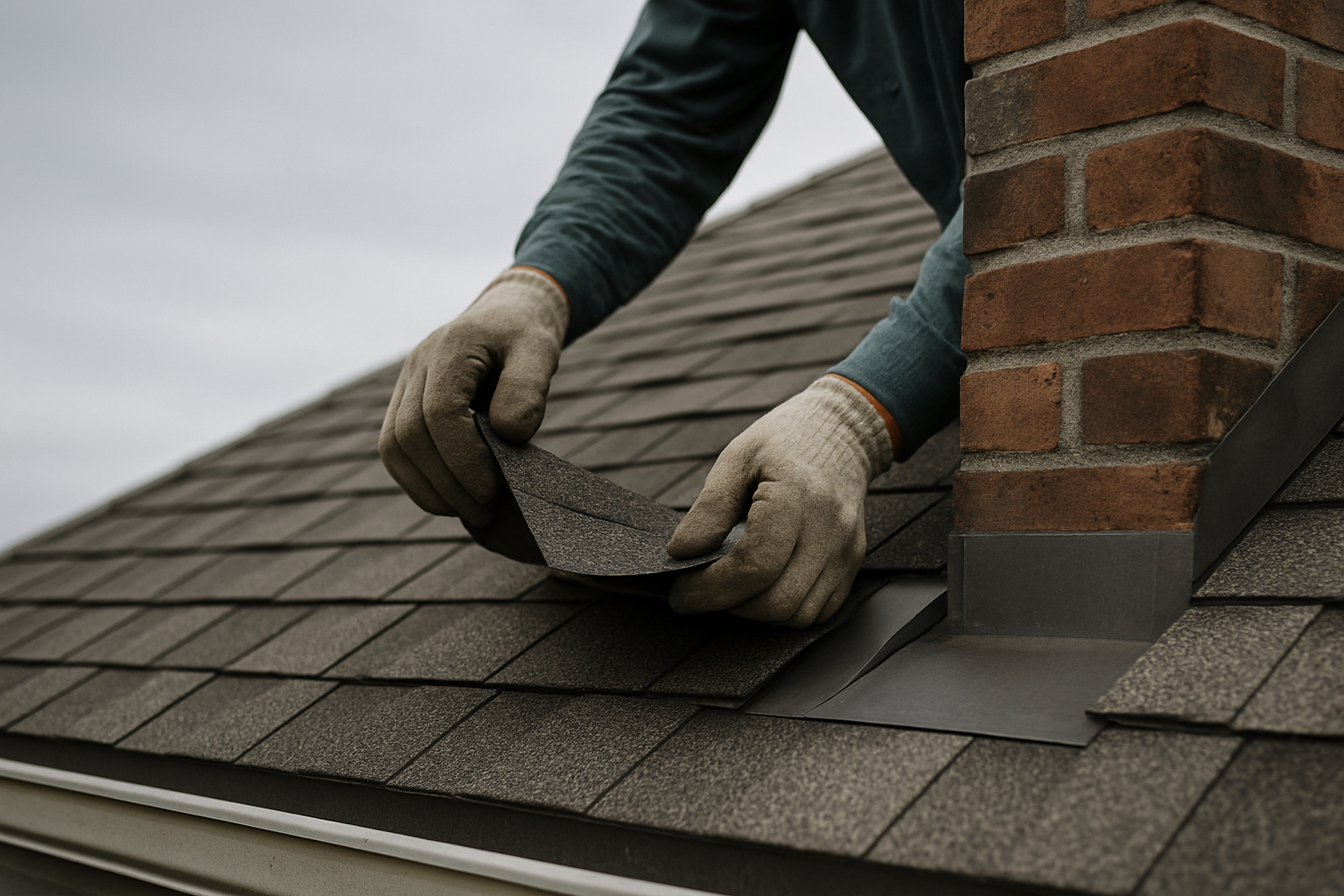
Wind-driven rain is the second weapon and it does quieter damage. Wind-driven rain moving horizontally does not respect the shingle geometry that assumes water flows downhill. It gets pushed up under courses, sideways into flashing laps, and behind counter-flashing on chimneys. That is why homeowners in Brigantine, Longport, and Ventnor City often report interior leaks after a storm with no missing shingles visible from the street. The roof covering is intact and the flashing details were overwhelmed. That is the failure mode covered in the roof flashing repair guide.
Thermal movement and rain noise
Two objections come up every time metal is quoted on a shore house: it moves, and it is loud. Both are real, and both are design problems rather than reasons to reject the material.
Metal panels expand and contract with temperature more than asphalt shingles do. On a coastal roof, the cycle is not trivial: a dark panel in July sun and a January nor'easter are different thermal states. A standing seam system is built to absorb that movement. The panels are attached with clips and joined with seams that allow lengthwise movement, so the panel can grow and shrink without working the fasteners loose. That detail matters doubly in salt air, because a system that flexes its fasteners will eventually crack coatings and start corrosion at exactly the points salt aerosol attacks.
Noise is a function of the deck and the underlayment, not just the panel. A metal roof over open purlins, like a pole barn, transmits rain sound into the space below. A standing seam roof installed over a solid, sheathed residential deck with the manufacturer's underlayment does not behave that way. If sound is a concern, the inspection conversation should be about deck condition and underlayment, not a blanket rejection of metal. The full tear-off to the bare deck before any replacement is the moment to settle that question, because it is when the actual deck can be seen and measured.
Asphalt shingle systems do not have the same thermal movement to manage, and that is a genuine simplicity advantage. The cost of that simplicity is the exposed fastener and sealant detail that salt air attacks, which is why the two discussions cannot be separated on the coast.
Warranty vs. insurance: two separate decisions
The warranty conversation and the insurance conversation are separate, and confusing them costs homeowners money.
On the warranty side, the material warranty belongs to the manufacturer, and it stays valid only if the installation meets that manufacturer's requirements. The same logic applies to metal: the panel warranty is tied to the manufacturer's approved details, fasteners, and trim. A lower bid that shortcuts a detail can void the very warranty the homeowner thought they were buying. When the time comes, the homeowner should see the installation requirements in writing, not a promise.
On the insurance side, a contractor documents storm damage to support your claim, but the settlement is driven by documented damage and the policy, not by which material the homeowner would prefer next. If a homeowner wants to use a storm claim as the moment to upgrade from shingles to metal, that is a scope-and-pricing conversation with the adjuster and the contractor, and the cost difference between the two systems is the homeowner's to reconcile. The documentation and adjuster-meeting mechanics are covered in the New Jersey storm damage claims guide.
If a contractor offers to absorb or waive your deductible, that is the deductible scam to walk away from.
A municipal permit is part of the job either way, and the township inspection should be handled by the contractor as part of the scope, not left to the homeowner. That protects the homeowner regardless of material, and it is one of the items that should be visible in a written proposal.
The layer limit: tear-off comes before the material choice
New Jersey's adopted building code limits a roof to two layers of covering. Once a second layer is on, the next roof has to be a full tear-off no matter what, so an overlay does not avoid the cost of removal. It defers it and adds the weight of an extra layer to the bill.
That matters to the metal-versus-shingle decision because both materials start the same way: a full tear-off to the bare deck so every square foot of sheathing gets inspected before new material goes down. An overlay hides deck rot, failed flashing, and fastener damage under a fresh layer. It is less expensive because nobody has to remove and haul away the old roof, and some contractors push it hard for exactly that reason. On a coastal home, where the deck is the thing the wind load pulls against and the salt load eats into, skipping that inspection is the most expensive shortcut available.
The cost of getting the material wrong
The two mistakes are mirror images.
Put architectural shingles on a bayfront or barrier-island home and the failure shows up as corrosion before it shows up as missing shingles. Salt aerosol attacks the fastener heads, drip edge, vent hoods, gutter hangers, and flashing. Corroded fasteners lose holding power, which means the same wind event that a mainland roof shrugs off can lift shingles on an island roof of identical age and specification. The homeowner ends up paying for a roof that was specified for the wrong exposure, and the failure arrives years ahead of schedule.
Put a standing seam metal roof on a mid-county home with no coastal driver and the cost is simpler: budget. At $18,000 to $45,000 installed, the metal roof may be a fine roof and a poor use of money that could have gone to sheathing, ventilation, or a better shingle assembly. It is not wrong to want metal. It is wrong to pay the durability-tier premium without the exposure or the ownership horizon that justifies it.
There is a third mistake that applies to both materials: trying to defer a tear-off with an overlay. The layer limit means an overlay does not avoid removal cost. It defers it and adds the weight of an extra layer to the bill.
What both roofs have in common
The material debate can hide how much of a correct roof is identical regardless of choice.
Both systems start with a full tear-off to the bare deck so every square foot of sheathing gets inspected before new material goes down. Both need the same fundamentals: underlayment, ice-and-water shield in the right locations, ridge ventilation, step and counter flashing, valley metal, pipe boots, and drip edge. Both require a municipal permit and a township inspection. Both depend on installation that meets the manufacturer's requirements for the material warranty to stay valid. Both deserve a written proposal that separates labor, materials, and disposal. The ventilation half of that list is its own decision, covered in the coastal attic ventilation guide.
The choice between metal and shingles is a choice about the top layer of a system. It is not a substitute for the system underneath.
How to compare three quotes for the same street
A material decision is only as good as the quotes that implement it. The way to compare three bids is to force them onto the same scope, then look at the differences.
- Make every quote specify the same tear-off. If one bid assumes an overlay and the other two assume a full tear-off, the overlay bid is not less expensive. It is a different, worse job.
- Make every quote name the assembly. For shingles, that means the wind-rated line and the manufacturer's fastening pattern in the specified nailing zone. For metal, that means the metal and coating, the clip type, the clip spacing, the panel width, and the seam profile.
- Make every quote list the fundamentals: underlayment, ice-and-water shield locations, ridge ventilation, step and counter flashing, valley metal, pipe boots, and drip edge. If a line item is missing, the price is not lower. It is incomplete.
- Make every quote separate labor, materials, and disposal. That is the only way to see whether a price difference is real or an allocation trick.
- Ask which manufacturer's installation requirements the work will follow, and ask to see them in writing. A warranty is only as good as the details that keep it valid.
- Confirm the permit and the township inspection are in the contractor's scope, not the homeowner's.
The same price can mean two different roofs. The point of comparing quotes is not to find the smallest number. It is to find the bids that describe the same job, then compare the remaining differences.
The same salt load hits the HVAC condenser
The same aerosol load that shortens the life of roof fasteners also shortens the life of the outdoor HVAC equipment on the same house. Corrosion on a condenser coil and cabinet follows the same physics as corrosion on roof fasteners, which is why coastal HVAC corrosion protection is a related decision for the same homeowner rather than a separate problem. A rusting condenser is also the easiest first clue that the house is on a salt street, before anyone climbs onto the roof.
A free inspection with photos is the same no-pressure starting point for every town in Atlantic County, whether the answer turns out to be metal, shingles, or nothing at all.
FAQ
Is a metal roof worth the higher cost on a barrier island home?
Standing seam metal typically runs $18,000 to $45,000 installed versus $9,000 to $25,000 for architectural asphalt on an average Atlantic County home. On a barrier island, salt aerosol corrodes exposed fasteners years ahead of schedule, and metal resists that corrosion while concealing its fasteners. If you intend to stay and the house suits metal, the premium is defensible. If you may sell soon, the payback is less certain.
How long do architectural asphalt shingles last in salt air?
There is no single lifespan number that survives contact with the coast. Salt aerosol attacks fastener heads, drip edge, vent hoods, gutter hangers, and flashing, and corroded fasteners lose holding power. The same wind event a mainland roof shrugs off can lift shingles on an island roof of identical age. Service life is the manufacturer's rated line combined with your street's exposure, the installation, and maintenance.
Does standing seam metal resist wind better than shingles?
Not as a blanket claim. Uplift resistance is an assembly test. For metal it depends on clip type, clip spacing, panel width, seam profile, and fastening schedule. For shingles it depends on the wind-rated line, the adhesive seal, and the fastening. Standing seam sheds wind-driven rain well and lacks the exposed seal that fails under sustained lift, but the number that matters is the tested assembly value.
Will a metal roof be noisy in a coastal storm?
Rain noise depends on the deck and underlayment, not the panel alone. A metal roof over open purlins is loud. A standing seam roof over a solid, sheathed residential deck with the manufacturer's underlayment is a different thing. If sound is a concern, settle deck condition and underlayment at inspection rather than ruling out metal, and do not compare a shore house to a pole barn.
Does insurance pay more for a metal roof after storm damage?
Settlement follows documented damage and the policy, not the material you would prefer next. A contractor documents storm damage to support your claim. If you want to upgrade from shingles to metal during a claim, that is a scope-and-pricing conversation with the adjuster and contractor. If a contractor offers to absorb or waive your deductible, that is the deductible scam to walk away from.
Can I put metal over existing shingles in New Jersey?
New Jersey's adopted building code limits a roof to two layers of covering. Once a second layer is on, the next roof must be a full tear-off no matter what. An overlay defers removal cost and adds an extra layer's weight. A full tear-off to the bare deck lets sheathing get inspected before new material goes down, whether the new roof is shingle or metal.