Ice dam prevention in Atlantic County NJ is an attic job before a roofing job. Warm air leaking into the attic melts roof snow; it runs to the cold eaves, refreezes, and backs water under the shingles. The fix is air sealing, insulation, and ice-and-water shield at eaves, valleys, and penetrations.
How an ice dam forms on an Atlantic County roof
An ice dam is a ridge of ice that forms at the roof eave and traps meltwater behind it. The process starts with heat, not with the shingles.
Snow sits on the roof deck. The section of deck over the heated house is warmed by heat that has escaped the living space into the attic. The snow in contact with that warm deck melts from the bottom up, even when the outdoor air temperature is below freezing. The meltwater runs downhill between the snow and the shingles until it reaches the eave. The eave overhang projects beyond the heated envelope of the house, so the deck and shingles there stay at outdoor temperature. When that temperature is below freezing, the meltwater freezes at the eave edge.
One cycle produces a thin ridge. A South Jersey winter provides plenty of cycles. A nor'easter drops snow, the next afternoon thaws the south slope, the following night refreezes the eave, and the ridge grows. The ridge becomes a dam that traps the next round of meltwater. Shingles are designed to shed water running downhill. They are not designed to hold a shallow pond on the roof surface. The trapped water finds the laps between courses, works backward under the shingles, follows fasteners and underlayment seams, and reaches the deck.
Freeze-thaw does a second kind of damage at the same time. Water that has soaked into a hairline crack in shingle or flashing expands when it freezes, widening the crack a fraction each cycle. The same coastal winter that builds the dam is also working every small defect in the roof surface. That is why the repair pattern in Atlantic County is so consistent: the open field of a roof almost never leaks, while the eaves, valleys, and penetrations do.
Why the inland towns get the worst of it
Winter roof failure in Atlantic County divides along geography. The pattern matters because it tells you whether your house is more likely to suffer a mechanical wind problem or a freeze-thaw ice dam problem.
On the barrier islands, the dominant winter mechanism is mechanical. Sustained ocean wind works at shingle edges until the factory adhesive strip lets go, and once a corner lifts, every subsequent gust drives water underneath and levers the shingle further. Salt aerosol compounds it by corroding fastener heads and thin flashing metal, so repairs in Ventnor City, Margate City, Longport, Brigantine, and Atlantic City often involve metal that has rusted through rather than an installation error.
The inland and Pinelands towns live with the other failure mode. Freeze-thaw affects the inland ring most, and ice dams at the eaves back meltwater up under the courses. A nor'easter is in some ways harder on a roof than a hurricane because it lasts longer. A tropical system passes through in hours; a nor'easter can sit off the coast for two or three days driving sustained onshore wind and rain into the same elevations of the same houses without pause. That duration, followed by a thaw and a hard refreeze, is exactly the sequence that builds an ice dam.
| Geography | Dominant winter mechanism | Where damage concentrates |
|---|---|---|
| Barrier-island towns (Atlantic City, Brigantine, Longport, Margate City, Ventnor City) | Sustained ocean wind, salt corrosion of fasteners and flashing | Shingle edges, rake edges, exposed flashing |
| Inland and Pinelands towns (Hammonton, Folsom, Estell Manor, Weymouth Township) | Freeze-thaw cycles, attic heat, ice dams | Eaves, valleys, penetrations |
This is why a roof that was specified for a subdivision in central Jersey is not specified for a bayfront house in Margate, and why the inland towns need a different conversation about the attic.
Why ice dam prevention in Atlantic County NJ starts in the attic
A membrane cannot stop a dam from forming. A membrane can only stop the water the dam pushes backward from reaching the ceiling below. To prevent the dam, you have to remove the heat that creates it, and that heat comes from the house.
Every ice dam is driven by the same physical fact: the roof deck over the heated house is warmer than the roof deck over the eave. The difference between the two is what melts the snow and refreezes it at the edge. You can reduce that difference from the roof side by keeping the deck cold, or you can reduce it from the house side by keeping the heat out of the attic. The second one is the fix.
Air sealing closes the direct paths that let warm interior air into the attic. Insulation slows the conduction of heat through the attic floor. Together they keep the roof deck close to outdoor temperature, so the snow does not melt from underneath in the first place. Ice-and-water shield is the last line of defense for the water that still finds its way to the eave in a bad winter. The order matters: seal first, then insulate, then protect the roof assembly.
The three-part fix, in order
The fix is a sequence, not a menu. If the order is reversed, the work looks finished and still fails.
Part one: air seal the attic floor first
Air sealing is closing the gaps in the attic floor that let heated interior air leak into the unconditioned attic. It is the highest-leverage step because moving air carries far more heat, and far more moisture, than conduction through the framing.
The leakage paths are specific and predictable. Warm air leaves the house through gaps around plumbing vents, electrical penetrations, recessed lights, the attic hatch, the chimney chase, interior partition top plates, and dropped soffits. Each one is a small chimney. In winter, the warm air that leaks through them carries moisture from the living space. When that moisture hits the cold attic, it condenses on the sheathing and soaks the insulation. That is how insulation gets wet when there is no hole in the roof.
Air sealing is usually performed by an insulation or weatherization contractor, not by the roofing crew. That is an honest division of labor, not an attempt to push the work elsewhere. The roofer's scope is the membrane, flashing, ventilation, and gutter work at the roof line. The attic floor is a separate trade with its own tools. If you are coordinating both, do the attic work first.
Part two: insulation keeps the heat in the house
After the air paths are closed, insulation slows the heat that moves by conduction through the ceiling. Insulation only does its job if it is continuous and dry. A gap the size of a bypass carries more heat than a whole section of insulation, which is why air sealing comes first. Insulation that is compressed, wind-washed, or wet has lost its effectiveness even if it still looks thick.
At the eave, insulation must not block the soffit vents. The insulation should be held back from the underside of the deck so outside air can still enter the attic at the overhang. This is a detail that gets skipped when insulation is blown in quickly, and it is one of the places where an attic problem becomes a roof problem.
The goal is simple: keep the ceiling warm enough that the living space stays comfortable, and keep the attic cold enough that the snow on the roof does not melt from below. When both are true, the roof deck tracks the outdoor temperature instead of the thermostat.
Part three: ice-and-water shield is the last line of defense
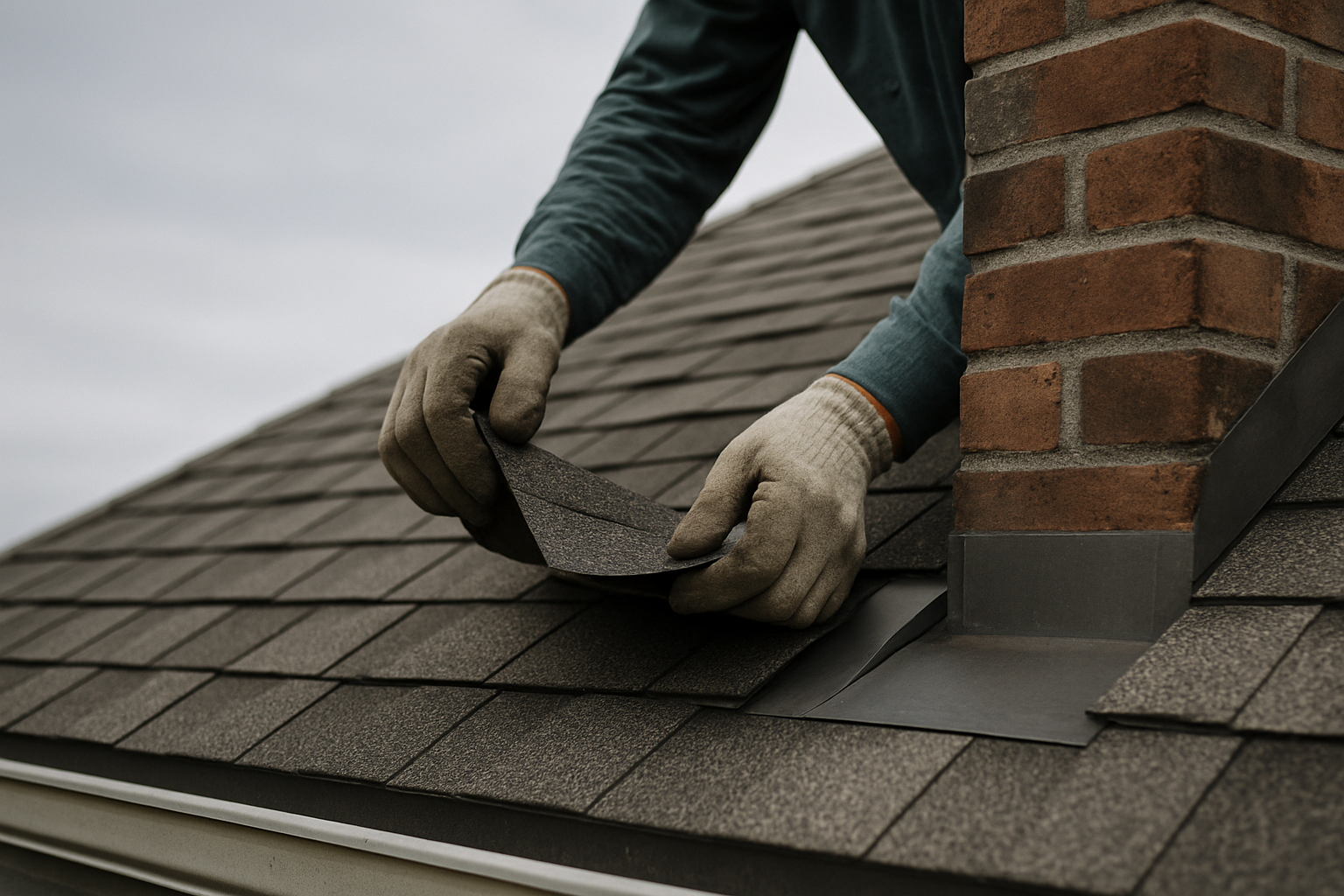
Ice-and-water shield is the self-adhering membrane that goes in the places where water does not simply run downhill. It belongs along the eaves, in every valley, around chimneys, skylights, and pipe penetrations, and up rake edges on exposed elevations. The membrane seals around nail shanks, so even where a fastener passes through it, the hole closes.
The membrane does not prevent the dam. It defeats the dam's worst consequence. When an ice dam backs meltwater up under the shingle courses, the membrane is the continuous barrier between that trapped water and the deck. In the inland and Pinelands towns, the eave membrane is what stops an ice dam from pushing meltwater backward under the shingles and into the ceiling below.
A roof can look intact from the ground and still have no membrane at the eave, and the first sign is a ceiling stain in the wrong room. That is the reason the inspection matters.
| Location | Why ice-and-water shield belongs there |
|---|---|
| Eaves | Stops meltwater backed up by an ice dam from reaching the deck |
| Valleys | Concentrated runoff that freezes and refreezes at the change of slope |
| Chimneys, skylights, and pipe penetrations | Transitions where trapped water works backward through laps |
| Rake edges on exposed elevations | Wind-driven rain forced under the shingle edge |
When an asphalt roof is replaced, the membrane goes down before the shingles, and its placement is part of the roof replacement specification. The same logic applies to repair work at an eave or valley that has already leaked: fixing the shingle is not enough if the membrane underneath is missing.
Where the membrane fits into a roof replacement
Ice-and-water shield is not an optional upgrade in a freeze-thaw climate. It is part of the underlayment system, and it has to be specified before the shingles go on. The relevant decisions are where it runs, how far up the slope it extends, and whether it wraps the eave and rake at the exposed elevations.
The eave membrane runs up from the eave edge far enough to cover the zone where a dam can form. Every valley gets its own run because a valley concentrates water from two slopes into one line. Chimneys, skylights, and pipe penetrations are wrapped individually because they interrupt the drainage plane. On the barrier-island elevations, the rake edge gets the same treatment because wind-driven rain approaches from the side, not just from above.
Deck rot in Atlantic County usually clusters in predictable places: along the eaves where ice dams and wind-driven rain have backed water up under the shingles, around chimneys and skylights where old flashing leaked slowly for years, in valleys, and on shaded north slopes that never fully dry out between storms. When the old shingles come off, that is where the sheathing gets exposed and priced. A roofing proposal that pretends the deck number is zero is not doing the homeowner a favor. The deck is invisible until the tear-off, and the eave is the most likely place to find it.
Ventilation's role: it works only after air sealing
Ventilation does two jobs in winter: it keeps the attic cold, and it carries away moisture that has found its way up from the house. A cold attic keeps the snow on the roof from melting from below, which is the whole point of the exercise.
Ventilation only works in the right order. If you add ventilation to a leaky attic before air sealing, the exhaust side can pull conditioned air up out of the house through the bypasses, making the heat loss worse while making the attic look properly vented. Air sealing first means the ventilation is moving outside air through the attic, not drawing heated air out of the living space. The two systems are related, but one has to come first.
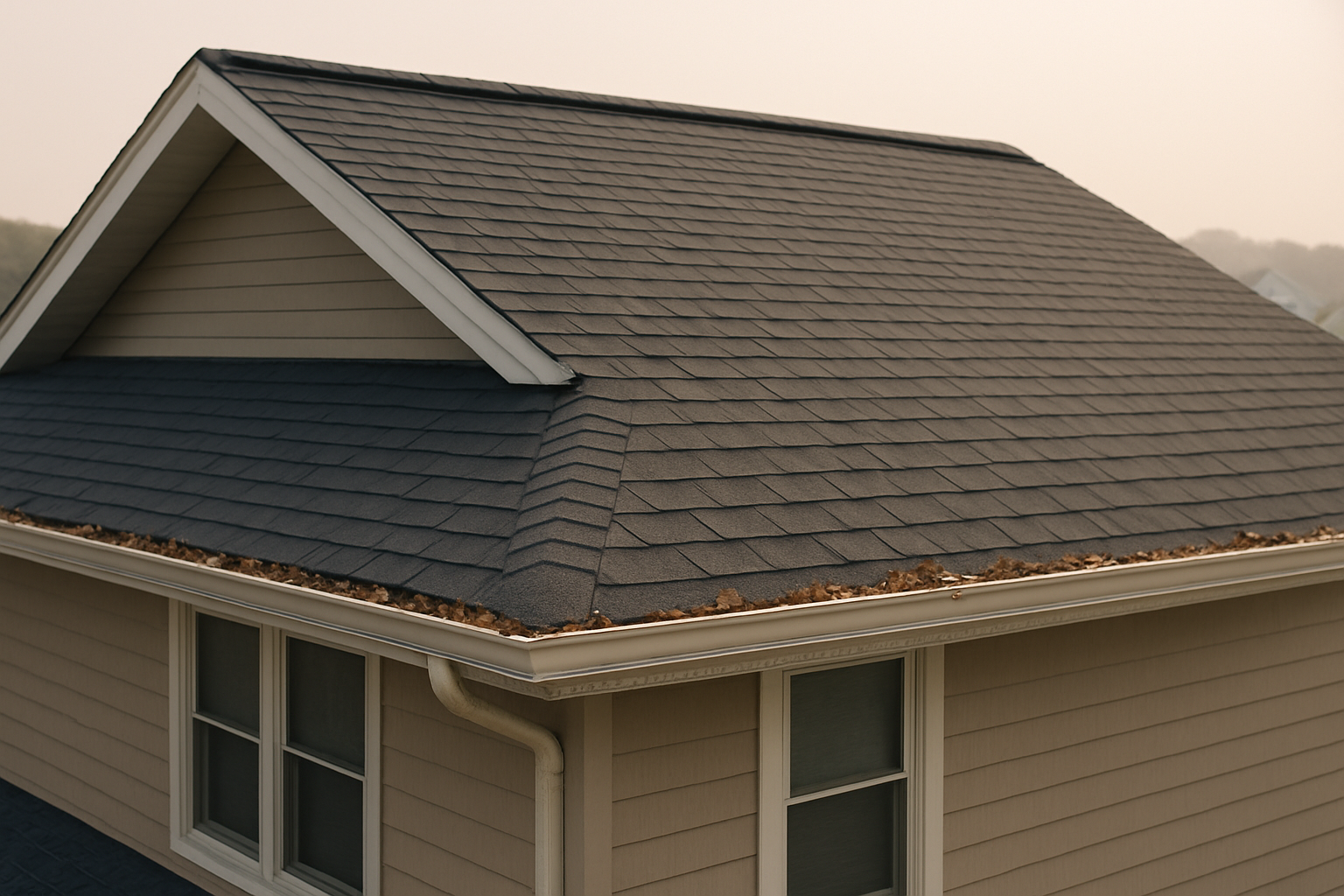
The other Atlantic County detail is the debris load. Pine needle load and coastal wind both put debris into soffit and ridge screens, and a screen that is plugged is not a vent. Intake at the soffit and exhaust at the ridge only work as a pair. When the lower side is blocked, the upper side starves. This is part of the same roof-ventilation conversation as humid coastal attics and leaf-loaded roofs, and it is worth reading on its own before the attic work is scoped.
Ventilation is part of the roof assembly, which puts it in the roofer's scope, but it cannot substitute for the attic floor work. A well-vented attic over a leaky ceiling still gets warm, still melts snow, and still dams at the eave. Ventilation is a partner to air sealing and insulation, not a replacement for them.
Warning signs that an ice dam is already working
The visible damage from an ice dam rarely appears where the water entered. That is the single most important thing to understand before you look at a stain.
Water that penetrates a roof deck lands on framing, and framing runs. It follows the underside of the sheathing to the nearest rafter, travels down that rafter until it hits a nail, a knot, or a joist connection, and only then falls. On a low-pitch roof over a finished second floor, the actual entry point is regularly eight or twelve feet uphill and to one side of the visible damage. The stain is not the leak; it is the exit.
The signs to look for:
- Ceiling stains that appear in winter or after a thaw, especially on the ceiling just inside an exterior wall or below a valley.
- Large icicles along the eave, particularly when they form with ice visible behind the gutter or in the soffit.
- Wet or stained insulation in the attic, even when the sheathing above it looks dry.
- Ice in the soffit vents or behind the gutter, which means meltwater has refrozen at the eave rather than draining.
- Peeling paint or damp spots on the wall just under the eave, where trapped water has run down the exterior wall.
- Stains that recur in the same place each winter, even after a repair that looked complete.
One warning sign does not confirm a dam, and icicles alone are not proof of failure. The combination of icicles with an interior stain, or wet insulation with no visible hole in the sheathing, is the pattern that points to the attic and the eave.
Emergency response: what to do this week
If water is entering the house, the first job is to stop the interior damage, not to fix the roof in a storm.
- Contain the water inside. Move contents, put down a bucket or a tray, and relieve any sagging drywall with a small drain hole so it does not fail under the weight.
- Document everything before anything is disturbed. Photograph the ceiling stain, the wet insulation, the ice at the eave, and the room around it. The claim will need the before state.
- Do not chip the ice. The ice is bonded to the shingle surface, and hammering it usually tears shingles, cracks flashing, or puts someone on an icy roof with a metal tool. The damage from the chipping is often worse than the leak.
- Do not use rock salt or salt pucks on the roof. Salt corrodes fastener heads and thin flashing metal, the exact materials a coastal roof depends on. A short-term melt channel is not worth a long-term flashing failure.
- Call for emergency tarping if water is actively entering. The goal is to get the water off the deck and keep the interior dry until a proper repair can be scheduled.
- Schedule the inspection that finds the actual source. The tarp stops the loss; it does not diagnose it.
The emergency response and the permanent fix are different jobs. The emergency is about stopping active water. The permanent fix is about the attic heat and the eave membrane, and it happens in dry conditions after the roof is accessible.
What to have ready before an inspection
A useful inspection is a fast one. The more you can show, the less time is spent guessing.
- Photos of the ceiling stains with a measurement for scale, so the roofer can see the location relative to the eave and the valleys.
- The date and weather conditions when the leak first appeared, including whether it followed snow, rain, or a thaw.
- A note of where the icicles and ice form, and whether they return every winter.
- Access to the attic, including a clear path to the eave area and any known wet spots.
- The history of the roof, if known: approximate age, whether the home predates standard ice-and-water membrane, and any past repairs at the eave or valley.
- Whether the gutters have been overflowing or holding ice at the downspouts.
None of this needs to be perfect. A photo of the stain and the month it appeared is enough to start. The inspection is a free roof inspection with photos of your own roof and an honest answer on whether the problem is the attic, the membrane, or both.
How the work should be sequenced, step by step
When both the attic and the roof are in play, the sequence is what keeps the fix from failing.
- Inspect and diagnose. Document the stains, the eave condition, the attic insulation, and the ventilation. The goal is to determine whether the dam is driven by attic heat, missing membrane, clogged gutters, or all three.
- Air seal the attic floor. Close the bypasses so heated air stops entering the attic. This is the step that removes the fuel from the dam.
- Insulate to the required level, keeping the eave intakes open. The attic should be cold enough that the snow does not melt from below.
- Verify the ventilation path. Confirm intake and exhaust are clear of leaf load and that the attic moves air after sealing.
- Repair or replace the roof-side components. Install or restore ice-and-water shield at the eaves, valleys, and penetrations, repair the flashing, and correct any gutter slope or blockage that holds water at the eave.
- Re-inspect after the next freeze-thaw cycle. The proof is not the invoice; it is a cold eave and a dry ceiling the following February.
If the roof does not yet need replacement, the membrane step may be limited to the affected eave or valley rather than the whole roof. The inspection determines that. A roofer who tells you the roof has years left and the real fix is the attic is doing you the same favor a surgeon does by not operating.
Scheduling: what drives the timing
There is no single lead time for this work, and a roofer who quotes one before seeing the roof is guessing. Three things drive the schedule.
The first is weather. Self-adhering membrane and shingles need dry conditions and the right temperature range to bond and seal. The work happens in a weather window, not on an arbitrary date. The second is scope. An air sealing and insulation job is scheduled separately from the roof work, and the attic work should be complete before the membrane goes down. The third is urgency. An active leak with a tarp on the roof gets priority over a preventive membrane job that can wait for a dry week.
The right question is not "when can you start" but "what has to happen before the roof work can be done correctly." In most cases the answer is the attic first, then the eave.
Where this applies in Atlantic County
HappyRoof serves every town in Atlantic County, New Jersey. The ice dam conversation is most urgent in the inland and Pinelands towns where freeze-thaw is the dominant winter mechanism, but the eave membrane and the attic logic apply to every house in the county, including the barrier islands.
The named places that recur in winter repair work are the same ones that recur in the failure-mode geography: Hammonton, Folsom, Estell Manor, and Weymouth Township for the inland freeze-thaw pattern, and Atlantic City, Brigantine, Longport, Margate City, and Ventnor City for the coastal wind-and-salt pattern. Egg Harbor Township, Galloway, Somers Point, and Mays Landing are also served. The physical fix does not change from town to town; the priority between attic heat and membrane placement shifts slightly with the geography.
A note on roof heating cables
The three-part fix described here deliberately does not start with heating cables. Cables melt a channel through an existing dam, but they do not reduce the heat leaving the house, do not dry the attic, and do not stop the next freeze-thaw cycle. They add an energized system exposed on the roof, and they fail silently. A cable system is a symptom treatment. Air sealing, insulation, and ice-and-water shield are the correction.
That said, if a cable system is already installed, it is not a reason to skip the inspection. The cable may be masking a heat loss that is also costing money all winter, wetting the insulation, and aging the sheathing. The attic is still the first place to look.
FAQ
My insulation is wet but I cannot find a hole in the roof. What is happening?
In winter, the usual answer is an ice dam or attic condensation, not an open hole. Meltwater backed up at the eave travels along the underside of the sheathing, follows a rafter, and soaks the insulation before it ever shows as a ceiling stain. The entry point is often eight or twelve feet uphill. Fix the attic heat loss, then check the eave membrane.
Does ice-and-water shield stop ice dams from forming?
No. Ice-and-water shield stops the water a dam pushes backward from getting into the house, but it does not stop the dam. The dam forms because attic heat melts snow and the eave refreezes it. The membrane is the last line of defense at the eave, valley, and penetration, not a substitute for air sealing and insulation.
Should I install roof heating cables instead?
Cables melt channels through the ice but do not address the attic heat that created the dam, and they leave an energized system exposed on the roof. The durable fix is air sealing, insulation, and eave membrane. Treat cables as a temporary measure, not the repair.
Can I chip the ice off the eaves myself?
Do not chip or hammer the ice. The ice is bonded to the shingle surface, and chipping usually tears shingles, cracks flashing, or sends someone off a ladder. Rock salt and salt pucks are also the wrong tool: salt corrodes fasteners and flashing metal. Contain the interior water, document it, and call for tarping if water is actively entering.
How much does ice dam repair cost in Atlantic County?
The price depends on the scope. A small eave or valley repair is different from replacing rotted decking, which is priced per sheet after the roof is opened. HappyRoof provides a written price before anything starts, so the inspection is what turns "what will this cost" into a number.
Will my homeowners insurance cover ice dam damage?
That depends on your policy and the cause of loss, and the claim is between you and your carrier. HappyRoof offers insurance claim help, including documenting the damage with photos before repairs begin.
The next step
Start with the inspection, not with a product. The free inspection produces photos of your own roof and an honest answer about whether the dam is an attic problem, a missing-membrane problem, or both. Call (609) 525-4521 to schedule it before the next freeze-thaw cycle turns a small eave leak into a February ceiling stain.