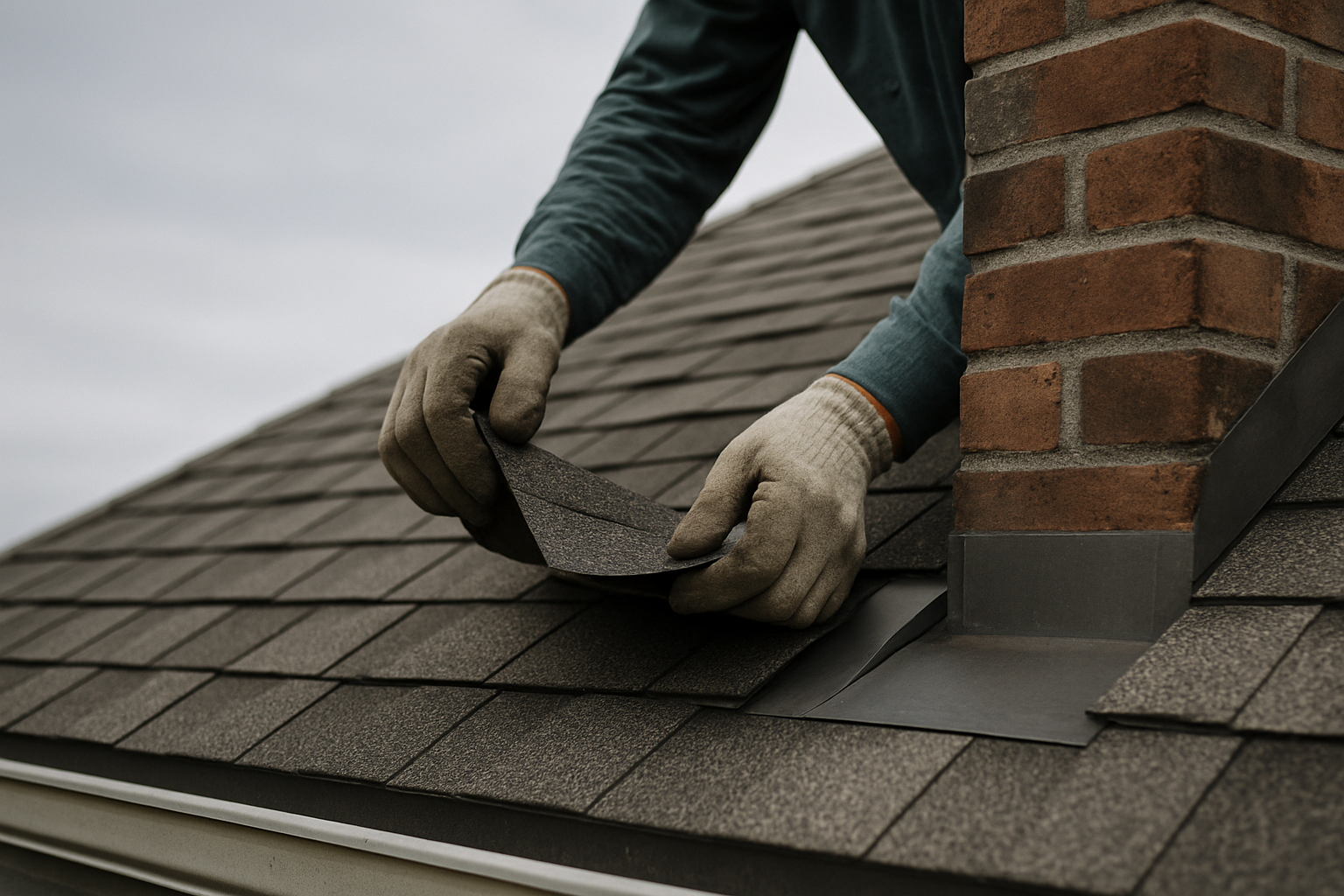
Repair a cracked panel, popped nail, or a few wind-lifted pieces when the profile is still made, the color matches, and the wall behind is dry. Replace when fading or a discontinued profile makes matching impossible, moisture reached the sheathing, or repairs approach the cost of recladding once. That is the siding repair vs replacement test for Atlantic County, NJ.
Most siding questions in Atlantic County come down to one of two situations: a single visible problem after a storm, or a wall that has been slowly failing for years. The repair-or-replace decision turns on whether the problem is on the surface or behind it. This guide walks through the tests in order: what is repairable, when matching makes repair impossible, what to check behind the panel, and where the cost line sits.
Siding repair vs replacement in Atlantic County, NJ at a glance
The table below separates the two paths by the factors that actually differ. If a factor is the same for both, it has been left out. Both paths still require an inspection, both should be done by a licensed and insured contractor, and both should carry a written price before work starts.
| Factor | Siding repair | Siding replacement |
|---|---|---|
| Scope | One panel, a few fasteners, or one section | A full elevation or the whole envelope |
| Color match | Depends on fade, profile availability, and batch | Uniform new color across the entire run |
| Hidden damage | Addressed only if the area is opened | Sheathing and housewrap checked across the wall |
| Cost structure | Small per visit, but can repeat | Higher once, then the elevation is reset |
| Service life | Buys back years on the damaged area only | Resets the weather screen for the whole run |
| Disruption | Hours to a day | Tear-off and re-clad, usually days |
| Best fit | Isolated, matchable, dry-wall damage | Widespread, unmatched, or moisture-driven damage |
The table is a decision aid, not a substitute for opening the wall. A panel that looks isolated can hide wet sheathing, and a wall that looks too faded can sometimes still be matched in the right light.
When siding repair is the right call
Repair is the right call when three things are true at the same time: the damage is localized, the material can be matched closely enough to disappear on the wall, and there is no sign that water has been getting behind the panel.
Cracked vinyl panels are the classic repairable condition. A single panel cracked by a ladder strike, a thrown stone from a mower, or a branch falling in a storm does not condemn the wall. If the profile is still manufactured and a sample can be held against the wall, one panel comes out and a new one goes in. The same logic applies to a popped nail: the panel itself is usually fine, and the problem is the fastener. The correct repair is to remove the loose fastener, re-secure the panel into sound material, and seal the penetration, not to drive the same nail back into a worn hole.
Isolated wind damage after a nor'easter often falls into this category as well. A panel that lifted at the bottom lock or pulled away at a corner is frequently re-securable. The repair will hold as long as the panel is not deformed, the nail slots are intact, and the surrounding wall is still sound.
Repair has a limit worth saying plainly: it does not reset the age of the siding. You are buying back years on the damaged area, not on the elevation as a whole. A repair on a wall already approaching the end of its service life is a bridge, not a solution. That is not a reason to avoid the repair. It is a reason to be honest about what the repair is for.
When siding replacement is the right call
Replacement is the right call when the damage is widespread, when matching has failed, or when the siding is no longer doing its only real job, which is keeping water out of the wall assembly.
Fading is the most common trigger that surprises people. Vinyl and fiber-cement colors both shift with sun exposure, and a panel that matched at installation will not match a factory-fresh panel years later. When the fade is too far to blend, a repair becomes a permanent patch on the elevation. The homeowner sees it, a future buyer sees it, and the next repair has the same problem all over again.
A discontinued profile is the second trigger. Siding profiles come and go from production. When the profile on the house is no longer made, matching means finding a compatible shape and accepting a visible seam or a texture difference. At that point the question stops being whether the wall can be patched and becomes how much of the wall has to be reclad to hide the difference.
Hidden moisture is the third and most serious trigger. A crack is not a cosmetic defect. It is an opening for wind-driven rain. If water has been getting behind the siding long enough, the damage is inside the wall: rotted sheathing, failed housewrap, soft trim. You cannot see that from the street, and you cannot fix it by caulking a panel.
Widespread damage is the simplest trigger of all. When failing panels are scattered across the elevation, some cracked, some faded, some loose at the locks, the cost of chasing them one by one exceeds the cost of recladding the elevation once. The same logic applies when damage keeps appearing in different places season after season. That is a sign the whole wall has reached the end of its service life, not that this year's storm was unusual.
The matching problem: faded vinyl, discontinued profiles, and texture differences
Matching is where most repair-or-replace decisions in Atlantic County are actually won or lost. It is rarely as simple as ordering the same color.
Fading is not uniform across a house. The south and west elevations take more sun than the north, and a gable end in full afternoon sun will be lighter than the wall under a porch roof. So the color of the siding is not one color. It is several colors, depending on orientation and exposure. A repair that matches the panel next to it may still read as wrong against the rest of the wall.
Profile matters more than color in many cases. Vinyl siding is not a commodity shape. Panels have a specific butt height, reveal, lock profile, and texture. A panel that is the right color but the wrong reveal will show as a patch from the street. Fiber-cement siding has the same issue in a different form: board width, texture, and edge profile all have to line up, or the repair reads as a seam.
Texture and embossing are easy to overlook until a patch is up. A smooth panel next to a wood-grain panel reads as a different product even in the same color. Older vinyl with a deep wood grain may have no exact current equivalent, and fiber-cement textures vary by line and generation. When the texture cannot be matched, the repair is visible no matter how good the color is.
Discontinuation is the quiet killer. Manufacturers revise and retire profiles routinely. If the profile on the house is no longer in production, the repair is not one panel anymore. It is a search for a close-but-not-exact substitute, a decision about how much of the wall to reclad to hide the difference, or a full re-clad.
Coastal conditions make matching harder. On the barrier islands, UV exposure and salt air move fade faster and make older panels more brittle. A repair on a Margate City or Brigantine house faces a harder matching problem than the same repair on a shaded Egg Harbor Township street. The environment that makes the damage also makes the repair less likely to disappear.
How the material changes the repair
Vinyl siding repair in New Jersey
Vinyl is the easiest siding to repair when the profile and color are still available, and the easiest material to match badly when they are not. Vinyl panels are light, cut cleanly, and unlock from the course below, so a single-panel replacement is straightforward work on a walkable wall.
The catch is fading and brittleness. Older vinyl that has spent years in Atlantic County sun is brittle at the nail slots and along the bottom lock. A repair that forces a brittle panel can crack the neighboring course and turn a one-panel job into a three-panel job. That is not a reason to avoid vinyl repair. It is a reason to let someone who handles the material daily make the call.
Fiber cement siding repair in Atlantic County
Fiber-cement repair is usually board replacement, not patching. The material is brittle by nature, and a cracked board is generally cut out and replaced in kind rather than filled or glued. The repair works when the board width, texture, and edge profile are still available and the color can be blended with paint or a factory finish that matches closely enough on that elevation.
Fiber cement is also heavier and dustier to work with, which is why a repair that looks small in scope can cost more in labor than a vinyl panel swap. The decision is still the same: if the board can be matched, replace the board. If it cannot, the honest answer is recladding the affected elevation or accepting a visible repair.
What's behind the cracked panel: checking sheathing, housewrap, and trim rot
Siding is a weather screen and a drainage plane, not a waterproof barrier. The layers that actually keep water out of the house are behind it: housewrap over sheathing, flashing at openings and corners, and trim that sheds water at the transitions. When siding cracks or pulls away, those layers are what get wet.
The check that matters is what you find when the panel comes off. Soft, discolored, or crumbling sheathing means water has been entering for a long time, not for one storm. Failed or missing housewrap means the wall assembly is unprotected even after the new panel goes back on. Rotted trim at corners, around windows, or at the bottom of a wall means the water path has been running long enough to do structural work.
Trim rot deserves special attention in Atlantic County because of the Pine Barrens leaf load. Gutters fill with pine needles and organic debris, downspouts overflow, and water runs down the same section of wall season after season. That concentrated water path rots trim and softens the sheathing behind it even when the siding looks fine from the street. A repair that fixes the siding but leaves the rotted trim is a repair that fails on schedule.
The practical rule is simple. If opening the wall reveals a wall that is not sound, the job is no longer a repair. It is the beginning of a replacement scope, and the only question is how much of the elevation has to be opened to get back to sound material.
What the damage looks like from inside the house
You do not always need to pull a panel to know something is wrong. Water that gets behind siding shows up indoors in predictable places.
Peeling or bubbling paint on interior walls, especially below windows and at outside corners, is a sign that water is moving through the wall assembly. Stains that darken after rain and lighten when the weather dries are the most telling: they track the storm, not the season. Swollen trim, a persistent musty smell in a single room, or baseboard that is soft at the floor are later signs. By then the sheathing has usually been wet for a while.
The pattern matters as much as the symptom. One stain below one window suggests a flashing problem at that opening. Stains on multiple floors along the same elevation suggest the wall itself is taking water, not one joint. That distinction changes the repair scope, and it is exactly the kind of thing a photo inspection should document before anyone quotes a number.
The cost threshold: when patching costs more than recladding
There is no fixed siding replacement cost Atlantic County, NJ homeowners can pull from a brochure, because the number depends on square footage, height, access, the siding material, and what is found under the old siding. The useful question is not what replacement costs. It is what this repair costs as a percentage of replacing the same elevation.
The threshold is a ratio, not a dollar figure. Compare the repair you are about to approve against the cost of recladding that same elevation properly. When one repair approaches a meaningful fraction of the elevation's replacement cost, and you can already see the next repair forming, the patch is no longer the cheaper option. It is the more expensive option, paid in installments. The same ratio drives the roof repair vs. replacement decision, where age, damage spread, and cost decide the scope.
Three forces push repair cost upward over time. First, mobilization repeats: every visit carries setup, access, cleanup, and labor whether the job is one panel or ten. Second, matching gets harder: each year makes the fade worse and the profile less likely to be in production. Third, hidden scope appears: the second and third repairs often find what the first one did not, because water that got behind the wall years ago finally softens something enough to notice.
Run the ratio on a real elevation. If recladding the front of the house costs a certain amount, and the first repair costs a quarter of that amount, you have not saved money yet. You have spent a quarter of the replacement cost and still have the rest of the wall, the fading, and the matching problem. If a second repair is likely within a year or two, the two patches together begin to approach the cost of doing the elevation once, and the wall is still the old wall. That is the arithmetic that makes replacement the cheaper decision even when the single repair looks cheap.
There is also a value side to the ratio. Money spent on a patch that does not match reduces the appearance of the house. Money spent on replacement resets the envelope. If a buyer or an appraiser will deduct for a visible patch, the cheaper repair has already spent money twice.
The only honest way to resolve the ratio is to price both paths on the same elevation from an actual inspection, in writing, before work starts. A price given over the phone for a wall nobody has opened is a guess dressed as a number.
Wind-damaged siding in NJ: what storms actually do to a wall
Wind is the great revealer of siding problems in Atlantic County. The damage it causes is rarely a clean tear-off in one event on the mainland. It is cumulative.
Sustained ocean wind works at fasteners and locks over many storms. A panel that is slightly loose after the first nor'easter gets looser in the second. Each cycle lets a little more wind-driven rain behind the panel, and each cycle widens the opening. By the time the damage is visible from the ground, water has often been moving behind the siding for longer than the homeowner realizes.
On the barrier islands, including Atlantic City, Brigantine, Longport, Margate City, and Ventnor City, the mechanical load is higher and the salt load is higher. Salt aerosol accelerates corrosion of metal fasteners and flashing. The same corrosion pattern drives roof repairs on the island towns. A fastener that is still holding shape on an inland house may be rusted thin on an island house. When it lets go, the panel is no longer anchored to the wall. It is hanging on its neighbors.
Wind-driven rain is the real enemy, not just wind speed. A siding system sheds ordinary rain by gravity, but a nor'easter drives rain sideways at the wall, against the laps and into every gap a loose panel has opened. The damage that shows up after the storm is often the panel that lifted. The damage that shows up later is the wall that got wet behind it. Repair the panel and you have fixed the visible part. Only opening the wall tells you whether the water part was caught in time.
The fastener lesson from storm repair work is consistent: the failure is rarely the siding itself. It is the connection. A panel that lifted at the bottom lock was usually under-fastened, over-driven, or fastened into soft substrate, not made of bad vinyl. Re-securing the panel without correcting the fastening pattern returns the wall to the same condition that failed in the last storm.
That is where repair and replacement genuinely diverge. A repair can re-secure the lifted panel with the right fastener in the right place and hold for years. But if the fastener problem is wall-wide, including soft sheathing, a poor fastening pattern, and corroded fasteners throughout, then recladding with a sound substrate and proper fastening is the only fix that survives the next storm season. On a coastal house, patching the lifted panel can be the expensive way to avoid the necessary job.
Documenting wind-damaged siding for an insurance claim
If the damage came from a named storm or a documented wind event, the way you handle the first repair call affects any insurance claim you file.
Photograph the damage before anything is touched. Take wide shots that show the whole elevation and close shots that show the lifted or cracked panels, in daylight, with the date recorded. Keep the damaged panels after they are removed until the claim is resolved. They are evidence of the loss, and an adjuster may want to see them.
Write down what happened and when, and keep any emergency repair receipts. Emergency work that prevents further damage, such as re-securing a lifted panel or closing a gap that is admitting rain, is the kind of work a claim adjuster will want documented, but confirm coverage before you approve permanent repairs.
HappyRoof documents storm and wind damage to support your insurance claim, but the coverage decision belongs to your insurer. In New Jersey, no contractor may lawfully absorb or waive your deductible. Anyone offering to do that is offering to break the rules, and the offer itself is a warning.
When to bundle soffit, fascia, and gutters with siding
Siding does not fail in isolation. The pieces around it, including soffit, fascia, trim, and gutters, are part of the same water-management system, and the right time to address them is when the wall is already open.
Soffit and fascia are the horizontal boundary of the envelope. When fascia rots, water gets into the rafter ends and behind the wall top. When soffit is missing or perforated, the wall-to-roof transition takes more moisture and the attic ventilation changes. If the gable siding is being replaced and the fascia below it is soft, doing one without the other leaves a seam between new work and failing work. A full roof replacement has the same dependency: new shingles over failing fascia or gutter flashing simply moves the leak to the seam.
Gutters are the first line of drainage. The Pine Barrens leaf load means gutters fill with pine needles and organic debris, overflow, and send water down the wall instead of away from the foundation. A siding job is the right moment to look at gutter and downspout condition because the wall is exposed and the water path is visible. Seamless gutters, guards, and downspout runs sized for that leaf load are part of the same envelope repair.
The bundling test is practical, not automatic. If the siding, fascia, or gutter work requires the same scaffolding, the same elevation, and the same crew, bundling removes duplicate setup and protects new siding from an old water problem. If the soffit and fascia are sound and the gutters are in good shape, there is no reason to replace them just because the siding is being done. The goal is one water-tight envelope, not a package deal.
Sequencing matters more than the package. If the gutters are being replaced because they overflow onto the wall, do the gutters before or with the siding, not after the new siding is up. If the fascia is being replaced because it is rotted, it has to come off before the siding work around it can be finished cleanly. A crew doing the whole elevation in the right order avoids re-cutting and re-sealing work that was just finished.
What repair and replacement have in common
Repair and replacement are both only as good as the inspection behind them. A repair that hides a wet wall is worse than no repair, and a replacement that skips the sheathing and housewrap check is a new skin over an old wound.
Both paths have to be matched to the exposure. Atlantic County is not one climate. A bayfront house in Margate takes different wind and salt than a wooded lot near Hammonton. The right fastening, flashing, and material choice changes with the site.
Both should come with a written, itemized price before work starts, and both should be done by a licensed and insured contractor who will show you photos of what was actually found. Both should also be installed to the manufacturer's requirements so the material warranty stays valid. An inspection with photos is the cheapest part of either path, and it is the part most likely to save you from the wrong one.
The cost of getting the decision wrong
Pick repair when you should have replaced, and you pay twice: once for the patch, then for the full job later, with the matching problem now harder and any hidden moisture now deeper. You also live with a visible patch that a future buyer's inspector will flag.
Pick replacement when you should have repaired, and you spend money you did not need to spend. On a sound wall with a matchable panel, that is a real cost with no structural benefit.
The more expensive direction in coastal New Jersey is usually the delay: treating a small siding defect as cosmetic while wind-driven rain turns it into a wall-assembly defect. The panel is cheap. The sheathing behind it is not.
The five-minute decision sequence
- Find the damage and photograph it before anything is touched.
- Check the match: profile availability, fade, and texture against the existing wall.
- Open one panel at the worst spot and check the wall behind it.
- Price the repair and the elevation replacement in writing.
- Compare the ratio, not just the single repair price.
If the sequence is unclear at step three, the decision is already leaning toward replacement, not because the siding is bad, but because the wall is telling you something.
Frequently asked questions
How do I know if my siding can be matched?
Matchability depends on three things: whether the profile is still manufactured, how much the installed siding has faded, and whether the new panel's color and texture can blend on that specific elevation. The reliable test is a physical sample held against the existing wall in daylight. An inspection with photos can document fade and profile before you spend money on a repair that will not match.
Is it better to repair or replace vinyl siding after wind damage?
Isolated wind damage, meaning a few lifted panels with intact nail slots and no water behind them, is usually repairable. If the fasteners pulled out because the substrate is soft or corroded, or if wind-driven rain has been entering over multiple storms, re-securing the panels just resets a failing wall. Have the fastening and the wall behind checked before you decide.
Can cracked fiber cement siding be repaired?
A single cracked fiber-cement board can often be replaced in kind if the board width, texture, and edge profile are still available and the color can be blended on that elevation. Fiber cement is brittle, so the repair is a board replacement, not a fill or patch. When matching is not possible, the honest options are recladding the affected elevation or accepting a visible repair.
When does hidden moisture make replacement necessary?
When water has reached the sheathing, housewrap, or trim and rotted or stained it, the siding is no longer the problem. The wall assembly is. Replacing only the visible panel leaves wet sheathing in place. If removing a damaged panel reveals soft, discolored, or crumbling sheathing, the repair scope has become a replacement scope.
Does homeowners insurance cover siding repair or replacement in New Jersey?
Coverage depends on your policy and the cause of loss. Storm or wind damage from a covered event is often covered, subject to your deductible. Gradual deterioration or lack of maintenance generally is not. HappyRoof documents damage to support your insurance claim, but confirm coverage with your insurer. No contractor may lawfully absorb or waive your deductible in New Jersey.
Should I replace gutters and fascia at the same time as siding?
Only if they are failing. If fascia is rotted or gutters overflow and send water down the wall, doing siding without fixing them puts new work in the same water path. If the soffit, fascia, and gutters are sound, there is no reason to replace them just because the siding is being done. Bundle when they share the elevation and the problem.