A roof inspection in Atlantic County NJ from HappyRoof is a free, documented walk-through of your roof: photos of what is actually up there, a straight remaining-life estimate, and an itemized written proposal only if the roof genuinely needs work. If you have ten good years left, you will hear that too.
What a roof inspection in Atlantic County NJ actually covers
A roof inspection with HappyRoof is a free, documented condition assessment of the roof you already have, not a scripted pitch for a roof someone wants to sell you. The inspector walks the roof, photographs what is actually up there, and goes into the attic when access allows. You leave with photos of your own roof, a straight remaining-life estimate, and a written proposal only if the roof genuinely needs work. If the roof has ten good years left, that is the answer you will hear.
That is the useful difference in this type of roof condition assessment NJ homeowners should expect: the output is evidence, not a sales conversation. The inspection serves three audiences. A homeowner planning a budget wants to know whether to save for a replacement in three years or fifteen. A buyer or seller in a real estate transaction wants a documented condition report that can be handed across the table. A homeowner staring at a stain or a storm wants to separate a small repair from a full tear-off.
What the inspection is not matters as much as what it is. It is not a structural engineering review, not a code compliance inspection, and not a moisture survey that cuts into the roof assembly. It is a careful visual and attic-side assessment performed by a licensed, insured New Jersey roofing contractor, and it becomes the evidence base for every repair-or-replace decision that follows.
What is included is specific. The roof walk covers the field of the roof, edges, and transitions. The attic-side check traces stains back toward their source. The photos document the defect and the surrounding condition. The written report states what was found, what is urgent, what is a watch item, and how much life appears to be left. What is not included is equally specific: no invasive opening of the roof assembly, no structural load calculation, and no promise that a hidden condition cannot exist behind an intact surface. The inspection is designed to make the next decision clear, not to guarantee that no condition will ever be discovered when a roof is opened.
The free inspection exists because the company's model runs the other way: diagnose before price. The About page puts it directly. The inspection is free and comes with photos of what is actually up there. If the roof has ten good years left, the homeowner is told that and left the report. When the roof genuinely needs replacing, the homeowner gets an itemized written proposal before anyone picks up a nail gun. That ordering is the whole structure of the inspection.
What you get: the photo report and why documentation matters
The deliverable of a HappyRoof inspection is not a verbal "looks fine." It is a photo report of the actual roof: the defects found, the areas that are aging but still serviceable, and the condition of penetrations, flashing, and roof surfaces. The same discipline runs through the repair side of the business: before-and-after photographs of the actual defect, and a clear statement of what a repair does and does not address.
A documented roof inspection report NJ buyers and sellers can act on matters for three reasons. First, insurance. When a nor'easter lifts shingles or wind-driven rain finds a gap, a claim turns on what can be shown. HappyRoof documents storm and wind damage and offers insurance claim help. A dated photo report written before the storm is stronger still: it shows what was already worn and what the storm actually changed. The sequence is to document the damage, stop further water with tarping if needed, and present a dated record the adjuster can verify. For the full sequence of documentation, deductibles, and adjuster meetings, start with New Jersey roof storm damage insurance claims.
Second, real estate. A pre-listing inspection gives a seller a report to hand to buyers and agents instead of a verbal assurance. A pre-purchase roof inspection Atlantic County buyers commission before closing gives them the same evidence before they own the problem. In both cases, the photos are yours to keep, and the report carries the date the condition was observed.
Third, a baseline. The first report becomes the reference point for every future inspection. Granule loss, seam condition, and flashing wear are far easier to judge when there is a dated photo to compare against than when two people are working from memory. That is how a homeowner eventually learns whether a roof is losing life slowly or all at once, and it is why the report is worth keeping even when the answer is "do nothing."
How the inspection changes by roof type
Atlantic County roofs fall into three common groups: architectural asphalt shingles, metal, and flat or low-slope membrane. The checklist changes with the material because the failure modes change with the material.
Architectural asphalt shingles
On an asphalt shingle roof, the inspector looks for granule loss, nail pops, curling or lifted shingle edges, and broken sealant strips. On the barrier islands, sustained ocean wind lifts shingle edges, so wind-lifted tabs and exposed nail lines get extra attention. Salt air corrodes fasteners years ahead of an inland schedule. The inspection also checks underlayment where visible, drip edge, and the ice-and-water shield at eaves and valleys. Granule loss is read as a remaining-life signal: a roof shedding granules into the gutters is aging even if no leak has appeared yet.
The inspector is also looking for the local failure pattern rather than the textbook one. On an Atlantic County barrier-island roof, the concern is not just missing shingles; it is the beginning of uplift, where the sealant strip has released and the tab is still lying in place. That condition photographs as normal from the ground and only shows up as movement when the roof is walked.
Metal roofing
Metal roofs fail at fasteners, seams, and penetrations more often than in the panel field. The inspection checks exposed-fastener grommets and washers for wear, standing-seam separation, sealant at pipe boots and curbs, and corrosion from salt air. Fastener condition is the headline item on exposed-fastener metal, because a worn grommet is a leak waiting for a rain event. On standing seam, the inspector looks for seam separation and panel movement after high-wind events, plus sealant breakdown where two materials meet. A metal roof can look clean from the ground and still have a failing fastener line at the ridge, which is why the inspection is not a drive-by. For how these systems are built and where they make sense along the coast, see standing seam and exposed-fastener metal roofing.
Flat and low-slope membrane
Flat and low-slope roofs are inspected for ponding water, open seams, failed flashing at walls and parapets, and deteriorated penetration boots. In the older neighborhoods of Atlantic City and Pleasantville, low-slope rear and porch roofs are common, and they need membrane work rather than shingle work. Ponding is the first thing to document: standing water that does not drain points to slope or drainage trouble before the membrane itself fails. The report also distinguishes a membrane that is aging evenly and can be maintained from a membrane that has already failed at the seams and is holding water against the structure. The first is a maintenance plan; the second is a repair or replacement decision. That is a different material and a different repair, covered in low-slope and flat roof repair.
Remaining-life assessment: how the repair-or-replace call gets made
The core question in a roof inspection Atlantic County NJ is not "does this roof have a problem." It is "how much service life is left, and is the next dollar better spent on a repair or a tear-off." HappyRoof's stated position is that the inspection is free, the photos are yours, and the answer is honest in both directions. If the roof has ten good years left, that is what you hear, and you keep the report.
Remaining life is not a single number pulled from a chart. It is read from material type and age, exposure, installation quality, ventilation, and the pattern of past repairs. A barrier-island roof takes a different beating than an inland roof under tree cover, and the estimate reflects that. For the underlying expectations by material and exposure, the Atlantic County roof lifespan FAQ covers how long roofs should last and what shortens them.
The estimate is a judgment, not a guarantee. It says, based on what is visible and documented, roughly how many serviceable years the roof has before the next major decision. It is deliberately honest about the range, because a roof that photographs well can still hide a decking problem, and a roof that looks tired can still have dry decking and years of life. The value is that the estimate is made by the same people who would do the repair or replacement, not by someone trying to sell a tear-off.
How to read the answer matters as much as the number. A remaining-life estimate is most useful when it comes with the reasons attached: the material, the exposure, the ventilation, and the specific findings that shortened or extended the estimate. That is what the written report gives. It lets a homeowner act on the estimate instead of just carrying a number away.
The repair-or-replace decision then applies a few tests. Age matters relative to the material's expected life, not on its own. Spread matters more than severity: one failed pipe boot is a repair; the same failure repeated at a dozen penetrations is a signal. Cost matters against value: repairs in Atlantic County typically run $400 to $1,800, and when the list of needed repairs stacks toward and past the cost of replacing the failing area, the repair stops being a good investment. Decking condition matters because hidden rot changes a surface repair into a structural one. And history matters: a roof that has leaked in multiple locations has already told you it is at the end of its serviceable life. HappyRoof's repair page states the rule plainly: honest guidance is given when the roof is too far gone for a repair to be a good investment.
Common findings in Atlantic County roofs
Most roof problems in Atlantic County are not a mystery. They repeat across the same details, which is why the inspection is organized around them.
| Finding | What the inspector sees | Why it matters | Usual next step |
|---|---|---|---|
| Open or failed flashing | Lifted, rusted, or missing step and counter flashing at chimneys, walls, and valleys | Water enters at roof transitions before the field of shingles fails | Repair or replace the flashing detail |
| Worn pipe boots | Cracked or dried rubber boot around vent pipes | A direct water path into the attic at a small, overlooked penetration | Replace the boot and check the decking below |
| Nail pops | Raised nails backing out through shingles | Water entry point; the shingle can crack at the raised nail | Reset the nail, seal, and inspect the area |
| Granule loss | Bare or thinning spots, granules collecting in gutters | The shingle is shedding its UV and impact protection | Monitor, or plan replacement if widespread |
| Poor or blocked ventilation | Hot attic, condensation, moss on shaded slopes, blocked ridge or soffit vents | Shortens shingle life and holds moisture against the decking | Correct the ventilation |
| Stained or soft decking | Attic-side water stains or spongy wood under the surface | The structural substrate is already damaged | Deck repair, usually at replacement |
| Coastal fastener corrosion | Rusted fasteners and pitted flashing near salt air | Fasteners fail years ahead of inland expectations | Replace corroded fasteners and flashing |
| Edge and leaf load | Pine needles packed at eaves and gutters, moss on shaded slopes | Traps water against the roof edge and accelerates deterioration | Clear the edge and re-inspect the vulnerable slope |
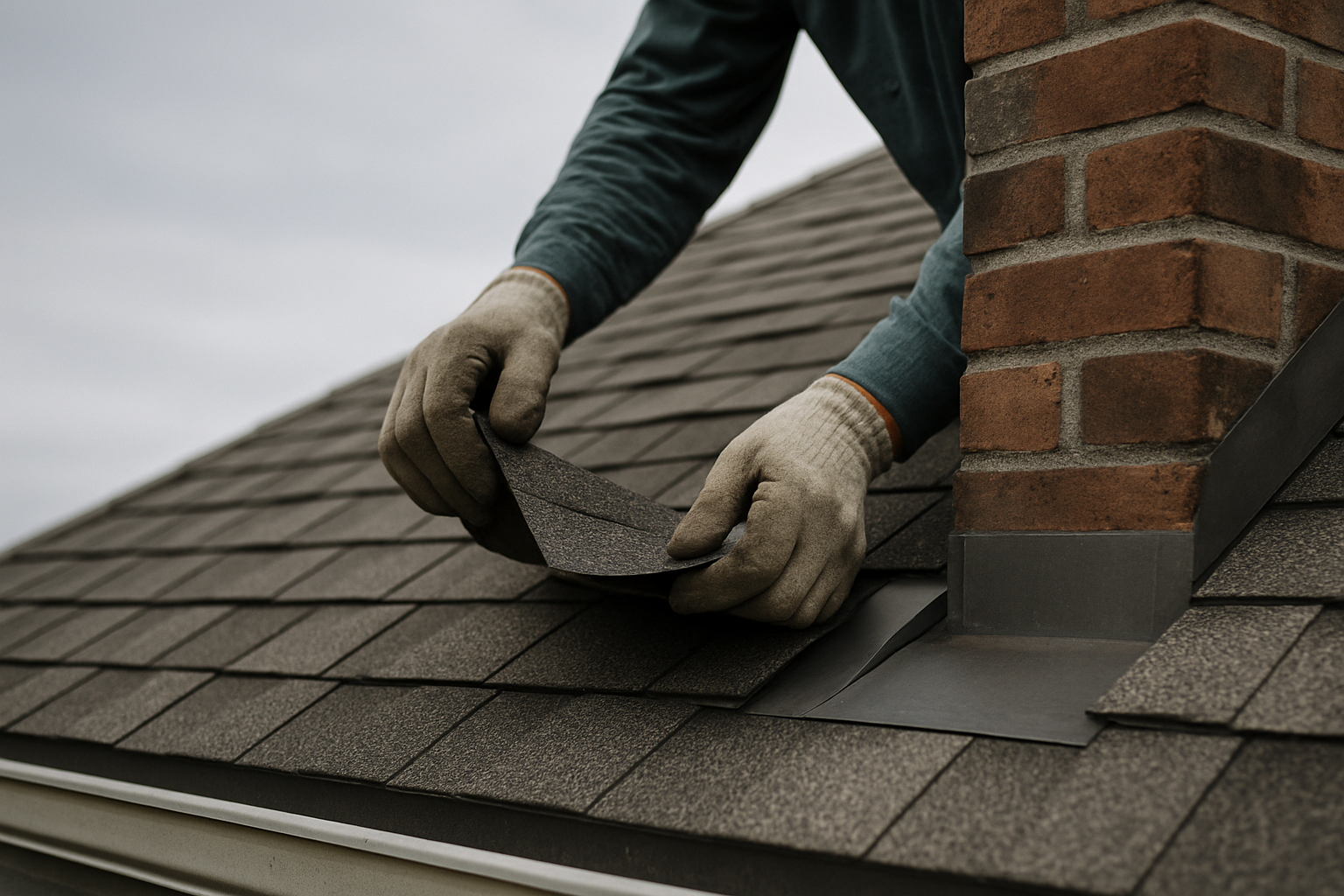
Flashing deserves more attention than any other single detail because it is where most leak calls begin. The entry point is rarely directly above the stain on the ceiling; water travels along framing before it shows. Step and counter flashing at chimneys and walls fail first because they join two materials that move differently, and because they are the easiest place for a previous repair to have been done badly. A photo report shows whether the flashing is intact, whether a past patch is holding, and whether the detail should be repaired or rebuilt. That is why the inspection includes the attic side, and why roof flashing repair in Atlantic County starts with finding where water actually enters rather than patching the spot where the ceiling turned brown.
Pipe boots and nail pops are small, cheap details with outsized consequences. They are also the reason a visual inspection is worth doing before a leak exists: a cracked boot can be photographed and replaced for a repair price, while the same crack left alone becomes a rotted deck section discovered during a replacement.
Nail pops and granule loss are often read together. A roof that is shedding granules and showing nail pops is sending two signals at once: the shingles are losing their protective surface, and the mechanical fastening is beginning to move. Either alone can be watched; together they push the remaining-life estimate downward.
Granule loss and ventilation are the two findings that speak to remaining life rather than an immediate leak. Granules protect the asphalt from sun; when they are gone, the shingle is aging fast. Ventilation failures hold heat and moisture in the attic and shorten the life of everything above it. The humid coastal attic and leaf-loaded roof problem is covered in roof ventilation in Atlantic County.
Decking is the one finding that changes the scope of the job. It can only be fully judged from the attic side during an inspection, and sometimes only after a tear-off begins. That is why the inspection flags what is visible and why the written proposal is itemized: if deck replacement is needed, it is a line item, not a surprise.
Two local patterns sit underneath every one of these findings. On the barrier islands, salt air and sustained wind accelerate fastener corrosion and shingle lifting, so a roof in Margate can show the wear of an older roof inland. Toward the Pinelands, tree cover means limb strikes, shaded slopes that grow moss, and gutters that pack with pine needles every autumn, which is where the edge and leaf-load findings come from. The inspection reads the roof in its actual setting rather than against a generic checklist.
When to schedule a roof inspection
There are four situations where a documented inspection earns its keep, and each gets something slightly different out of the photo report.
Pre-listing a home for sale
A seller uses a pre-purchase roof inspection Atlantic County-style report to document condition before the house goes on the market. The report tells the seller whether to repair, replace, or do nothing before listing, and it gives the buyer's side a dated condition statement instead of a verbal promise. A seller who repairs before listing can show the buyer a completed repair with before-and-after photos, which is a stronger position than a verbal promise that something was fixed. It also separates pre-existing wear from anything a later storm changes between contract and closing.
After a storm or high-wind event
After a nor'easter, wind-lifted shingles and wind-driven rain may not show as a ceiling stain for weeks. A post-storm inspection documents what the wind actually changed while the evidence is fresh. Waiting also lets small problems become larger ones: a lifted shingle that would have been a repair becomes a wet deck after the next rain. That dated record is the difference between a clean claim and a disputed one. HappyRoof documents storm and wind damage and offers insurance claim help, and emergency tarping is available for active leaks.
On an aging roof with no known leak
The quiet case is often the best case for an inspection. A roof that is past the middle of its expected life but has no active leak is exactly where a remaining-life estimate prevents a budget surprise. The homeowner learns whether to plan for replacement in three years or thirteen, and gets a baseline report for every inspection after it.
On a recurring leak or a fresh stain
A roof leak inspection Atlantic County NJ starts from the stain and works backward. The inspector checks the attic side, traces the water path, and finds the actual entry point rather than resealing a guess. This is the scenario where diagnosis-before-pricing matters most: you pay to solve the leak, not to patch the symptom.
What a visual inspection can and cannot tell you
A visual inspection is honest about its own edges, and a good one tells you where those edges are.
What it can do: document surface condition across shingles, membrane, or metal; assess flashing, pipe boots, and other penetrations; identify granule loss, nail pops, and sealant failures; check visible ventilation and attic-side staining; and support a remaining-life estimate and a repair-or-replace recommendation.
What it cannot do: see inside the roof assembly without opening it; confirm hidden decking rot behind an intact membrane; calculate structural load capacity, which is a structural engineer's task; or certify code compliance, which is the municipal inspector's task. Code compliance is a separate step, not something a visual inspection can promise.
The distinction matters when a buyer asks whether an inspection can guarantee a roof. It cannot, and no honest visual inspection can. It can document what is visible, flag what is suspicious, and tell you what would need to be opened or tested to go further.
The practical rule is that a visual inspection finds the condition of what can be seen and the evidence of what cannot. When attic-side staining, granule loss, or fastener corrosion suggests something worse underneath, the written proposal reflects the honest range of what may be found when the surface is opened. A report that pretends otherwise is less useful, not more.
The inspection process, step by step
- Book the visit. Call (609) 525-4521. If you have an active leak, say so first; HappyRoof prioritizes getting a tarp on it.
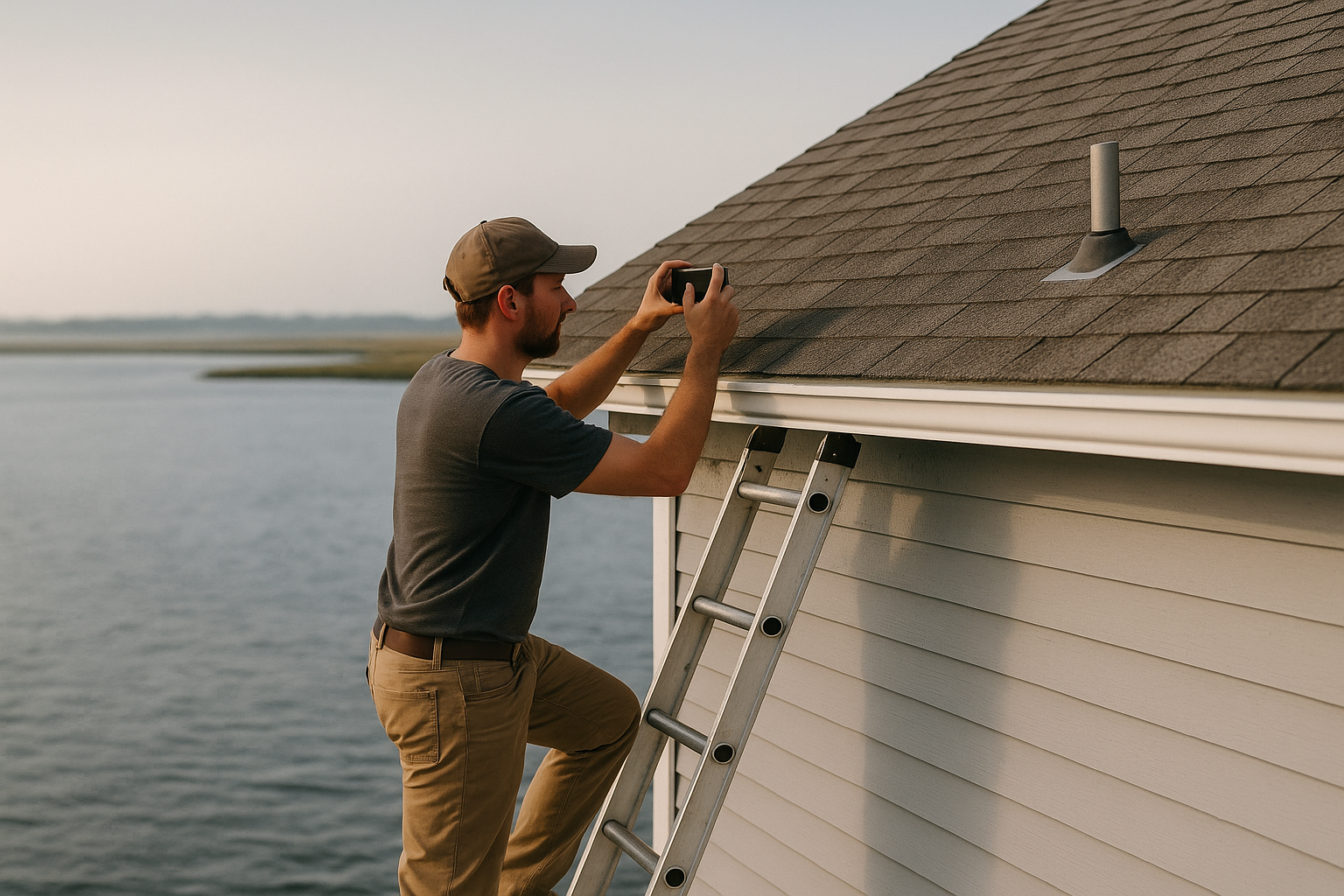
- Roof walk and photo documentation. The inspector walks the roof and photographs the defects, the aging-but-serviceable areas, and the condition of penetrations, flashing, and surfaces.
- Attic-side inspection. Where access allows, the inspector goes into the attic to trace stains back to the actual entry point, because water travels along framing before it shows on a ceiling.
- Findings review. You hear what is urgent, what is a watch item, and what the honest remaining-life estimate is. If the roof has years left, that is the answer.
- Written photo report. You keep the photos and the report. If the roof needs nothing, that is the end of it, with no obligation.
- Itemized proposal, only if needed. If the roof genuinely needs work, you get an itemized written proposal before anyone picks up a nail gun. If a replacement follows, the installation is done by manufacturer-certified installers.
What to have ready before the inspection
A little preparation makes the report more useful.
- Clear access to the attic hatch or scuttle, and to any roof access point the team will use.
- A list of every known leak, stain, or past repair, with approximate dates.
- Photos of interior stains with notes on when they appear and whether they worsen in rain.
- Prior inspection, repair, or replacement records if you have them.
- Any insurance claim history for the roof.
- A real estate deadline if the inspection supports a listing or closing.
- Access notes for island and shore towns: narrow lots, shared driveways, and seasonal parking restrictions are planned before the visit.
- Your question list, including anything you want the photo report to answer specifically.
The list is not a gate; the inspection still works without records. It simply means the remaining-life estimate is built from the roof itself and what you can tell the inspector, rather than from a longer paper trail.
Where roof inspections are offered in Atlantic County
HappyRoof serves every municipality in Atlantic County, with the homepage stating it serves every town in the county. The towns named across the site include Egg Harbor Township, Galloway, Hammonton, Mays Landing, Atlantic City, Somers Point, and Margate, plus Pleasantville, where the older neighborhoods commonly have low-slope roofs.
The inspection conditions differ more than people expect across the county. On the island towns, the challenge is exposure and access: sustained ocean wind, salt air that corrodes fasteners ahead of schedule, and narrow lots with shared driveways and seasonal parking restrictions. In the older neighborhoods of Atlantic City and Pleasantville, low-slope rear and porch roofs are common and need membrane work rather than shingle work. Inland toward Hammonton, Mays Landing, Egg Harbor Township, and Galloway, tree cover brings limb strikes, shaded slopes that grow moss, and gutters that pack with pine needles every autumn. A roof specified for a subdivision in central Jersey is not specified for a bayfront house in Margate, and the inspection reads the roof in its actual setting. That local variation is why the inspection is performed by a contractor who works across the county rather than against a generic checklist: the report on a Margate bayfront roof and the report on a Hammonton roof under pines should not read the same way.
Scheduling, weather, and what drives lead time
Inspection scheduling depends on weather, roof access, and the current workload, so the honest answer is to call and confirm. What the site does promise is priority where it matters: an active leak is prioritized for tarping, and the repair side carries same-day service. A roof inspection done in driving rain or on an unsafe surface is not a real inspection, so scheduling works around the conditions rather than against them. The practical takeaway is to book before the season you are worried about: before the summer listing, before the autumn leaf load, or as soon as a stain appears. To book the free roof inspection Atlantic County NJ homeowners use to plan a budget, list a house, or document storm damage, call (609) 525-4521.
Frequently asked questions
Do you charge for a roof inspection in Atlantic County NJ?
No. The inspection is free and includes photos of your actual roof and an honest remaining-life assessment. If the roof needs nothing, you keep the report and there is no obligation. If it needs work, you get an itemized written proposal before anything starts.
What should I do if I have a ceiling stain but no visible roof damage?
Do not patch the stain. The entry point is rarely directly above it, because water travels along framing before it shows. An attic-side inspection traces the path back to the actual defect, so you pay to solve the leak rather than reseal a guess. Photograph the stain and note when it appears.
How long does a roof inspection take?
It depends on roof size, access, and the number of penetrations, so HappyRoof confirms timing when you book. The point is not speed; it is a complete walk of the roof and attic-side check with photos. An active leak is prioritized for emergency tarping first.
Will the inspector tell me I need a new roof even if I don't?
The inspection is built against that. It is free, the photos are yours, and the answer is honest in both directions. HappyRoof states plainly that if you have ten good years left, you will hear that too, and you keep the report either way.
Is a roof inspection the same as a structural or code review?
No. A visual roof inspection documents surface condition, flashing, penetrations, ventilation, and attic evidence. It does not open the roof assembly or calculate structural load capacity. Code compliance is a separate municipal step, not part of a visual roof inspection.
Do I need a roof inspection before selling my house in Atlantic County?
You are not required to, but a dated photo report gives you a documented condition statement for buyers and agents, and it separates pre-existing wear from a later storm event. It also tells you whether to repair, replace, or do nothing before listing.
Book a free roof inspection in Atlantic County NJ
Call (609) 525-4521. If you have an active leak, say so first, and HappyRoof will prioritize getting a tarp on it. The inspection is free, the photos are yours to keep, and there is no pressure either way.