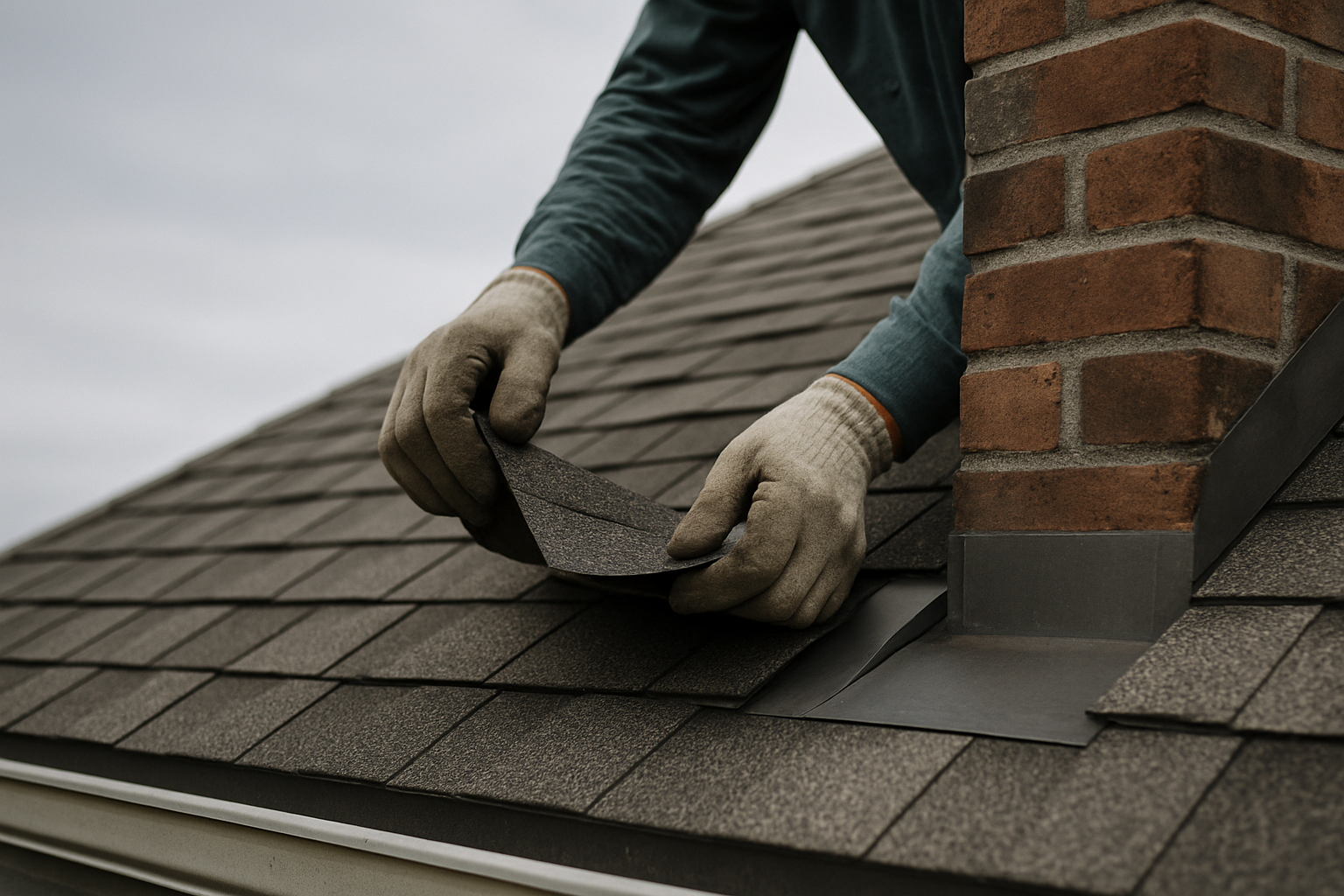
Fascia board replacement cost in Atlantic County, NJ is built per linear foot of board plus labor, gutter removal, and whatever rot repair the eave line reveals. Wood, cellular PVC, and aluminum capping change the number differently, and access plus hidden conditions move the total more than the board itself. HappyRoof provides upfront pricing after a free inspection.
What does fascia board replacement cost in Atlantic County, NJ depend on?
Fascia replacement is a line-item job, not a flat-rate job. A complete estimate breaks into a few parts: the new board or cap measured in linear feet, removal and disposal of the old material, gutter removal and rehang when the trough is in the way, priming and paint for wood, and any hidden-condition work the tear-off exposes.
The useful question is not "what does fascia cost." The useful question is what the estimate itemizes and what allowance it makes for hidden rot. The same honesty rule that applies to roof decking applies here. Nobody can see the back of a fascia board until the gutter comes down, and nobody can see inside the rafter tail until the board is pulled. A proposal that says "fascia included" with no linear-foot count and no per-foot repair allowance is pretending the unknown is zero.
For scale, HappyRoof's published roof repair guidance puts most roof repairs in Atlantic County between $400 and $1,800, with the low end covering straightforward, accessible work such as sealing and re-securing a section of drip edge. That is the repair side of the eave. A full fascia replacement along an entire eave line is a different scope. It is measured in linear feet, it usually includes gutter removal and rehang, and its total moves with material choice and with what the tear-off reveals. At the other end of the scale, a complete asphalt roof replacement on a typical Atlantic County home runs $9,000 to $25,000, and fascia work that rides along with that project becomes a line item inside the larger proposal.
The per-linear-foot question deserves a direct answer: there is no honest single number that fits every house. What there is, is a set of drivers that show up on any honest quote.
- Board size and profile. A 1x6 is a different quantity of material than a 1x8 or a built-up cornice, and the per-foot price should change with width.
- Material family. Wood, cellular PVC, and aluminum capping carry different material costs and different labor. Wood adds priming and paint. PVC adds expansion-aware fastening. Aluminum adds brake time and coil stock.
- Access and height. A single-story ranch eave is a different labor day than a shore house with no driveway to stage from. On the barrier islands, access planning is part of the price because there is often no driveway to stage from.
- Gutter scope. Gutter removal for fascia repair is a separate line item, and re-hanging, re-pitching, and re-securing the trough rides with it.
- Hidden conditions. Soft rafter tails, rotted soffit panels, and corroded fasteners are discovered, not assumed.
Because the number is built this way, a single published per-linear-foot range would mislead more than it would help. The honest estimate shows the measured quantity and the unit price for each material, plus a stated allowance for what may be found when the board comes off. HappyRoof provides upfront pricing after a free inspection. That is the same discipline behind the per-sheet decking price: show the unit price and measure the quantity.
Where fascia rot hides, and how fascia board rot repair is assessed
The fascia board is the horizontal trim at the eave, and the gutter is fastened to its face. The two surfaces a roofer most needs to inspect are the back face of the board and the wood behind the gutter. Those are also the two surfaces a homeowner never sees. Rot develops for years before the paint blisters on the front.
Fascia board rot repair starts with what is visible: paint blisters and peeling at joints, black or gray staining, a gutter line that sags between hangers, fasteners that have pulled or rusted, and separation where the drip edge meets the board. Then a section of gutter comes off. Behind it, the inspector looks at the screw holes from the gutter hangers, the top edge where the drip edge should discharge, and the end cuts at corners and rakes.
The probe test decides it. A sound fascia resists a sharp probe. Rotted wood gives way with the texture of a sponge. The inspector also checks the rafter tails behind the board, because the fascia is only as solid as the framing it is nailed to. If the tail ends are soft, the job is no longer trim.
Atlantic County makes the diagnosis predictable even when the damage stays hidden. Freeze-thaw cycles on the mainland open the wood grain and split the paint film, so water gets in and stays in. On the barrier islands, salt aerosol corrodes fasteners and thin flashing metal while wind-driven rain keeps the eave wet. Pine Barrens leaf load clogs gutters, the trough overflows, and the overflow runs down the fascia face instead of away from it. The rot is behind the gutter, but the cause is usually above it.
How drip edge failures accelerate the rot
Drip edge is the small metal detail that decides whether the eave stays dry. Its job is to carry water off the sheathing edge and into the gutter rather than letting it curl back onto the fascia. HappyRoof's roof repair guidance lists sealing and re-securing a section of drip edge as straightforward, accessible work at the low end of the repair range.
When drip edge is missing, water from the shingle overhang wicks back along the underside of the shingle and down the fascia face. When it is present but installed wrong, set too tight against the fascia, back-sloped, or terminating behind the gutter, the same water path opens. Wind-driven rain from a nor'easter forces water sideways along the eave, and any gap becomes a channel.
The failure sequence explains why a fascia repair without a drip-edge repair is a repeat job:
- Water curls back at the eave and wets the top edge of the fascia.
- The wet top edge sits against the gutter hanger penetrations, and capillary action draws water into the screw holes.
- The end grain at corners and rake cuts wicks water deeper than the face grain.
- Paint film holds the moisture in, and the board rots from the inside.
- The gutter hangers lose their grip, the trough sags, and overflow makes the wetting worse.
The fix is not a bigger board. The fix is a drip edge that discharges into the gutter, fasteners that are sealed or corrosion-resistant, and end cuts that are sealed. Those details return in the replacement section below.
Spot repair vs full fascia replacement
Not every rotted fascia board means replacing every foot of eave trim. The decision is made behind the gutter, not from the ground.
A spot repair is legitimate when the rot is confined to one run, usually at a corner, a rake, or the low end of a gutter that has been overflowing for years. The rotted section is cut out to sound wood, new material is spliced in, and the joints are sealed. The rest of the eave stays. This is the fascia version of the roof repair guidance: straightforward, accessible work where the material cost is modest and the labor is measured in hours.
Full replacement is the right call when rot is widespread, when fasteners have pulled along the entire run, when multiple sides of the house are soft, or when the eave will be exposed anyway during a roof or gutter replacement. Full replacement is also the right call when the boards are so weathered that a patch would be the only painted, sound piece on an otherwise failing line.
The economic test matches the roof repair versus replacement test. If the repair restores a sound, watertight eave for a fraction of the replacement and the surrounding boards are solid, patch it. If you are patching into rot, the patch is a down payment on the next patch.
Wood vs PVC fascia board vs aluminum fascia capping
The three fascia options are not three prices for the same product. They are three different answers to the same question: how do you keep water out of the eave trim for the next two decades?
| Decision factor | Wood fascia | Cellular PVC fascia | Aluminum fascia capping |
|---|---|---|---|
| What it replaces | The board itself | The board itself | Nothing. It wraps the existing board |
| Rot resistance | Rots unless every face and cut is sealed | Does not absorb water or rot | Does not rot, but conceals rot beneath it |
| Maintenance | Prime, paint, and repaint on a cycle | None | None beyond occasional cleaning |
| Hidden damage | Revealed when the board is removed | Revealed when the board is removed | Hidden. The old board keeps rotting behind the metal |
| Coastal exposure | Needs sealed end cuts and corrosion-resistant fasteners | Strong for salt air when fasteners and expansion are correct | Strong only if the substrate is sound |
| Primary failure mode | Rot at joints, end cuts, and hanger holes | Fastener or expansion mistakes | Trapped water and undetected substrate rot |
How to choose between the three fascia options
Match the material to the exposure
Start with where the eave sits. A shaded north slope that never fully dries between storms, or a barrier-island house in sustained salt air and wind-driven rain, punishes any material that absorbs water. The exposure answer points toward cellular PVC or, over a sound board, aluminum capping. A protected inland eave on a painted wood-trim house can stay with wood if the preparation is right.
Be honest about maintenance appetite
Wood fascia is a paint obligation. It needs priming on every face, sealed end cuts, and repainting on a cycle that the coastal climate shortens. PVC and capping remove the paint cycle. The wrong choice is the one that saves on the board but commits the homeowner to maintenance they will not actually do.
Let the condition of the existing board decide
This is the sharpest filter. If the board is soft, capping is out. You cannot wrap rot. The board comes off, and the choice is wood or PVC for the replacement. If the board is sound but the paint is failing, capping becomes a legitimate option because there is a sound substrate to wrap.
Check the framing behind the board
The fascia is only as good as the rafter tails it fastens to. If the tails are rotted, material choice is secondary to framing repair. Decide the substrate first, then the trim.
The three fascia options in detail
Wood fascia
Wood fascia is dimensional lumber matched to the existing trim, most commonly a primed pine or cedar board. It is the right answer when the rest of the exterior trim is wood and will be painted, when the homeowner wants to match an existing profile exactly, or when the budget conversation starts with replacing the rotted board and keeping the rest.
What it suits: painted wood-trim homes, small repairs where only one run is rotted, and situations where matching grain and profile matters more than zero maintenance.
What it does not suit: a barrier-island eave that takes salt spray and wind-driven rain unless the owner accepts the sealing and repaint cycle, and any homeowner who wants to be done with painting.
The honest limitation: wood is only as rot-resistant as its preparation. The end grain is the wick. A board primed on the face but left raw on the back and the ends will rot again, often faster than the original because the old board had years of paint build-up. If the drip edge is not corrected, new wood is fresh food for the same water path.
Cellular PVC fascia
Cellular PVC is a solid plastic board that is cut and fastened like wood but does not absorb water. It suits eave lines that stay wet: shaded north slopes that never fully dry between storms, barrier-island houses in sustained salt air, and homeowners who have repainted wood fascia twice and are done.
What it suits: coastal and shaded eave lines, replacement where the failure was moisture-driven, and anyone who wants the board replaced once rather than maintained forever.
What it does not suit: structural trim details where the fascia is doing real work, and any installation where the crew is not prepared to follow the manufacturer's expansion and fastener guidance. PVC moves with temperature, and a fastener pattern that works for pine does not automatically transfer.
The honest limitation: PVC carries a higher upfront material cost than a primed wood board, and it does not forgive a careless install. Over-driven fasteners, missing expansion allowance, or the wrong sealant create their own failure mode. It is also not a structural substitute for a rotted rafter tail. It is trim, and the framing behind it still has to be sound.
Aluminum fascia capping
Aluminum fascia capping is not a board replacement. It is coil stock, bent on a brake to the fascia profile and wrapped over the existing board. It protects a sound board from water and sun and matches seamless gutter color exactly.
What it suits: a fascia board that is still solid but has failing paint, a home where the gutters are being replaced anyway, and homeowners who want the eave trim and gutter to match without repainting.
What it does not suit: any board that has already rotted. This is the central warning of this guide. Capping over soft wood hides the rot, and the board continues to decay behind the metal. The homeowner gets a straight-looking eave and a hidden structural problem.
The honest limitation: aluminum capping is only as good as the substrate it wraps. If the inspection cannot confirm the board is sound, and that usually means looking at the back face with the gutter off, capping is a cosmetic decision rather than a repair. On the barrier islands, capping also needs the existing fasteners to be sound, because the metal gives the gutter hangers nothing new to bite.
When soffit, rafter tails, and gutter hangers change the cost to replace fascia and soffit
Fascia work rarely stays fascia work. The eave is a system: fascia on the face, soffit underneath, rafter tails inside, and gutter fastened to the front. An estimate that ignores the neighbors is an estimate that will need a change order.
Soffit enters the scope when the underside is damaged, when the eave is already open and the panels are brittle, or when ventilation is being corrected. Ridge ventilation only works if intake air can enter at the eave. If the soffit is sealed or rotted, the intake side of the balance is wrong. HappyRoof's roof replacement guidance asks whether ventilation balances intake with exhaust, and the same question applies when the eave is apart. The cost to replace fascia and soffit together is higher than fascia alone, but it is the cheapest moment to do the soffit because the eave is already open.
Rafter tails are the framing the fascia is nailed to. If the tail ends are rotted, and they usually rot right where the fascia traps water against them, the fascia has nothing sound to fasten to. At that point the job moves from trim to framing. The rotted section is cut back, new material is sistered or replaced, and the new fascia fastens to sound wood. This is the honest version of scope change. It is the same principle as decking discovered after a tear-off: nobody can see it until the old material is off, and an honest proposal prices the unit rather than pretending the risk is zero.
Gutter hangers change the scope in two ways. First, the gutter usually has to come down to access the fascia, and it has to be re-hung and re-pitched afterward. Second, the hanger screws have already penetrated the board. If those holes are stripped or the board is soft, the new board must be sound enough to take the re-hang, and the hanger placement may need to move. On a Pine Barrens leaf-load house, this is also the moment to ask whether the gutter and guards are sized for the load, because a fascia job with the gutter already off is the cheapest moment to fix the gutter too.
Priming, sealing end cuts, and fastening details that prevent repeat rot
The difference between a fascia job that lasts and one that rots again in five years is mostly preparation, not material.
For wood, prime every face before it goes up, including the back face that sits against the rafter tails, and seal every end cut. End grain wicks water many times faster than face grain, so the cuts at corners, rakes, and scarf joints are where rot re-enters first. Use exterior-rated fasteners, and on the barrier islands use corrosion-resistant fasteners. Salt aerosol attacks plain steel quickly.
For cellular PVC, follow the manufacturer's fastener schedule and expansion guidance. PVC moves with temperature, so the board needs room to expand and contract or it will buckle at the fasteners. Over-driven screws, missing pre-drilling where the manufacturer requires it, and the wrong sealant are the ways a PVC job fails early.
For aluminum capping, hem and overlap the joints so water sheds off rather than in, and make sure the cap is not trapping water against the board. The metal should shed. It should not seal a wet board inside a sleeve.
Across all three, the sealant matters less than the drainage. The goal is not to caulk the eave shut. The goal is to give water a path down and away: drip edge into gutter, cap over board, sealed cuts where water would otherwise wick. A correctly detailed eave is mostly dry by design, not by sealant.
Code, permits, and drip edge integration
Fascia replacement is usually a repair rather than a structural alteration, but it sits inside the roof and gutter system that the municipality regulates. Two questions should be settled before work starts.
Permits. HappyRoof pulls the permit for a roof replacement before work starts, and if fascia work rides along with that replacement it is inside that permit scope. A small standalone trim repair may not require one, but the answer is municipal rather than generic. Ask the contractor to confirm what the permit covers and who meets the inspector.
Drip edge integration. The drainage principle is simple: water must discharge from the roof edge into the gutter, not behind it. The drip edge belongs at the eave, discharging over the back of the gutter, so the water path runs shingle, drip edge, gutter, never shingle, fascia. If the gutter is set behind the drip edge, water runs down the back side of the trough and soaks the fascia even with new trim in place. The inspector and the roofer should both look at this detail.
What a useful fascia estimate looks like
A useful estimate reads like a schedule of work, not a single number. Before you compare two quotes, line up what each one actually contains.
The estimate should show measured linear feet of fascia, by material. It should separate the board from the labor so a change in material does not hide a change in scope. It should show removal and disposal of the old board, and gutter removal and rehang as its own line if the gutter has to come down.
It should also state the hidden-condition rules. What is the per-foot price if the rafter tails are soft? What is the soffit allowance if the underside is rotted? Is the drip edge included, or is that a separate line? An estimate that does not answer those questions has not priced the job. It has priced the easy version of the job.
Finally, it should say who pulls the permit, who disposes of the material, and whether cleanup includes a magnet sweep for fasteners. Those items are small on paper and expensive when they are missing.
How HappyRoof's pricing approach applies to fascia work
HappyRoof's published pricing approach is upfront and inspection-based. The company advertises upfront pricing and a free inspection. The same discipline that applies to roof decking applies to fascia: nobody can see the condition of the wood until the old material comes off, so an honest proposal shows the unit price and measures the quantity rather than pretending the unknown is zero.
Fascia work that rides along with a roof replacement follows the same logic. If the eave trim is damaged and the roof is being replaced anyway, the fascia is exposed for free, and the same hidden-condition rules apply. A useful estimate still reads as a schedule of work: linear feet of fascia by material, removal and disposal, gutter removal and re-hang if the trough has to come down, soffit or rafter tail repair if found, priming and paint for wood, permit if required, and cleanup including a magnet sweep for fasteners. For fascia, the inspection should look at the back face with the gutter off or a section pulled, not just the front paint.
A word on storm work. If the fascia damage came from a nor'easter or wind-driven rain, the claim follows the same documentation discipline as any storm claim. HappyRoof's storm damage guidance covers how to document the damage, what the adjuster is looking for, and the deductible scam to walk away from. The same deductible-scam warning applies to trim work as it does to roofing.
Homeowners in Atlantic County can schedule the free inspection at (609) 525-4521. HappyRoof serves all of Atlantic County, NJ.
Common fascia replacement mistakes
Replacing the fascia but leaving a missing or failed drip edge is the most expensive shortcut. The new board rots from the top again. Fix the drip edge so it discharges into the gutter before the board goes up.
Capping over a board that was never inspected from the back hides the problem instead of fixing it. Remove a gutter section and probe the board, and cap only sound wood.
Accepting a "fascia included" price with no linear-foot count and no per-foot repair allowance invites a change order. Require a line-item schedule with measured quantities.
Painting the face of wood fascia but leaving the back and end cuts raw guarantees early rot. Prime every face and seal every cut before install.
Fastening new fascia to soft rafter tails means the trim has nothing to hold. Probe the tails before the board goes up, and sister or replace what is soft.
Skipping the soffit and ventilation question while the eave is open wastes the access you already paid for. Assess intake ventilation and soffit condition as part of the same scope.
Fascia replacement questions, answered
How much does fascia board replacement cost in Atlantic County, NJ?
It is priced per linear foot of material plus labor, gutter removal, and any hidden rot repair. HappyRoof's published roof-repair range is $400 to $1,800 for accessible work such as re-securing drip edge. A full eave-line replacement is a larger itemized scope because it includes gutter removal and re-hang and depends on material and access. Get a measured, line-item quote after a free inspection.
Should I replace rotted fascia with wood or PVC near the ocean?
Both can work when detailed correctly. PVC does not absorb water and needs no painting, which suits salt air and wind-driven rain. Wood can be fine when every face and end cut is sealed and corrosion-resistant fasteners are used. Aluminum capping is only appropriate over a sound board, not as a fix for rot.
Does the gutter have to come off to replace fascia?
Almost always. The back face of the board and the gutter hanger penetrations cannot be inspected or re-fastened behind the gutter. Removing and re-hanging the gutter is a separate line item, and it is usually the cheapest moment to inspect, repair, and resecure the eave.
Can aluminum capping fix rotted fascia?
No. Capping wraps the existing board. It does not replace it. If the board is soft, capping hides the rot and the board keeps decaying behind the metal. Remove and replace the rotted section first, then cap only if you want the metal finish over sound wood.
Is fascia damage from a storm covered by insurance?
Coverage depends on the policy and the documented cause of loss. Wind-driven rain or a nor'easter that damages the eave is documented the same way as any storm claim. HappyRoof's storm damage guidance covers how to document the damage, what the adjuster is looking for, and the deductible scam to walk away from. The same deductible-scam warning applies to trim work as it does to roofing.
Do I need a permit to replace fascia in New Jersey?
A small standalone trim repair may not require one, but the answer is municipal. If fascia work rides along with a roof replacement, HappyRoof pulls the permit before work starts and the fascia is inside that scope. Confirm with the municipality and the contractor what the permit covers.
Frequently asked questions
How much does fascia board replacement cost in Atlantic County, NJ?
It is priced per linear foot of material plus labor, gutter removal, and any hidden rot repair. HappyRoof's published roof-repair range is $400 to $1,800 for accessible work such as re-securing drip edge. A full eave-line replacement is a larger itemized scope because it includes gutter removal and re-hang and depends on material and access. Get a measured, line-item quote after a free inspection.
Should I replace rotted fascia with wood or PVC near the ocean?
Both can work when detailed correctly. PVC does not absorb water and needs no painting, which suits salt air and wind-driven rain. Wood can be fine when every face and end cut is sealed and corrosion-resistant fasteners are used. Aluminum capping is only appropriate over a sound board, not as a fix for rot.
Does the gutter have to come off to replace fascia?
Almost always. The back face of the board and the gutter hanger penetrations cannot be inspected or re-fastened behind the gutter. Removing and re-hanging the gutter is a separate line item, and it is usually the cheapest moment to inspect, repair, and resecure the eave.
Can aluminum capping fix rotted fascia?
No. Capping wraps the existing board. It does not replace it. If the board is soft, capping hides the rot and the board keeps decaying behind the metal. Remove and replace the rotted section first, then cap only if you want the metal finish over sound wood.
Is fascia damage from a storm covered by insurance?
Coverage depends on the policy and the documented cause of loss. Wind-driven rain or a nor'easter that damages the eave is documented the same way as any storm claim. HappyRoof documents the damage and can meet the adjuster, and no contractor may lawfully absorb or waive a deductible in New Jersey.
Do I need a permit to replace fascia in New Jersey?
A small standalone trim repair may not require one, but the answer is municipal. If fascia work rides along with a roof replacement, HappyRoof pulls the permit before work starts and the fascia is inside that scope. Confirm with the municipality and the contractor what the permit covers.