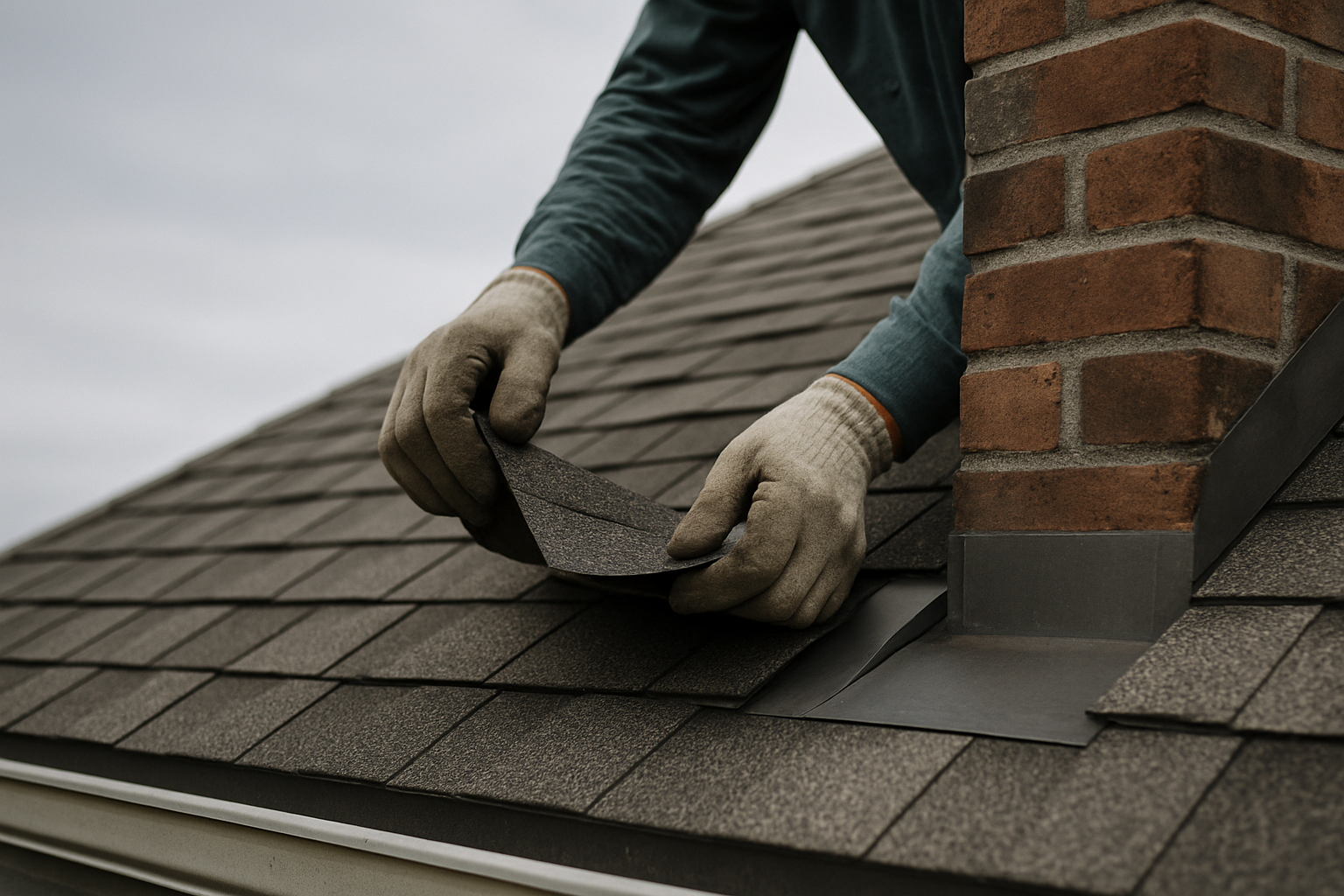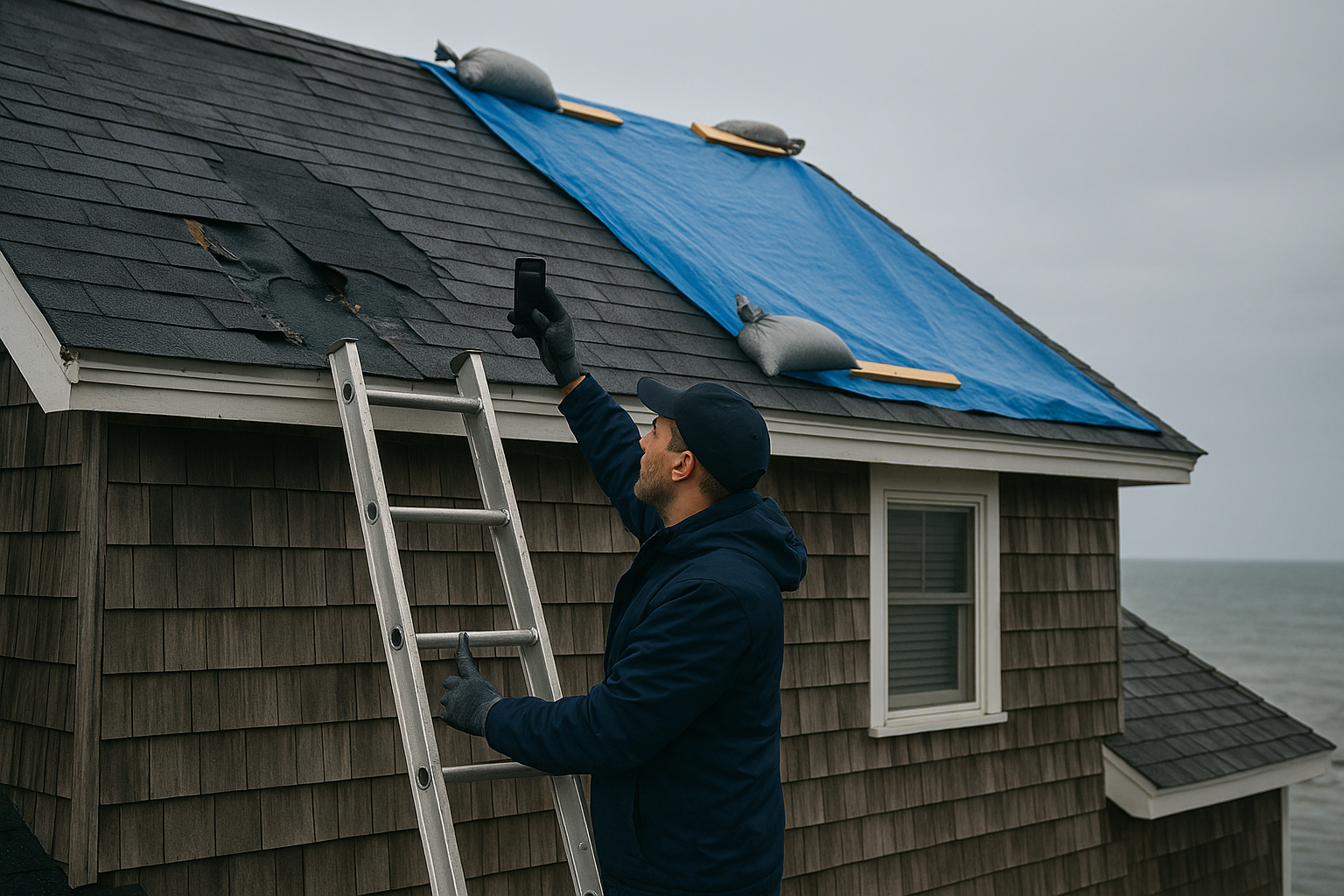
Hail damage roof repair in New Jersey comes down to evidence. Hail on an Atlantic County roof usually shows as a bruise: granules knocked off in a circular pattern over a soft, fractured spot, not a hole. That bruise weathers fast and looks like ordinary age, so inspect and document it within weeks of the storm.
What hail does to an Atlantic County roof
South Jersey does not get hail on the scale of the plains states, but it gets hail, usually from summer thunderstorm cells that develop inland and track east. When one of those cells crosses Atlantic County, the damage it leaves on an asphalt shingle roof is deceptively subtle. What you are looking for is not a hole but a bruise.
A hail strike knocks granules off in a roughly circular pattern and fractures the fiberglass mat beneath the shingle. It leaves a soft spot that feels like pressing on a fresh bruise. The mark is visible on close inspection and nearly invisible from the ground. That contrast is the entire reason hail damage roof repair in New Jersey gets missed until the evidence has aged.
Because the damage is subtle, a homeowner can walk past it for months. Water may not enter the house the day after the storm or the week after. The bruise sits on the roof, the exposed asphalt weathers, and by the following spring it looks like every other aging shingle. At that point the claim file is weaker than it needed to be, not because the damage was minor, but because the proof was allowed to fade.
The practical rule follows from that. If you know hail fell on your street, treat the roof as potentially damaged until someone has put eyes and hands on it, whether or not anything is leaking yet.
Why hail damage is frequently missed
Hail damage gets missed for three reasons, and all three are avoidable.
The first is that it rarely leaks immediately. A hail bruise weakens the shingle and fractures its mat, but it does not always open a path for water on day one. Homeowners use the absence of a leak as proof that the roof is fine, when the leak is the late symptom, not the first sign.
The second is that the damage is on the roof, not in the driveway. Wind damage shows up as shingles in the yard or a gutter hanging off the fascia. Hail damage shows up as a soft spot on a slope nobody climbs. From the ground, a hail-bruised roof can look completely normal.
The third is timing. Granule loss from hail looks similar to granule loss from age if enough time passes for the exposed asphalt to weather. The circular bruise you can feel in August is a bare patch that photographs like ordinary wear by the time spring rains start. The longer the wait, the weaker the cause-and-effect argument becomes.
None of this means the damage was not real. It means the evidence has a shelf life, and the inspection needs to happen inside it.
The bruise test: separating hail from ordinary roof aging
Roof hail damage in Atlantic County is often mistaken for normal granule loss from age. The distinction matters because an adjuster is paid to separate sudden, storm-caused damage from gradual, age-related wear. If the homeowner cannot tell the difference, documenting the loss correctly is much harder.
Start with the surface. A hail bruise is a depression, not a bump. It forms where a stone struck the shingle, knocked granules off in a roughly circular pattern, and fractured the fiberglass mat beneath. Run your fingertips across it and you will feel a soft spot that gives under light pressure. The bare area is usually round or oval, and it sits in a cluster with other circular marks on the slopes that faced the storm.
Normal granule loss from age does not look like that. Aging shingles lose granules broadly across the whole slope, and the exposed asphalt weathers slowly over years. You will see bare patches, but you will not find one localized, circular, soft depression that gives under a fingertip. The difference between granule loss vs hail damage in NJ is not the missing granules. It is the localized fracture underneath the missing granules.
| Condition | Surface feel | Pattern | Underlying damage | What it means |
|---|---|---|---|---|
| Hail bruise | Soft depression that gives under light pressure | Circular or oval, clustered on storm-facing slopes | Fiberglass mat fractured | Sudden impact damage; document for the claim |
| Age granule loss | Firm, weathered asphalt | Broad and uneven across the slope | Mat intact, gradual wear | Normal aging, not storm-caused |
The mat fracture is the part that matters for the roof's future. The fiberglass mat is the shingle's structural layer. When a hail stone fractures it, the shingle has lost more than granules; it has lost strength at that point, and the point becomes a candidate for a future crack or tear. Cosmetic granule loss is a surface issue. A fractured mat is a structural issue. The inspection should record which one it is.
One warning from the field closes this section. Granule loss from hail looks similar to granule loss from age if enough time passes for the exposed asphalt to weather. That is exactly why the inspection belongs within weeks of the storm, not the following spring when a ceiling stain finally appears.
What a proper hail damage shingle inspection in NJ involves
A hail damage shingle inspection in NJ is not a drive-by and it is not a drone pass. It is an on-roof, hands-on examination, and the difference shows up in the claim.
The inspector should walk every slope, not just the street-facing one. Summer hail cells in Atlantic County usually develop inland and track east, so the elevation that took the hits is often the one the homeowner never sees from the driveway. Walking the full roof finds the cluster density and the direction of the storm.
The inspector should test the marks with a hand, not just a camera. The soft depression of a hail bruise is a tactile finding. Photographs record color and granule loss; a hand records whether the mat has fractured underneath. Both go into the file.
The inspector should photograph your actual roof, not a library image. The point of the photos is to show an adjuster the exact bruise locations, cluster density, and collateral damage on your property, weeks after the inspection. Stock images prove nothing.
The inspector should also walk the ground level. Gutters, downspouts, screens, siding, and air-conditioner fins carry the collateral marks that corroborate stone size and direction. A roof-only inspection misses the evidence that is easiest to verify.
Finally, the inspector should give you an honest assessment, including the answer nobody sells. HappyRoof's inspection standard is explicit: if you have ten good years left, you will hear that too. A hail inspection should tell you whether the roof needs work at all, not just whether the work is hail-related.
What adjusters look for: size, density, and collateral damage
A hail damage insurance claim in New Jersey is evaluated by an adjuster who was not present during the storm. The adjuster has to reconstruct whether hail actually fell, whether it was large enough and dense enough to damage a roof of this age and type, and whether the resulting damage is functional or merely cosmetic. How the roof is documented decides how easy that reconstruction is.
The first question is stone size. Impact force scales with stone diameter and fall speed, so carriers apply their own size and density thresholds under the terms of your policy. This page will not invent a specific number, because the threshold that governs your claim is the one in your policy documents and the carrier's adjustment guidelines. What you can control is the physical evidence that shows the storm cleared whatever bar applies: circular bruises, fractured mat, and matching marks on collateral surfaces.
The second question is density. Adjusters do not count every mark on the roof. They assess representative sections on each slope and look for a consistent concentration of circular impacts within a defined area, then compare that concentration with the roof's age and condition. A few scattered marks across a twenty-year-old roof reads differently from a dense pattern across the field of a newer shingle. A roof hail damage Atlantic County inspection should therefore record not just that bruises exist, but where they cluster and how tightly.
The third question is collateral damage. Hail that is large enough to bruise a shingle will often mark exposed metal and screening at the same time. Walk the property and photograph aluminum gutters and downspouts, window screens, fascia trim, siding, air-conditioner fins, and anything else the stone would have struck. Collateral damage corroborates stone size and direction better than a roof photo alone, because those surfaces dent in ways nobody confuses with age.
The fourth question is storm geometry. In Atlantic County, summer hail cells usually develop inland and track east, so one elevation of a house often takes more hits than another. Tell the adjuster which side of the house faced the storm. It explains why one slope is bruised and the opposite slope is clean, which is itself evidence of a sudden, directional event rather than uniform aging.
Put together, these four questions form the adjuster's test: was there hail, was it big enough, was it dense enough, and is the damage real. Your documentation either answers those questions cleanly or leaves them to be answered by guesswork.
Timing: inspect within weeks, not the following spring
The reason hail claims get denied or underpaid is often timing. The physical evidence of hail has a short, weather-dependent shelf life, and the clock starts the day the stones fall.
The sequence is familiar. A hail event arrives with a summer thunderstorm. The homeowner looks for leaks, finds none, and decides the roof got through it. Months later, water finds a compromised shingle, or a buyer's home inspection flags granule loss, and the question becomes whether the damage is storm-caused or simply old. By then the best physical evidence has aged.
The rule is simple: if you know hail fell on your street, get the roof looked at while the evidence is fresh, whether or not anything is leaking yet. That means an inspection within weeks of the event, not the following spring. HappyRoof's inspection is free and produces real photos of your own roof rather than stock images or a verbal reassurance.
Do not wait for a leak to be the trigger. Hail damage frequently does not leak immediately. It weakens the shingle, fractures the mat, and shortens the life of the roof. By the time water shows up at the ceiling, the cause-and-effect question has already gotten harder to answer.
Common mistakes that weaken a hail claim
Most weak hail claims are not weak because the damage was minor. They are weak because the evidence was handled late or badly.
Waiting for a leak is the most common mistake. The leak is the late symptom. By the time water reaches the ceiling, the bruise that caused it may have weathered to look like age.
Trusting a door-knocker is the most expensive mistake. Contractors appear after every storm offering to take care of the deductible. That offer is insurance fraud in New Jersey, and the homeowner who signs is a participant.
Signing before inspecting is the fastest mistake. A homeowner who signs a contract before anyone has photographed the bruise pattern has given up the evidence advantage that the claim depends on.
Patching the stain instead of the roof is the mistake that repeats. A ceiling stain gets painted while the fractured mat stays on the roof. The interior looks fixed and the roof keeps failing.
Letting months pass is the quietest mistake. Nothing visibly changes, the roof does not leak, and the circular bruise slowly becomes ordinary-looking granule loss. The claim gets harder with every week of exposure.
The correction to all five is the same: inspect early, document everything, and keep the deductible honest.
Building a hail damage insurance claim in New Jersey
Storm damage claims are won or lost on evidence. An adjuster standing on your roof three weeks after the hail event is looking for signs that the damage was sudden and storm-caused rather than gradual and age-related. The homeowner who has dated photographs, a written contractor assessment, and a record of the mitigation steps they took is in a completely different position from the one who has a memory and a wet ceiling.
Documentation starts the day of the storm. Note the date and time, the direction the storm came from, and the size of any stones you saw. If stones are still on the ground, photograph them next to a common object for scale before they melt. Photograph the roof from the ground if you can do so safely. Then walk the property and photograph gutters, downspouts, screens, siding, and air-conditioner equipment for collateral marks.
The next step is a written contractor assessment. HappyRoof photographs the damage properly, documents what it finds, and helps you assemble a claim file your adjuster can actually work from. The assessment should distinguish hail bruising from ordinary aging, note where the bruises cluster, and record any collateral damage. It should also state what is open or leaking and what mitigation was done.
A useful claim file contains:
- Dated photographs of the roof bruises and their cluster locations
- Dated photographs of collateral marks on gutters, downspouts, screens, siding, and equipment
- A written contractor assessment separating hail impact from age
- A record of mitigation, including tarping, with receipts and photographs
- The date, time, and direction of the storm, plus any stone size you observed
- The policy declaration page and the claim number once filed
Mitigation is part of the file. If hail or the same storm's wind opened part of the roof, get it tarped and keep the receipt and photographs. Insurers expect a homeowner to take reasonable steps to stop further damage, and the record of those steps belongs in the claim. HappyRoof provides emergency tarping.
Then the file goes to the carrier. The claim number, the dated photographs, the contractor's written assessment, the mitigation record, and the policy declaration page belong together. The adjuster works from that file, and a file that is organized answers the adjuster's questions before they are asked.
Keep one hard line in mind throughout: your deductible is the portion of the loss your policy requires you to pay, and nobody may lawfully absorb or waive it in New Jersey. The section below explains why that matters.
The contractor's role at the adjuster meeting
At the adjuster meeting, the contractor's role is to point at physical evidence. The person who inspected the roof can show the adjuster the circular bruise pattern, the soft fractured mat, the cluster density, and the matching collateral marks, so the adjuster's notes line up with what is actually on the roof.
That role is specific. HappyRoof documents claims and can meet adjusters, but it does not act as a public adjuster or a legal advisor. The claim decision belongs to the carrier, and the policy terms belong to the policy. What the contractor brings is the roof-level knowledge the adjuster needs: which slopes were hit, which bruises are mat fractures, which collateral marks match the storm direction, and what the repair or replacement would actually require.
A contractor who is willing to meet the adjuster and point at the evidence is worth more than one who files a bid and disappears. The meeting is where sudden versus gradual gets decided, and the evidence does the talking.
Repair or replace after hail damage
The roof repair vs. replacement decision after hail damage is not one question. It is four questions asked at the same time: how old is the roof, how far has the bruising spread, how deep is the damage, and what will the carrier actually cover.
Age sets the baseline. Hail that bruises a few shingles on a ten-year-old roof is often a repair. The surrounding shingles are sound, the mat is still flexible, and matching the damaged field is manageable. Hail that bruises a twenty-year-old roof across multiple slopes is different. The roof was already near the end of its service life, and patching hail-bruised shingles onto a worn field buys less than the homeowner may hope.
Damage spread is the next test. Localized bruising on one slope, usually the elevation that faced the storm, can point to a targeted repair. Widespread bruising across the field of the shingle on multiple slopes points toward replacement. The adjuster's density assessment matters here, because a claim that demonstrates a consistent, dense impact pattern is a different claim from one that shows a handful of scattered marks.
Depth of damage is the third test. A hail bruise that has fractured the fiberglass mat has compromised the shingle's structure even if it is not leaking today. Multiple fractured impacts across the roof are a different animal from superficial granule loss. The inspection should note which bruises are mat fractures and which are cosmetic.
Coverage is the fourth question, and it is a policy question, not a roofing question. The carrier determines what the policy covers, what the deductible is, and whether the covered loss justifies replacement under the policy's terms. A contractor's job is to document the damage accurately so the carrier has the facts. It is not to promise an outcome the policy does not support.
The honest answer is that some hail-damaged roofs are repaired and some are replaced, and the roof itself usually tells you which one it is. HappyRoof's inspection is built around an honest remaining-life assessment. If the roof has years left and the hail damage is localized, you will hear that. If the hail has finished a roof that was already on its last legs, you will hear that too.
Hail on low-slope membrane roofs
This page is built around the asphalt shingle bruise because that is where hail damage is most frequently missed in Atlantic County. Low-slope membrane roofs take hail differently, and the inspection should account for the difference.
A low-slope membrane roof needs a different inspection than a shingle roof, because there is no shingle mat to fracture and the damage expresses itself as a different kind of surface failure. HappyRoof works on flat membrane roofs as well as asphalt shingle roofs, so the inspection should follow the material, not a generic checklist.
The claim principle does not change with the material. Sudden impact still has to be separated from gradual wear, dated photographs still matter, and the deductible is still not negotiable. Only the diagnostic detail changes.
The New Jersey deductible rule no reputable contractor will bend
After every significant storm, contractors appear in Atlantic County neighborhoods offering to take care of the homeowner's deductible, work with it, eat it, or build it into the estimate. Understand clearly what is being proposed.
Your deductible is the portion of the loss your policy requires you to pay. A contractor who waives it and then bills the insurer the full amount is submitting a claim for a price nobody actually charged. That is insurance fraud under New Jersey law, and the homeowner who signs the paperwork is a participant, not a bystander.
There is no legal version of the deductible waive. A contractor who inflates the estimate to hide the deductible is committing fraud. A contractor who asks you to sign a release for a lower amount while billing the insurer higher is committing fraud. A contractor who says the deductible is handled is asking you to join them in it.
HappyRoof will not do any of it. The work is priced honestly and in writing before anything starts. The claim documentation reflects what actually happened. The deductible is paid by the homeowner as the policy requires. That is the only version of hail damage roof repair in New Jersey that does not put the homeowner's claim, policy, and legal exposure at risk.
What HappyRoof does and does not do on a hail claim
What is included starts with the inspection. HappyRoof performs a free roof inspection with real photos of your own roof, an honest answer on whether the damage is hail, age, or something else, and a written price before anything starts. The inspection is the same standard of work whether you file a claim or not.
For a hail event, the included work is this: photographing the damage properly, documenting the bruise pattern and collateral marks, tarping anything that is open, helping you assemble a claim file your adjuster can work from, meeting the adjuster to point at the evidence, and then performing the roof repair or replacement. Pricing is written before work starts.
What is not included is just as important. HappyRoof does not act as a public adjuster or a legal advisor. It does not guarantee that a claim will be approved or that a specific settlement will be reached, because the carrier decides the claim under the policy. It does not waive, absorb, or build in your deductible, because no one may lawfully do that in New Jersey. It does not promise a replacement where the evidence supports a repair, and it does not push a repair where the roof is finished.
The operating standard is the one printed on the site: if you have ten good years left, you will hear that too. The inspection exists to tell you where the roof stands, not to sell you a roof you do not need.
The process, step by step
Hail damage roof repair follows a sequence, and the sequence exists to protect the evidence. Here is how it works with HappyRoof.
- Call or request the free inspection. The number is (609) 525-4521. Emergency tarping is available for storm emergencies.
- The inspection happens on the roof, not from the ground. The inspector walks the slopes, photographs the bruise pattern, tests the soft spots, and checks gutters, downspouts, screens, and equipment for collateral marks. You get photos of your own roof.
- You receive a written assessment and pricing before anything starts. The assessment separates hail from age and wear, notes where the damage clusters, and states what a repair would address and what it would not.
- If the storm opened the roof, HappyRoof tarps it. Emergency tarping stops further water entry and becomes part of the claim file: what was open, when it was covered, and what it took to cover it.
- The claim file is assembled. Dated photographs, the contractor's written assessment, and the mitigation record go together so the adjuster can work from evidence rather than memory.
- At the adjuster meeting, the contractor can be present to show the circular bruise pattern, the fractured mat, and the collateral marks. The adjuster's notes then match the roof.
- The work proceeds on the same evidence. Repair or replacement is performed with full cleanup.
Each step exists because hail evidence degrades. The faster the first three steps happen, the stronger the file.
What to have ready before the inspection
A little preparation makes the documentation better.
Have the date and approximate time the hail fell, and the direction the storm came from. If you saw stones, note their size in ordinary terms. If any are still on the ground, photograph them next to a common object for scale. Note anything else the storm hit: a dented gutter, a torn screen, a marked air-conditioner fin, a chipped piece of trim.
Have the roof's history ready if you know it: approximate age, any prior repairs, any recent inspection reports, and whether a prior owner disclosed roof work. If you have already filed a claim, have the claim number and the policy declaration page available.
Have access notes ready. In the island towns of Atlantic County, staging is the challenge. Narrow lots, shared driveways, and summer parking restrictions can affect access, so HappyRoof plans access before it plans the repair. On the mainland the same question is usually simpler, but knowing where trucks can stage and where materials can be placed still speeds the day.
Finally, have your questions written down. The inspection is the moment to ask about repair versus replacement, about what the claim needs, and about what the work will cost in writing.
Where HappyRoof does hail damage roof repair in New Jersey
HappyRoof serves every town in Atlantic County, New Jersey. The listed service area includes Mays Landing, Atlantic City, Somers Point, Margate City, and Brigantine, along with Pleasantville, Ventnor City, Longport, Port Republic, and Estell Manor.
On the barrier island towns, access is the challenge: narrow lots, shared driveways, and summer parking restrictions mean HappyRoof plans access before it plans the repair.
On the mainland side, the exposure changes again. Inland towns catch the summer hail cells as they develop and track east, which is why storm direction matters when documenting damage. Hail damage roof repair in Atlantic County is not one service applied uniformly. It is the same diagnostic standard applied to roofs that face genuinely different conditions.
HappyRoof runs repair calls across the whole county. Island town access is planned around narrow lots and shared driveways. Older neighborhoods in Atlantic City and Pleasantville frequently have low-slope rear and porch roofs that need membrane work rather than shingle work, which is a different repair and a different material. The hail bruise on a shingle field is the subject of this page, but the inspection should catch whatever the storm actually hit.
Scheduling and lead times
Scheduling a full repair or replacement after a hail event depends on the adjuster's timeline, the scope of the work, weather windows, and material availability, all of which are specific to the job. The inspection and written pricing come first; the schedule follows the evidence.
The company is licensed and insured and presents itself as a manufacturer-certified installer. Work is priced in writing before it starts.
Frequently asked questions
How can I tell hail damage from normal granule loss on my shingles?
Hail damage is localized and impact-caused. Look for roughly circular bare spots with a soft, depressed center where the fiberglass mat is fractured. It feels like pressing a fresh bruise. Normal granule loss is uniform across a slope, with exposed asphalt weathering evenly over years and no localized soft spot.
How long after a hail storm should I get my roof inspected in Atlantic County?
Within weeks, not the following spring. Granule loss from hail begins to look like granule loss from age once the exposed asphalt weathers. If you know hail fell on your street, have the roof looked at while the bruise pattern is fresh, whether or not anything is leaking yet.
Does homeowners insurance cover hail damage to a roof in New Jersey?
Coverage depends on your policy and turns on proof that the damage was sudden and storm-caused rather than gradual and age-related. Your policy's terms and deductible apply. HappyRoof documents the damage and helps assemble a claim file, but the carrier decides the claim.
What does an adjuster look for during a hail damage inspection?
The adjuster looks for signs that damage was sudden rather than gradual: circular bruise patterns with fractured mat, a consistent density of hits on representative roof sections, and collateral marks on gutters, downspouts, screens, or siding. Dated photos, a written contractor assessment, and mitigation records strengthen the file.
Can a contractor legally waive my deductible after a hail claim in New Jersey?
No. Your deductible is the portion of the loss your policy requires you to pay. A contractor who waives it and bills the insurer the full amount is submitting a claim for a price nobody actually charged, which is insurance fraud under New Jersey law. The homeowner who signs the paperwork is a participant, not a bystander.
Will a hail-damaged roof need full replacement or can it be repaired?
It depends on the roof's age, the spread of bruising across slopes, whether the mat is fractured or leaking, and what the carrier covers. Localized bruising on an otherwise sound roof can often be repaired. Widespread bruising across multiple slopes on an older roof often points to replacement. The inspection determines which applies.
Get the free inspection before the evidence ages
If hail fell on your street, do not wait for a leak. Call (609) 525-4521 or request the free inspection. HappyRoof will photograph your own roof, give you an honest answer on whether the damage is hail or age, and put the price in writing before anything starts.