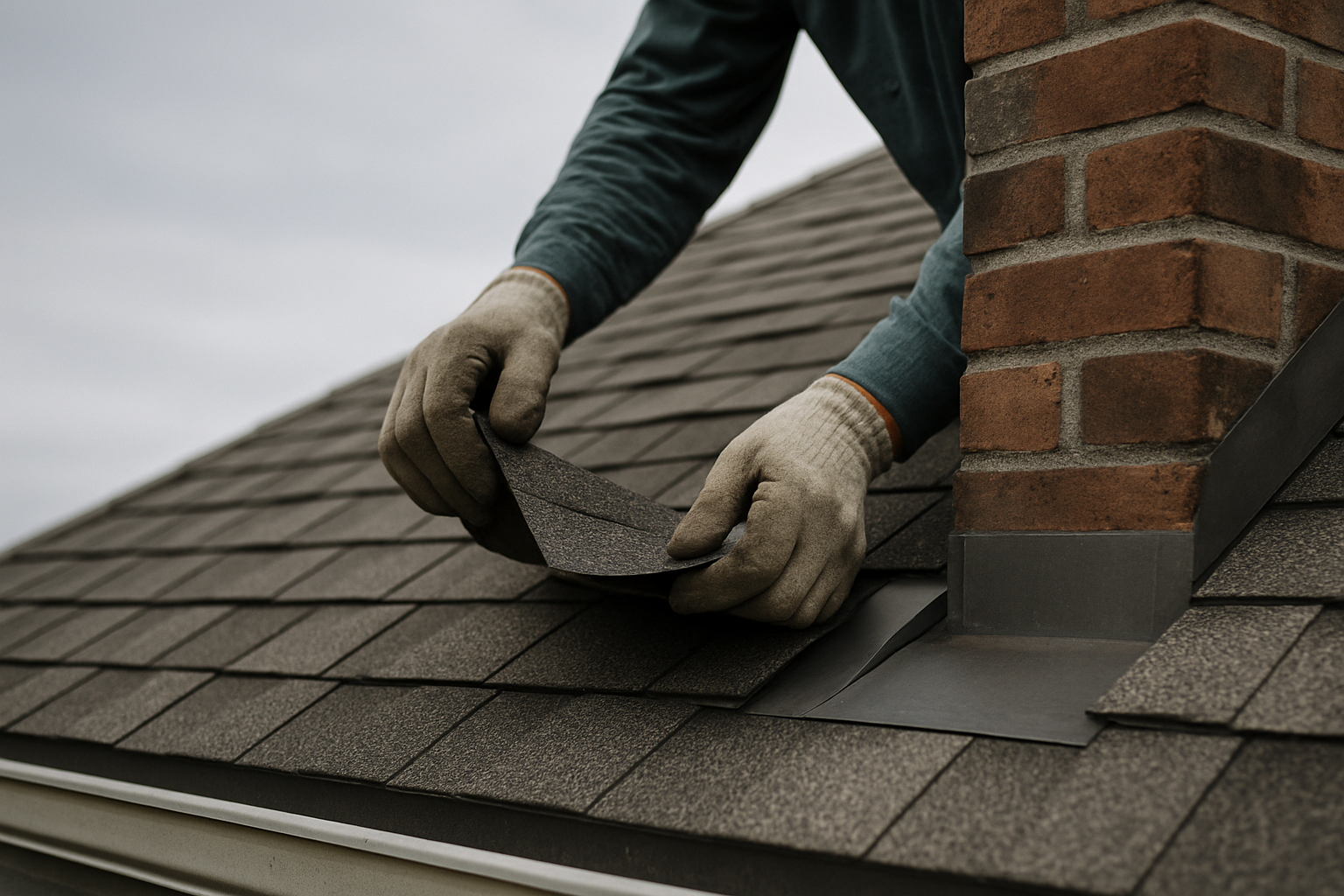
A roof warranty New Jersey homeowners receive is two separate promises, not one. The manufacturer's material warranty stands behind defects in the shingle or membrane itself and usually steps down in value as the roof ages. The contractor's workmanship warranty stands behind the installation, and it is worth only what is written on the contract. Manufacturer-certified installation is what keeps the first promise enforceable.
Most warranty confusion starts when those two documents are treated as a single "roof warranty." They are issued by different companies, cover different failures, and expire on different schedules. This page separates them, explains proration and transferability, and lists the questions to ask before you sign a New Jersey roofing contract.
The two warranties behind every New Jersey roof
A residential roof replacement in New Jersey produces two distinct warranty relationships, and they are easy to tell apart once you know what question each one answers.
The material warranty is issued by the manufacturer of the shingle, metal panel, or membrane. It is a promise that the product will not fail because of a manufacturing defect: premature granule loss, cracking, delamination, or a defect in the material itself. It does not promise that your roof will not leak, because a leak is usually an installation or flashing problem, not a material defect. The material warranty is the document that sits in the bundle wrapper or arrives as a certificate after the product is registered.
The workmanship warranty is issued by the installing contractor. It is a promise that the roof was installed correctly: the underlayment was lapped the right way, the flashing was cut and fastened properly, the nailing followed the manufacturer's pattern, and the details around chimneys, valleys, and pipe boots were built to shed water. If the roof leaks because of an installation error, this is the warranty that responds.
The two warranties answer different questions:
| Question | Material warranty | Workmanship warranty |
|---|---|---|
| Who issues it | Shingle, metal, or membrane manufacturer | Installing contractor |
| What it covers | Defects in the material itself | Errors in installation and detailing |
| What it does not cover | Storm damage, installation errors, neglected maintenance | Manufacturer defects, storm damage, normal aging |
| Who decides a claim | The manufacturer, usually after inspecting a sample | The contractor |
| What governs it | The manufacturer's written warranty certificate | The contractor's written warranty terms |
That last row is the practical point. A material claim is decided by the manufacturer under the certificate you were given. A workmanship claim is decided by the company that installed the roof, under the terms it wrote — or failed to write. When a homeowner says "I have a lifetime warranty," the next useful question is always: which document says that, and who is standing behind it?
Material warranty vs workmanship warranty: who stands behind what
The cleanest way to keep the roof warranty workmanship vs material question straight is to ask one thing: did the material fail, or did the installation fail?
A material defect is a problem with the product before it was nailed down. A shingle that cracks along its own laminate line, a membrane seam that separates because of a factory fault, or granule loss far beyond what the manufacturer's specification allows are material questions. The manufacturer stands behind those.
An installation defect is a problem created on the roof. A leak at a valley because the valley metal was not lapped correctly, a leak at a chimney because the counter flashing was not set into the mortar joint, or wind damage because the shingles were nailed outside the manufacturer's nailing line are installation questions. The contractor stands behind those.
The reason this distinction matters in New Jersey is the failure overlap. A leak is rarely labeled "material defect" or "installation error" on its face. The homeowner sees water in the bedroom. The manufacturer may say the shingle was installed wrong. The contractor may say the shingle was defective. Each points at the other, and the homeowner is in the middle with a wet ceiling.
That is why the documentation habit matters before any work begins. HappyRoof's stated process of providing a free inspection with photos and itemized written pricing creates a record of what was actually on the roof and what was actually replaced. A photo report that shows the flashing condition before the job, and a written scope that lists the tear-off, materials, permits, and disposal, are the evidence a homeowner needs if the two warranties later point at each other.
Coverage windows are harder to generalize than most homeowners expect. A shingle line marketed as "30-year" or "limited lifetime" does not automatically mean the manufacturer pays for a new roof in year 29 or year 49. The enforceable coverage is the schedule printed in the manufacturer's certificate, and the label on the bundle is only the marketing name. A workmanship warranty is usually shorter than the material warranty, but the term is whatever the contractor puts in writing. There is no statewide New Jersey rule that sets either number; the documents do.
Proration: why "30-year" and "lifetime" do not mean full replacement
Shingle warranty proration is the mechanism that makes a long material warranty pay far less than a homeowner assumes.
A prorated warranty pays a declining portion of the covered value as the roof ages. The manufacturer's certificate contains a schedule: an initial period at full material value, followed by years in which the covered percentage steps down. The dollar answer for any given year is that percentage applied to the manufacturer's stated material value — which is generally not your original contract price, because your contract price included labor, tear-off, disposal, permits, and other items the material warranty never covered.
The honest way to think about the dollar question is that the bundle label answers almost none of it. Two warranties can both carry the word "lifetime" and produce very different payouts, because three variables differ:
- The initial period covered at full value.
- The annual percentage after that period.
- The value the percentage is applied to.
None of those variables is visible on a bundle wrapper or a proposal summary. They are visible only in the manufacturer's written warranty certificate. Before you compare two roofing bids on warranty length alone, compare the certificates. A "50-year" shingle with a steep proration schedule may pay less in year 12 than a "30-year" shingle with a longer non-prorated initial period. The year on the label is not the schedule.
"Lifetime" also has a definition problem. In many shingle warranties, the certificate defines what "lifetime" means — frequently the period the original owner owns the home, or a defined number of years, and not "until the roof physically fails." A homeowner who plans to stay for a decade and then sell may be reading a "lifetime" label that converts to a much shorter transferred coverage window at the sale. The definition is in the certificate, and it is often not what the sales conversation implied.
The proration question is also where a workmanship warranty can be worth more than a material warranty, even when the workmanship term is shorter. A contractor that warrants its installation in writing for a defined period is warranting the part of the roof most likely to fail early: the details. If a flashing detail fails in year three, the workmanship warranty responds at full value, while a heavily prorated material warranty might pay little or nothing. The practical rule is to read both schedules, not the two marketing labels.
How to read a manufacturer's warranty certificate
The certificate, not the brochure, is the warranty. A certificate is usually a few dense pages, and most of the useful information sits in three places.
First, find the coverage schedule. This is the table or paragraph that states what percentage of the covered value is paid in each year. The words "full replacement" or "limited lifetime" in the header do not override the schedule beneath them.
Second, find the definition of "lifetime." If the certificate defines lifetime as the original owner's period of ownership, then the effective term for you depends on how long you stay in the home. If you sell, the transfer provisions take over.
Third, find the conditions and exclusions. The manufacturer will list what voids or limits coverage: installation that departs from the manufacturer's instructions, inadequate ventilation, improper substrate, or damage from events the certificate excludes. Those conditions are the reason installation quality and warranty validity are the same conversation.
The certificate is also where transferability is defined. The marketing brochure will not tell you whether a second owner receives a reduced period or whether the original owner must notify the manufacturer within a set time after closing. The certificate will. If the certificate has not been provided, ask for it before signing — a summary sheet is not the same document.
Transferability when you sell a New Jersey home
Roof warranty transferability is a selling question before it is a legal one. A buyer's home inspector and attorney will ask about the roof's age, remaining life, and warranty, and a seller who cannot answer those questions accurately is negotiating from a weaker position.
A material warranty is not automatically transferable. Many shingle manufacturers allow a transfer to a second owner, but the transfer usually has conditions: the original owner must notify the manufacturer within a defined period after closing, the second owner may receive a reduced coverage period, and the transfer may apply once rather than to every subsequent buyer. Whether those conditions exist for your roof is stated in the certificate, not in the sales brochure and not in the listing description.
A workmanship warranty transfers only if the contractor's written terms say it does. A verbal promise from a salesperson that "the warranty follows the house" is not a transfer provision. If the contractor's written warranty is silent on transfer, assume it does not transfer and ask the contractor to put the transfer language in writing before you sign.
For a seller, this changes the repair-or-replace decision directly. If the roof is near the end of its useful life and the warranty is not transferable, a buyer's inspection report may flag the roof as an immediate cost, and the buyer may ask for a credit or a replacement. If the roof has documented remaining life and a transferable material warranty, that is a selling point worth including in the disclosure.
The question "how many years are left" is a roof lifespan question, not a warranty question — the two overlap but are not the same. A roof can have years of serviceable life left and a nearly worthless prorated warranty, or the reverse. Sellers in Atlantic County should get the roof inspected with photos so they can answer both questions honestly, whether they are listing next month or planning two years out.
How installation errors can void a material warranty
This is the least understood part of roof warranties, and the one with the most money attached to it.
A shingle warranty is not a blanket promise. It is written against the manufacturer's installation instructions. The manufacturer promises the shingle will perform if it is installed the way the manufacturer specifies. When the installation departs from that specification, the manufacturer's position is usually that the failure was caused by the installation, not the product.
HappyRoof's replacement page puts the point bluntly: shingle warranties are written against the manufacturer's installation instructions, and if the nailing line, the starter course, or the ventilation is wrong, the warranty is theoretically intact and practically worthless.
That sentence is worth reading twice, because it explains the entire certified-installation discussion. The warranty document still exists. The homeowner still holds a piece of paper that says "limited lifetime." But when the claim is made, the manufacturer examines the roof and finds the shingles were nailed too high, or the starter course was omitted, or the attic never had enough intake and exhaust ventilation — and the claim is denied because the product was not installed to spec.
The installation errors that commonly put a material warranty at risk include:
- Nailing outside the manufacturer's nailing line or using the wrong fastener type.
- Skipping or misplacing the starter course at the eaves and rakes.
- Underdriving or overdriving fasteners so the shingle is not held correctly.
- Incorrect underlayment or ice-and-water shield coverage for the roof's exposure.
- Inadequate ridge and soffit ventilation that overheats the shingle field.
Each of those is a build detail, not a product defect. Each is also the kind of thing a homeowner cannot see from the ground after the job is finished. That is why the installer's training and certification matter more than the shingle's marketing label. The ventilation point deserves particular attention on coastal New Jersey homes: a roof specified for a subdivision in central Jersey is not specified for a bayfront house in Margate, and the details that keep a warranty valid are the same details that keep the attic dry and the shingles from cooking. Those details are covered in the guide to roof ventilation in Atlantic County, and the nailing and underlayment choices are laid out in the guide to asphalt shingle roof replacement in Atlantic County.
Why manufacturer-certified installation matters in New Jersey
Manufacturer certified installation warranty NJ discussions usually start and end with a logo on a website. The useful question is what the certification actually documents.
HappyRoof states that it installs GAF, Owens Corning, CertainTeed, Atlas, TAMKO, and Malarkey product lines and holds manufacturer certification. On the replacement page, the company explains why that matters: certification is the paperwork that says the crew was trained to the spec the warranty depends on.
That is the correct framing. A manufacturer certification is not a warranty upgrade, and it is not a different shingle. It is evidence that the installing crew has been trained on the specific product line's installation requirements — the nailing pattern, the starter course, the ventilation assumptions, the flashing details — so that the work matches the document the warranty is written against.
When a homeowner hires an uncertified crew to install a shingle line, the shingle still carries a material warranty. But the homeowner has no documentation that the crew knew the product's installation spec. If the roof fails, the manufacturer's investigation is more likely to find an installation departure, and the homeowner is left arguing with a contractor rather than holding a manufacturer to its certificate.
For New Jersey homeowners, the practical test is not "does the contractor say it is certified," but "will the contractor put the certification and the workmanship warranty in writing." HappyRoof's stated process includes itemized written pricing before work starts, with the municipal permit pulled and the township inspection scheduled as part of the job. Those documents — the permit, the inspection record, and the written warranty — are the paper trail a claim depends on.
Workmanship warranty in writing vs a verbal promise
Roofing has a reputation problem, and part of that reputation is built on verbal warranties that evaporate the first time a leak appears.
A verbal promise is not a workmanship warranty roof NJ homeowners can enforce. It is a sales sentence. If the contractor will not put the term, scope, exclusions, and transfer language in writing, the homeowner does not have a warranty — the homeowner has a memory of a conversation, and the contractor may have a different memory.
A written workmanship warranty should answer at least these questions:
- What is the term in years, and when does it start?
- Does it cover labor only, or labor and replacement materials?
- Is it prorated, or full value for the whole term?
- Which details are included: flashing, valleys, pipe boots, ridge, and decking?
- What is excluded: storm damage, foot traffic, alterations, neglect?
- Who performs the repair work if the original contractor is unavailable?
- Does it transfer to a new owner, and under what conditions?
HappyRoof states that it provides a workmanship warranty in writing on every installation. That statement, standing alone, is a start — but a homeowner should still read the document and ask the follow-up questions above before signing. A one-page written warranty that answers all of them is worth more than a ten-page material certificate the homeowner never reads.
The written-warranty requirement also disciplines the contractor. A company willing to put its workmanship term in writing is making a promise it expects to be held to. A company that keeps the warranty verbal is keeping its obligations vague on purpose, and that is a signal about how it will behave if the roof leaks in year four.
What to ask before signing a New Jersey roofing contract
Before you sign, get these in writing:
- The manufacturer's warranty certificate for the exact product line being installed, not a summary sheet.
- The contractor's written workmanship warranty, with term, scope, and exclusions.
- Itemized pricing that separates labor, materials, disposal, permits, and the per-sheet rate for any decking replacement.
- Confirmation of who pulls the municipal permit and schedules the township inspection.
- The transferability terms of both warranties, in writing.
- A written answer on whether the installation follows the manufacturer's nailing and ventilation specifications for your street's exposure.
Do not accept a warranty discussion that stays at the level of "it's a lifetime roof." The phrase contains no enforceable information. The enforceable information is in the certificate, the written warranty, and the contract. The material choice itself — standing seam metal versus architectural asphalt shingles — is a separate decision that affects both the roof's service life and the warranty documents that come with it, and it is worth making before the warranty conversation, not after.
New Jersey code, permits, and the two-layer rule
Warranty validity and code compliance are different things, but they interact in ways that matter to a claim.
New Jersey's adopted building code limits a roof to two layers of covering. An overlay — nailing new shingles over the existing layer — may look like a money-saver, but once a second layer is on, the next roof must be a full tear-off regardless. An overlay also adds weight to the structure and hides the decking, which means the decking cannot be inspected before new material goes down.
That matters to warranties in two ways. First, a manufacturer's installation instructions generally assume a proper substrate; a roof installed over a deteriorated or flexing deck may fail in ways the manufacturer attributes to the substrate, not the shingle. Second, a full tear-off lets the installer inspect every square foot of sheathing and replace damaged decking before the new roof goes on, which is the kind of documentation that supports a later warranty claim.
HappyRoof states that it performs a full tear-off to the bare deck on replacements, so every square foot of sheathing gets inspected before new material goes down, and that it pulls the municipal permit and schedules the township inspection as part of the job. A permitted, inspected replacement creates a public record of what was done and when. That record is useful if a warranty claim or an insurance claim later turns on the roof's condition and history.
Storm damage is an insurance question, not a warranty question
One of the most common New Jersey warranty misunderstandings is the assumption that a "lifetime" roof warranty covers a nor'easter.
It does not. A material warranty covers manufacturing defects. A workmanship warranty covers installation errors. Neither is an insurance policy. Wind, hail, flying debris, and storm-driven water are insurance claims against a homeowners policy, not warranty claims against a shingle manufacturer or a contractor.
That distinction changes what a homeowner should do after a storm. Document the damage, have the roof inspected with photos, and meet with the adjuster with that documentation in hand. HappyRoof states that it provides emergency tarping for active leaks and storm damage and that it documents insurance claims and meets with adjusters. The company also warns, correctly, that New Jersey prohibits a contractor from absorbing or waiving a deductible — conduct that can lead to criminal charges, civil penalties, claim denial, and policy cancellation. A contractor offering to "cover the deductible" is not doing the homeowner a favor; it is proposing conduct that can cost the homeowner the claim. For the step-by-step sequence after a storm, see the guide to New Jersey roof storm damage insurance claims.
The overlap between warranty and insurance is worth stating plainly: a roof that fails because of a storm is an insurance matter, and a roof that fails because of a bad flashing detail is a warranty matter. The same photo documentation supports both. That is why the inspection habit before and after any event is the cheapest form of protection a homeowner has.
What HappyRoof states about its own warranties
The claims on this page about HappyRoof are limited to what the company states on its own site.
HappyRoof states that it is a New Jersey licensed and insured roofing contractor serving Atlantic County, and that it provides manufacturer-certified installation so material warranties stay valid. It states that it installs GAF, Owens Corning, CertainTeed, Atlas, TAMKO, and Malarkey product lines and holds manufacturer certification. It states that every installation carries a workmanship warranty in writing.
It does not publish specific warranty terms, transfer windows, or named manufacturer certification levels on the pages reviewed. A homeowner should therefore not infer a particular warranty duration or coverage amount from the statements above. The correct next step is to ask for the manufacturer's certificate for the exact product line proposed and the contractor's written workmanship warranty, and to read both before signing.
What HappyRoof does publish, consistently, is a process that supports warranty claims: a free inspection with photos, itemized written pricing before work starts, municipal permits pulled and inspections scheduled, a full tear-off to the bare deck, and full-property cleanup including a magnet sweep for nails. Those are not warranty terms — but they are the documentation and build practices that make a warranty claim possible to prove. A manufacturer's certificate is only as strong as the installation it describes, and a workmanship warranty is only as strong as the contractor's willingness to write it down.
New Jersey roof warranty FAQ
What is the difference between a roof material warranty and a workmanship warranty?
A material warranty comes from the shingle or membrane manufacturer and covers defects in the product itself. A workmanship warranty comes from the installing contractor and covers errors in how the roof was installed. They are separate documents with different decision-makers: the manufacturer decides material claims, and the contractor decides installation claims. Most roof failures sit somewhere between the two, which is why documentation matters.
Does a "lifetime" shingle warranty mean the roof is covered for life?
Not usually in the way homeowners expect. "Lifetime" is a marketing label; the enforceable definition is in the warranty certificate, and coverage is typically prorated. The certificate may define lifetime as the original owner's period of ownership or a set number of years. Read the definition and the coverage schedule before comparing warranties.
Is a roof warranty transferable when I sell my New Jersey home?
Sometimes, but never automatically. Material warranties often allow a one-time transfer to a second owner, usually with a shorter coverage period or a requirement to notify the manufacturer within a set time after closing. A workmanship warranty transfers only if the contractor's written terms say it does. Ask for both documents before listing or closing.
Can an installation error void my shingle warranty?
Yes. Shingle warranties are written against the manufacturer's installation instructions. If the nailing line, starter course, or ventilation is wrong, the manufacturer can deny a material claim even though the warranty document still exists. That is why manufacturer-certified installation matters: it is evidence the crew was trained to the specification the warranty depends on.
What should I get in writing before signing a New Jersey roofing contract?
Get the workmanship warranty term and scope in writing, plus itemized pricing that separates labor, materials, disposal, and any decking replacement. Confirm who pulls the municipal permit and schedules the inspection, whether the warranty transfers, and what it excludes. A verbal promise about a warranty is not a warranty.
Does a roof warranty cover storm damage in New Jersey?
No. A material or workmanship warranty is not an insurance policy. Wind, hail, and storm damage are insurance claims, not warranty claims. Document damage immediately, have the roof inspected, and meet with your adjuster. Never let a contractor absorb or waive your deductible; New Jersey law prohibits it.
Frequently asked questions
What is the difference between a roof material warranty and a workmanship warranty?
A material warranty comes from the shingle or membrane manufacturer and covers defects in the product itself. A workmanship warranty comes from the installing contractor and covers errors in how the roof was installed. They are separate documents with different decision-makers: the manufacturer decides material claims, and the contractor decides installation claims. Most roof failures sit somewhere between the two, which is why documentation matters.
Does a "lifetime" shingle warranty mean the roof is covered for life?
Not usually in the way homeowners expect. "Lifetime" is a marketing label; the enforceable definition is in the warranty certificate, and coverage is typically prorated. The certificate may define lifetime as the original owner's period of ownership or a set number of years. Read the definition and the coverage schedule before comparing warranties.
Is a roof warranty transferable when I sell my New Jersey home?
Sometimes, but never automatically. Material warranties often allow a one-time transfer to a second owner, usually with a shorter coverage period or a requirement to notify the manufacturer within a set time after closing. A workmanship warranty transfers only if the contractor's written terms say it does. Ask for both documents before listing or closing.
Can an installation error void my shingle warranty?
Yes. Shingle warranties are written against the manufacturer's installation instructions. If the nailing line, starter course, or ventilation is wrong, the manufacturer can deny a material claim even though the warranty document still exists. That is why manufacturer-certified installation matters: it is evidence the crew was trained to the specification the warranty depends on.
What should I get in writing before signing a New Jersey roofing contract?
Get the workmanship warranty term and scope in writing, plus itemized pricing that separates labor, materials, disposal, and any decking replacement. Confirm who pulls the municipal permit and schedules the inspection, whether the warranty transfers, and what it excludes. A verbal promise about a warranty is not a warranty.
Does a roof warranty cover storm damage in New Jersey?
No. A material or workmanship warranty is not an insurance policy. Wind, hail, and storm damage are insurance claims, not warranty claims. Document damage immediately, have the roof inspected, and meet with your adjuster. Never let a contractor absorb or waive your deductible; New Jersey law prohibits it.