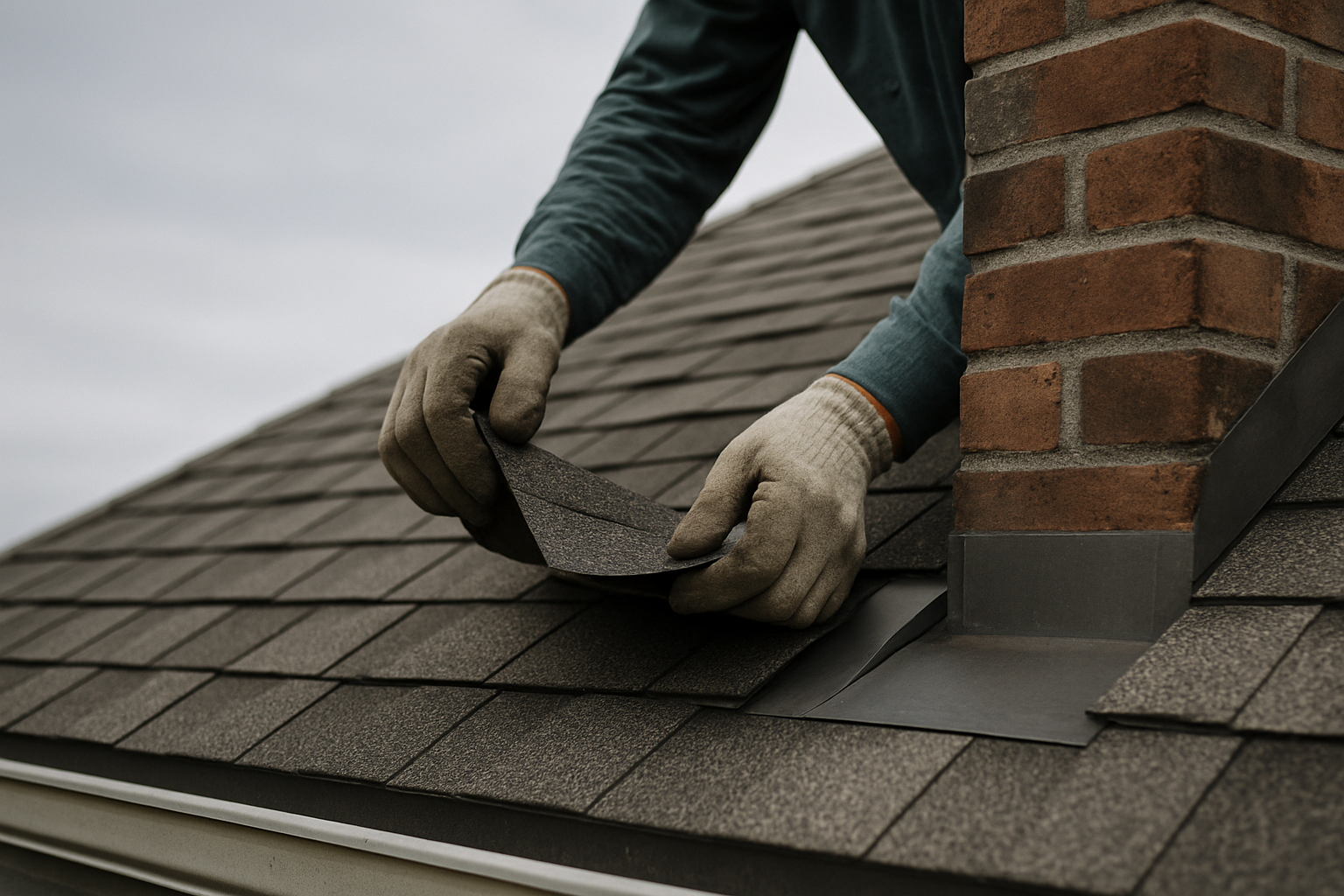
Roofing in Mays Landing NJ has to address the Great Egg Harbor River corridor, older county-seat housing, and subdivisions built across several decades. The correct scope depends on floodplain rules, tree cover, roof age, and construction era. HappyRoof provides repair, replacement, storm work, and free roof inspections to Mays Landing and Hamilton Township homeowners.
What roofing in Mays Landing NJ actually has to solve
Mays Landing is not a single roof type. It is the county seat of Atlantic County, and the surrounding Hamilton Township neighborhoods sit between two distinct roofing worlds. Some homes are older and historic. Others are recent subdivision construction. Still others are mid-century houses that have already been re-roofed once or twice, often with different materials and different levels of workmanship.
That mixed-age housing stock means a roof decision in Mays Landing cannot be reduced to "tear it off and put shingles back." The right scope depends on the house, the roof's construction era, the tree cover around it, and whether the property sits in or near the Great Egg Harbor River floodplain or a tributary corridor.
Three forces shape most Mays Landing roof work:
- River and stream-corridor moisture, which changes underlayment and flashing priorities.
- Older and historic housing fabric, where roof geometry, sheathing, chimneys, and sidewalls create repair points that newer homes do not have.
- Mixed-age subdivisions, where some roofs need repair and ventilation correction while others need full replacement.
The common mistake is to treat every roof the same way. A roof specified for a newer open-lot subdivision is not automatically the right roof for a shaded river-corridor lot with mature trees, and an older home needs a different inspection than a roof installed in the last two decades.
River corridor, not barrier island: how the exposure differs
Mays Landing sits inland along the Great Egg Harbor River. That is a different exposure from Atlantic County's barrier-island towns. The difference matters because it changes which parts of the roof fail first and what a replacement should emphasize.
A barrier-island roof faces salt spray, sustained coastal wind, and wind-driven rain during nor'easters. A river-corridor roof in Mays Landing faces more humidity, fog, heavy rain, and tree debris. Salt air is less constant than on the oceanfront, but wind still drives rain into flashings and sidewalls during coastal storms.
The table below separates the two exposures.
| Factor | Great Egg Harbor River corridor | Atlantic County barrier island |
|---|---|---|
| Dominant moisture | Humidity, fog, river floodplain moisture, heavy rain | Salt spray, wind-driven rain, coastal fog |
| Wind | Gusty during storms, less constant salt loading | More sustained coastal wind and salt exposure |
| Debris | Leaves, twigs, pine needles, seed pods | Sand, salt film, less tree litter |
| Primary roof priorities | Drainage, valley and gutter performance, deck protection, ventilation | Corrosion-resistant flashing, drip edge, uplift-resistant fastening |
| Flashing emphasis | Step and counter flashing at sidewalls, valley metal, pipe boots | Corrosion-resistant metals, drip edge, ridge and rake details |
The practical takeaway is that a Mays Landing roof should not be built or repaired as if it were an oceanfront roof. Salt-resistant materials may matter less, while leaf load, drainage, and long periods of dampness matter more. The roof still has to handle a nor'easter, but the everyday failure points are more likely to be valleys, gutters, flashings, and ventilation than salt corrosion.
Great Egg Harbor River and stream-corridor flood-zone implications for roof and flashing scope
The Great Egg Harbor River and its tributaries put some Mays Landing properties in or near mapped flood hazard areas. That affects the permit process and the scope of a roof project, even when the roof itself is not the reason for the flood risk.
The roofing contractor's job is not to determine the flood zone. That determination comes from flood maps and the local construction office. The contractor's job is to make sure the roof scope matches what the permit process requires and what the structure actually needs.
If a property is in a mapped floodplain, a roof replacement may trigger floodplain review as part of the construction permit. The local office may ask for documentation before issuing the permit. The owner should expect the process to be the same shape as anywhere else in Atlantic County: application, permit issued, work performed, inspection, permit closed. What varies is what the township asks for along the way.
Flood-zone work also changes how a roofer thinks about the roof-to-wall connections. A river-corridor home may have additions, porches, dormers, or lower roof sections that meet walls at awkward angles. Those transitions are where wind-driven rain enters during a storm. Step flashing and counter flashing have to be correct at every sidewall, chimney, and change in plane. Valley metal has to carry water without backing up.
The deck is another flood-zone consideration. A roof that has been wet repeatedly may have sheathing that looks sound from below but has lost fastener grip. When a full tear-off is done, the deck can be inspected and replaced where needed. That is one reason a full tear-off is the default for replacement: it exposes what the floodplain moisture and tree cover have been doing to the roof deck.
Underlayment matters along the river corridor. Ice-and-water shield at eaves, valleys, and roof-to-wall intersections protects against wind-driven rain and water backup. Drip edge at the eaves and rakes directs water away from the fascia. These are not optional details on a shaded river-corridor roof; they are the difference between a roof that sheds water and one that lets water sit where it can find a seam.
Older and historic county-seat housing: what changes
Mays Landing's older housing stock changes the inspection and repair logic. A newer home usually has a simple roof shape: a main gable, maybe a front porch, and predictable flashing points. An older home may have steeper pitches, multiple roof planes, dormers, chimneys, and original framing that was never designed for modern roof ventilation.
When inspecting an older Mays Landing home, the first question is what is actually under the shingles. The roof may have board sheathing or skip sheathing rather than modern plywood or oriented strand board. It may have more than one layer of roofing. The framing may have settled enough that roof planes no longer meet cleanly at valleys or sidewalls. None of that can be assumed from the street; it has to be confirmed before a written price is produced.
Older homes also concentrate failures at the transitions:
- Chimney flashing and counter flashing, especially on masonry chimneys that have absorbed decades of rain.
- Step flashing at sidewalls, where siding or stucco meets the roof.
- Valley metal, where two roof planes concentrate water.
- Pipe boots and vent collars, which dry out and crack with age.
- Ridge and eave ventilation, which is often undersized or missing.
The repair priority on older housing is usually flashing and water management first. The roof covering may still have life, but the flashings and drainage details have failed. A roofer who patches the stain inside instead of finding the actual source is not solving the problem. The correct work is to trace the leak to the transition, repair the flashing or valley, and only replace the roof if the covering and deck have reached the end of their service life.
Newer subdivision homes in Hamilton Township: a different roof logic
Newer subdivision homes in the Hamilton Township area present a different pattern. The roof is often a straightforward architectural asphalt shingle roof with a ridge vent, synthetic or felt underlayment, and factory-built trusses. The geometry is simpler, but the failure points are still predictable.
The mainland communities in Atlantic County tend to produce repairs that skew toward flashing, boots, and ventilation corrections on roofs installed in the last two decades. Mays Landing sits between that newer housing stock and the older county-seat homes, so the inspection has to sort which category the house belongs to.
On a newer roof, the shingle field may look fine while the roof leaks. Common findings include:
- Pipe boots that have dried and cracked.
- Step flashing that was not properly integrated with the housewrap or siding.
- Ridge vents without enough intake air at the soffits.
- Nail placement that is too high or overdriven.
- Valley metal that is undersized or incorrectly lapped.
- Exhaust fans discharging into the attic instead of through the roof.
A newer roof with a leak is not automatically a replacement candidate. The right first step is a roof inspection that shows what is actually there. If the shingle field is intact and the deck is dry, the repair may be limited to the failed flashing, boot, or ventilation detail. If the leak has been running long enough to wet the insulation or deck, the scope grows.
Mixed-age subdivisions and re-roof timing by construction era
Mixed-age subdivisions are one of the defining features of Mays Landing. On the same street, one house may have been built decades ago and re-roofed twice, while the next house is new construction. That means re-roof timing is not uniform by neighborhood; it is uniform by roof age and condition.
The age of the roof matters more than the age of the house. But the house's construction era tells the inspector what to expect when the roof comes off.
| Construction era | What the roof scope tends to include | What the inspection must verify |
|---|---|---|
| Older and historic housing | Steeper pitches, dormers, chimneys, possible board or skip sheathing, multiple roof layers | Sheathing type and condition, flashing at every transition, ventilation, existing roof layers |
| Mid-century to late-century subdivisions | Older framing, possible original sheathing, roofs likely re-covered at least once | Deck condition, rafter spacing, underlayment, whether an overlay is hiding damage |
| Roofs installed in the last two decades | Architectural shingles, ridge vents, newer underlayment | Pipe boots, step flashing, intake and exhaust ventilation, nailing, valley metal |
| New construction | Modern materials and simple geometry, but installation quality varies | Early installation defects, flashing integration, manufacturer installation details |
The practical rule for Mays Landing is to let the inspection sort the category. A roof that is leaking at a pipe boot does not need a full replacement if the shingle field is sound. A roof with widespread granule loss, curling shingles, failed flashing, and wet deck does. The inspection exists to tell the homeowner which situation they are in before any work is priced.
Mature tree cover, leaf load, and valley and gutter stress
Tree cover is not a background detail in Mays Landing. Mature trees along the Great Egg Harbor River corridor drop leaves, needles, twigs, and seed pods onto roofs for months at a time. That debris load changes the roof's behavior.
Leaves collect in valleys first. A valley is already the highest-volume water path on the roof. When leaves pack into it, water backs up behind the debris dam and can travel sideways under the shingles. That is why valley metal, correct underlayment, and clean valleys matter more on shaded river-corridor roofs than on open-lot roofs.
The same debris load hits gutters and downspouts. A gutter full of Pine Barrens leaf load cannot move heavy shore rain away from the foundation. The result is overflow at the eaves, water running behind the gutter, and fascia or soffit damage. Downspouts that are undersized for the roof area or clogged at the elbow make the problem worse.
Gutter guards are not a universal fix, but they are worth evaluating on heavily treed lots. Seamless gutters reduce the number of joints where debris can catch and leak. Downspout runs need to be sized to the roof area and the leaf load, not just to the house's footprint.
The roof itself also needs ventilation in a tree-covered setting. Shaded roofs dry more slowly after rain. If the attic is not vented correctly, moisture lingers and can condense on the underside of the deck. The result is the homeowner who says, "My insulation is wet but I cannot find a hole in the roof." That is often a ventilation problem, not a leak. A proper inspection separates the two.
What a roof inspection in Mays Landing NJ should cover
A roof inspection in Mays Landing NJ should be more than a visual walk across the shingles. It should produce a written answer about what the roof needs, without pressure to sell a replacement when one is not needed.
HappyRoof provides free roof inspections. That means the inspection covers:
- Roof covering condition, including granule loss, curling, missing shingles, and impact marks.
- Flashing at chimneys, sidewalls, skylights, and roof-to-wall transitions.
- Valleys and the condition of valley metal.
- Pipe boots, vent collars, and other penetrations.
- Ridge and soffit ventilation, including whether intake and exhaust are balanced.
- Attic evidence of wet deck, wet insulation, or condensation.
- Gutters and downspouts for debris load, slope, and discharge.
- Deck condition where visible or where a tear-off will expose it.
The inspection should answer three questions: Is the roof leaking or likely to leak soon? Is the failure repairable, or is it time for replacement? What is the remaining life if nothing is done now?
HappyRoof's position is that if a roof has ten good years left, the homeowner should hear that. The inspection is not a sales appointment. It is the evidence base for a written proposal or a written repair scope.
Roof replacement scope for river-corridor homes
When roof replacement is the right call, the scope for a Mays Landing home should be written around the river-corridor conditions, not copied from a generic Atlantic County roof.
A full replacement starts with a tear-off. That exposes the deck so rotted or water-damaged sheathing can be replaced before new underlayment goes down. Overlaying new shingles over an existing roof hides deck damage and can trap moisture that is already in the roof system.
The replacement package should include:
- New underlayment appropriate for the roof pitch and exposure.
- Ice-and-water shield at eaves, valleys, and roof-to-wall intersections.
- Drip edge at the eaves and rakes.
- Step flashing and counter flashing at sidewalls and chimneys.
- Valley metal that can carry the water volume from the roof planes above.
- New pipe boots and vent collars at every penetration.
- Ridge and soffit ventilation that actually balances intake and exhaust.
- A roof covering sized, vented, and flashed correctly for the coastal climate.
HappyRoof installs asphalt shingle and metal roofs. The choice depends on the home, the roof geometry, the exposure, and the owner's priorities. The written price is itemized before work starts, so the homeowner can see what is included and what is not.
The installation should be manufacturer-certified so the material warranties stay valid.
Mays Landing roof repair priorities
Mays Landing roof repair is usually a diagnostic job, not a patch job. The goal is to find the actual source of water entry and correct it, not to paint a stain or caulk a seam that will fail again.
The most common repair targets in the Mays Landing area follow the housing mix. On newer roofs installed in the last two decades, the repairs skew toward flashing, boots, and ventilation corrections. On older homes, the repairs also include chimney flashing, sidewall step flashing, valleys, and deck issues found during the work.
A repair scope should be written after the inspection, not before. If a leak shows up on a ceiling, the water may have traveled from a pipe boot, a valley, a chimney, or a sidewall. The only way to write a correct repair is to trace the path. The repair then becomes:
- Remove the failed flashing or boot and replace it correctly.
- Re-lap the valley metal so water does not back up.
- Correct the ventilation so condensation stops.
- Replace only the damaged shingles or deck section.
- Seal the transition so the leak does not return.
When a repair is no longer the right financial or structural decision, the inspection should say that too. The homeowner needs the repair-or-replace answer, not a series of small patches that add up to a new roof without the new roof's warranty.
Storm and wind damage, emergency tarping, and insurance
Mays Landing sits far enough inland that it does not take the worst of the oceanfront salt and surf, but it still takes nor'easter wind, heavy rain, and tree-fall damage. Wind can lift shingles, break seals, and drive rain through flashings that were already marginal.
After a storm, the first priority is to stop water from entering the home. Emergency tarping is available outside normal business hours. A tarp is not a repair, but it prevents the damage from growing while a full scope is written.
The second priority is documentation. HappyRoof documents storm damage to support the homeowner's insurance claim. The company does not act as a public adjuster or legal advisor, but it can document the damage and help make sure the claim file reflects the actual roof condition.
One point matters in New Jersey: any offer to absorb or waive a homeowner's insurance deductible should be treated as a red flag. The correct process is an honest repair or replacement scope, documented damage, and a claim that reflects the real work.
Gutters, downspouts, and Pine Barrens leaf load
Gutters are part of the roof system, not a separate afterthought. On a Mays Landing lot with mature trees, a well-installed shingle roof can still fail at the foundation because the gutters cannot move the water away.
Seamless gutters reduce the joints where debris catches and water leaks. Gutter guards help on heavily treed lots, but they need to be matched to the debris type. Pine needles behave differently from broad leaves, and a guard that works for one may not work for the other.
Downspouts should discharge where water can flow away from the foundation, not into a flower bed against the foundation wall. On river-corridor lots with high groundwater, that discharge detail matters even more.
HappyRoof installs seamless gutters, guards, and downspout runs that are intended to move Pine Barrens leaf load and heavy shore rain away from the foundation. The gutter scope should be part of the same inspection as the roof, because the two systems fail together.
Permits and inspections in the county seat
New Jersey requires a construction permit for a roof replacement. The requirement is not optional or negotiable based on how busy the township is. In Mays Landing and the surrounding Hamilton Township area, the process follows the same shape as the rest of Atlantic County: application, permit issued, work performed, inspection by the municipal inspector, permit closed.
Each Atlantic County municipality runs its own construction office, so filing details and lead times vary. The homeowner should expect the permit to be part of the job, not an add-on. A contractor who suggests skipping the permit is asking the homeowner to carry the risk of an unpermitted roof.
The municipal inspection is not the same as the roofing crew's quality inspection. The municipal inspector checks for code compliance and closes the permit. The roofing crew is responsible for the flashing details, ventilation, deck condition, and workmanship that determine whether the roof actually performs.
For a roof repair, the permit question depends on the scope. A minor repair may not require the same permit process as a replacement, but the local construction office is the authority. HappyRoof works on the record, with written pricing and the permit process handled as part of the replacement.
Scheduling and what drives lead times
Scheduling for Mays Landing roof work depends on several things that cannot be promised until the inspection is done.
- Municipal permit processing time, which varies by township workload.
- Weather windows, because a tear-off cannot be left exposed overnight during rain.
- Deck condition discovered during the tear-off, which may add a repair day.
- Material availability from the supplier for the specified system.
- Crew capacity and the number of active jobs in the area.
Emergency tarping is available outside normal business hours. A homeowner who needs a storm tarp should not wait for the next business day.
The honest scheduling answer is that the inspection comes first, the written scope comes second, and the schedule is set once the permit, materials, and weather align. A contractor who promises a precise start date before seeing the roof is guessing.
What to have ready for a roof inspection or quote
A homeowner in Mays Landing can make the inspection more useful by having a few facts ready:
- The property address and the year the roof was last replaced, if known.
- The location of any interior stains, even if they have dried.
- Any prior inspection reports, repair invoices, or insurance claim documents.
- Access to the attic, if the home has one, so the inspector can check the underside of the deck.
- A note of any rooms that feel damp or smell musty after rain.
- The insurance claim number if the visit is storm-related.
The inspector does not need the homeowner to climb the roof or move furniture. The useful information is what the homeowner has observed from inside the house, because that is the half of the leak the roofer cannot see from the top.
Roofing Mays Landing NJ: questions homeowners ask
Do I need a permit to replace a roof in Mays Landing?
Yes. New Jersey requires a construction permit for a roof replacement, and the requirement is not optional. The process follows the same shape as the rest of Atlantic County: application, permit issued, work performed, inspection by the municipal inspector, and permit closed. Hamilton Township runs its own construction office, so filing details and lead times vary, but the permit itself is part of the job.
How is roofing near the Great Egg Harbor River different from the barrier islands?
A river-corridor roof faces more humidity, heavy rain, and tree debris than a barrier-island roof, and less constant salt spray. The failure points shift toward valleys, gutters, flashing, and ventilation. A barrier-island roof emphasizes corrosion-resistant flashing and uplift resistance. A Mays Landing roof still needs storm-ready flashing, but the everyday priority is drainage and leaf load.
My roof is only 15 years old but leaking. Do I need a full replacement?
Not necessarily. On roofs installed in the last two decades, many leaks come from pipe boots, step flashing, valley metal, or ventilation problems rather than a failed shingle field. The correct first step is a roof inspection that traces the actual source. If the shingle field and deck are sound, the repair may be limited to the failed detail.
Do you charge for a roof inspection in Mays Landing?
No. HappyRoof provides free roof inspections. The inspection is designed to give an honest answer on repair, replacement, or remaining life, and it includes a written price only if work is needed. If the roof has good years left, that is what the homeowner hears.
Can you document storm damage for my insurance claim?
Yes. HappyRoof documents storm and wind damage to support the insurance claim. The company does not act as a public adjuster or legal advisor, but it documents the damage and the actual roof condition. Emergency tarping is available to stop water entry while the claim is opened.
Does mature tree cover mean I need gutter guards?
Not automatically, but tree cover changes the gutter and valley calculation. Leaves and pine needles collect in valleys and gutters, and a clogged valley can back water under the shingles. On a heavily treed Mays Landing lot, seamless gutters, properly sized downspouts, and guards matched to the debris type are worth evaluating as part of the roof inspection.
Get a free roof inspection in Mays Landing
The first step is not a quote. It is an inspection that shows what is actually happening on the roof. HappyRoof serves Mays Landing and the surrounding Hamilton Township area with roof replacement, roof repair, storm and wind damage work, emergency tarping, gutters, and siding.
Call (609) 525-4521 or visit the shop at 611 Doughty Rd, Pleasantville, NJ 08232. Emergency tarping is available outside normal business hours. The inspection is free, and the answer is based on what the roof actually needs.
Frequently asked questions
Do I need a permit to replace a roof in Mays Landing?
Yes. New Jersey requires a construction permit for a roof replacement, and the requirement is not optional. The process follows the same shape as the rest of Atlantic County: application, permit issued, work performed, inspection by the municipal inspector, and permit closed. Hamilton Township runs its own construction office, so filing details and lead times vary, but the permit itself is part of the job.
How is roofing near the Great Egg Harbor River different from the barrier islands?
A river-corridor roof faces more humidity, heavy rain, and tree debris than a barrier-island roof, and less constant salt spray. The failure points shift toward valleys, gutters, flashing, and ventilation. A barrier-island roof emphasizes corrosion-resistant flashing and uplift resistance. A Mays Landing roof still needs storm-ready flashing, but the everyday priority is drainage and leaf load.
My roof is only 15 years old but leaking. Do I need a full replacement?
Not necessarily. On roofs installed in the last two decades, many leaks come from pipe boots, step flashing, valley metal, or ventilation problems rather than a failed shingle field. The correct first step is a photo inspection that traces the actual source. If the shingle field and deck are sound, the repair may be limited to the failed detail.
Do you charge for a roof inspection in Mays Landing?
No. HappyRoof provides free roof inspections with photos of what the crew actually finds. The inspection is designed to give an honest answer on repair, replacement, or remaining life, and it includes a written price only if work is needed. If the roof has good years left, that is what the homeowner hears.
Can you document storm damage for my insurance claim?
Yes. HappyRoof documents storm and wind damage to support the insurance claim and can meet the adjuster. The company does not act as a public adjuster or legal advisor, but it photographs the damage and documents the actual roof condition. Emergency tarping is available outside normal hours to stop water entry while the claim is opened.
Does mature tree cover mean I need gutter guards?
Not automatically, but tree cover changes the gutter and valley calculation. Leaves and pine needles collect in valleys and gutters, and a clogged valley can back water under the shingles. On a heavily treed Mays Landing lot, seamless gutters, properly sized downspouts, and guards matched to the debris type are worth evaluating as part of the roof inspection.