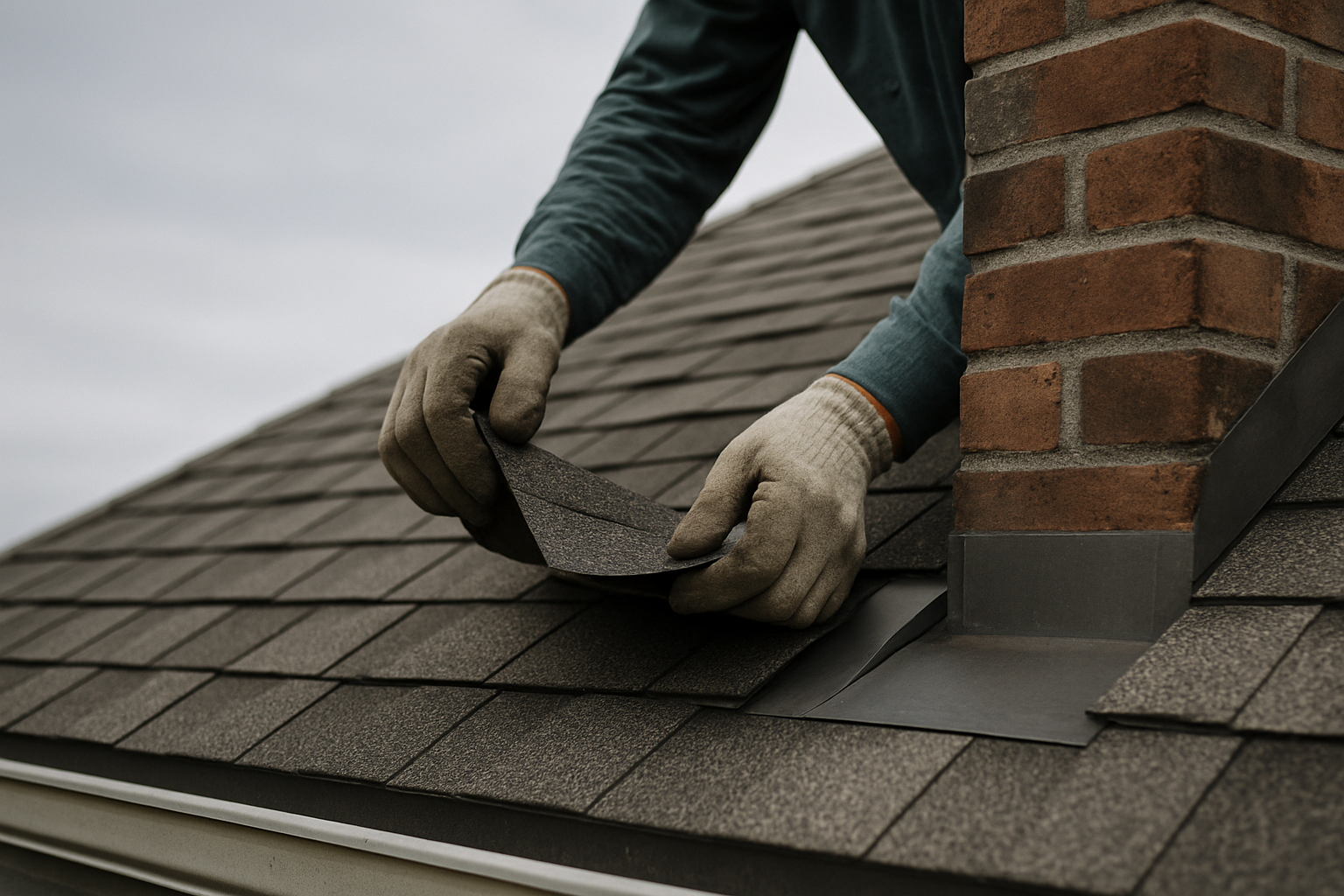
Prepare an Atlantic County roof before hurricane and nor'easter season by inspecting shingle seals, flashing, ridge and edge metal, and fasteners; clearing gutters and drainage; and taking date-stamped photos of the roof's pre-storm condition. Address any loose or failing element before a named storm, because a marginal roof is the one that fails first.
This is a pre-season guide, not a post-storm response plan. Everything here happens on a dry, calm day, when there is still time to fix a lifted shingle before it becomes a missing one. This roof hurricane preparation guide is written for New Jersey's coastal wind, salt air, and heavy shore rain rather than generic storm advice. HappyRoof serves every town in Atlantic County, and the inspection matters when it turns up something that needs attention before the wind does.
Why Atlantic County roofs fail before the storm, not during it
Hurricane season officially runs from June through November. Nor'easter season overlaps it and extends well past it. In practice, Atlantic County sees three pressure points each year: late-summer tropical systems, the fall and winter coastal lows that stall offshore, and the spring wind events that finish off shingles already weakened over the winter.
The failure sequence matters more than the storm category. A nor'easter is in some ways harder on a roof than a hurricane, because it lasts longer. A tropical system may pass through in a matter of hours. A nor'easter can sit off the coast for two or three days, driving sustained onshore wind and rain into the same elevations of the same houses without pause. That duration is what defeats roofs. A shingle that would survive a brief gust can fail after forty hours of continuous lifting force working the same adhesive seal.
| Characteristic | Hurricane | Nor'easter |
|---|---|---|
| Duration | Passes through in hours | Can stall offshore for two to three days |
| Wind | Strong gusts that shift direction | Sustained onshore wind into the same elevations |
| Rain | Heavy and fast | Prolonged and driving, over the same faces |
| Peak in Atlantic County | Late summer | Fall and winter, with a spring echo |
That is why the useful question is not "what will this storm do to my roof" but "what is my roof carrying into this storm." Roofs that were marginal in May are the ones that fail in September. A pre-season inspection converts an unknown into a short list of things to fix while the weather is still quiet.
Atlantic County adds two aggravators on top of the wind: salt air and water. Salt air accelerates corrosion on exposed fasteners and flashing. The Pine Barrens leaf load and heavy shore rain both test gutters and drainage. None of these show up from the street, which is the entire argument for looking before the season instead of after.
A roof is a system, not a shingle. The shingle sheds the rain, but the underlayment, flashing, edge metal, and fasteners all carry part of the load, and the gutters carry the water away. A pre-season checklist that only looks at shingles is checking one layer of a five-layer job. The sections below walk each layer in the order the wind and water reach them.
The roof hurricane preparation checklist for New Jersey
Work through the checklist in order, because each layer depends on the one above it. A wind mitigation roof inspection in New Jersey looks at exactly these items, because they are the ones the wind works loose first. If you cannot safely get on the roof — and most homeowners should not — hand the same checklist to someone who can and who will photograph what they find.
Time the inspection for a dry day, and if possible a warm one. Shingle seals are easiest to evaluate when the adhesive is soft enough to test without tearing the shingle, and a wet roof hides the very things you are looking for. A bright day also makes photographs sharper, which matters later when the photos become part of a claim file.
Shingle seals
The wind resistance of an asphalt shingle depends heavily on its adhesive seal strip. On a warm day, the seal softens and bonds the overlapping shingle to the course below it. Over time, heat cycling, salt air, and repeated lifting can break that bond. Unsealed shingles look identical to sealed ones from the street; they show themselves only when a corner is gently lifted or when the wind already has.
Look for corners that lift easily, shingles that have shifted out of line, and granules collecting in the gutters. Granule loss by itself does not mean the roof has failed, but it is surface wear worth photographing and watching through the season.
Flashing
Flashing is the metal that interrupts water at the roof's joints and transitions: step flashing where a roof meets a wall, counter flashing at chimneys, valley metal in the valleys, and pipe boots around vents. Most leaks begin here, because flashing works by shedding water, and a small lift or a dried sealant joint defeats it.
Check step and counter flashing for lifted edges, missing fasteners, cracked sealant, and rust. Check valley metal for dents, corrosion, and gaps where water can get under the edge. Check pipe boots for dried or cracked rubber around the pipe and for boot flashing that has pulled away from the shingles.
Loose fasteners
Popped or backed-out nails leave a small hole and a raised shingle edge. In high wind, a raised edge is a purchase point. Look for nail heads that have pushed up through the shingle above, shingles that rock under hand pressure, and any exposed fastener. Every exposed fastener on a roof is a water entry point waiting for the first heavy rain.
Ridge and edge metal
Ridge cap shingles and ridge metal take the highest wind pressure because they sit at the top of the roof with wind on both sides. Drip edge and rake metal hold the shingle edges at the eaves and gable ends. Look for loose or missing ridge cap, lifted drip edge, and rake metal that has pulled away from the fascia. Edge metal that is not secured becomes a lever in a storm and can peel an entire course of shingles with it.
| Roof area | What to look for | Why it matters before a storm |
|---|---|---|
| Shingle seals | Corners that lift, shifted shingles, granule accumulation in gutters | An unsealed shingle is the first thing sustained wind lifts and removes |
| Step and counter flashing | Lifted edges, missing fasteners, cracked sealant, rust | Flashing failures let wind-driven rain behind the shingle system |
| Valley metal | Dents, corrosion, gaps at the edges | Valleys carry the most water; a gap becomes an inlet in heavy rain |
| Pipe boots | Dried or cracked rubber, boot pulled from shingles | Pipe penetrations are a classic leak point in driving rain |
| Fasteners | Popped nails, exposed heads, rocking shingles | Raised edges give the wind a purchase point |
| Ridge and rake metal | Loose ridge cap, lifted drip edge, pulled rake metal | Edge metal that fails can peel an entire course of shingles |
The checklist is not a pass/fail test. It is a triage list. Each item either gets fixed now, documented as a known condition, or watched through the season. What you cannot do is un-know a lifted flashing detail once you have seen it.
What you can check from the ground
Part of the checklist works from the ground with binoculars or a camera zoom. You can check the visible roof planes, the ridge line, the edge metal at the eaves, and the gutter runs. You can photograph anything that looks wrong so a contractor sees exactly what you saw. The ground check does not replace the roof check, but it catches the obvious problems — and it costs nothing.
What wind-rated shingles and enhanced nailing patterns actually mean
"Wind-rated" is not a single grade and it is not a guarantee. It means the shingle manufacturer publishes a wind-resistance rating for that product and specifies how the shingle must be installed to achieve it. The rating holds only if the installation matches the manufacturer's instructions, which is the point of manufacturer-certified installation.
For an Atlantic County roof, the rating matters because the exposure is real. A roof that was specified for a subdivision in central Jersey is not specified for a bayfront house in Margate, and it should not be built the same way. Coastal exposure means sustained onshore wind, salt air, and less shelter from neighboring houses. A shingle on a bayfront roof is doing different work than the same shingle on an inland lot.
Uplift is not the same thing as wind speed. A strong gust that hits a house square is one load; sustained wind that gets under a lifted edge and works it for two days is another. Wind-rated shingles and enhanced nailing are designed for the second problem as much as the first, because in Atlantic County the storm that stays is the storm that removes the roof.
Two parts of the installation carry most of the wind load: the adhesive seal and the fastening pattern.
The seal strip is the first line of defense against uplift. High-wind shingles use a stronger or larger adhesive to keep the shingle bonded to the course below. But a seal only works if the shingle was pressed into it during installation, on the right day, in the right temperature range. A shingle installed cold and never bonded is an unsealed shingle from day one.
Enhanced nailing is the second line. In high-wind zones, the manufacturer's installation instructions may call for more fasteners per shingle than the standard pattern and a different fastener type. The exact count, placement, and fastener come from the shingle's published instructions for your wind zone. Do not accept "more nails" as a substitute for the manufacturer's diagram. The fasteners also have to land in the right part of the shingle, because a nail placed too high or too low can miss the reinforcement or split the shingle.
Underlayment and ice-and-water shield are the quiet part of the wind story. If the shingles lift or the wind drives rain under the edges, the underlayment is what keeps the water out of the deck until the shingle is repaired. At the eaves and in valleys, ice-and-water shield provides a second barrier where water is most likely to be driven. A wind-rated shingle over a torn or absent underlayment is a partial fix.
The rest of the system matters as much as the shingle itself. The starter course, the underlayment, the ice-and-water shield at the eaves, and the edge metal all work together. A high-wind shingle over a failing deck or a missing drip edge is still a failure waiting for the right storm.
The practical takeaway is not to memorize a nailing schedule. It is to ask two questions of whoever works on the roof: what wind rating is specified for this location, and does the installation follow the manufacturer's high-wind instructions. The material warranty stays valid when the installation is manufacturer-certified; it is not a blanket promise that covers an installation done wrong.
Gutters, downspouts, and yard drainage: the water side of the checklist
Wind is the visible threat. Water is the one that finishes the job. A roof that sheds water perfectly still fails the house if the water has nowhere to go.
Atlantic County's leaf load is the first problem. Pine Barrens leaf load fills gutters faster than most homeowners expect, and a full gutter turns a working roof into a waterfall at the fascia. Clear gutters and downspouts before heavy rain, and check the downspout outlets rather than assuming the top looks clear.
Downspouts need to discharge away from the foundation. A downspout that empties against the wall is watering the exact place a storm is already saturating. Check splash blocks and extensions, and make sure the grade slopes away from the house where the water lands. Downspout runs sized for heavy shore rain are part of the difference between a gutter system that drains and one that overflows at the first prolonged downpour.
Yard drainage is part of the roof system even though it is not on the roof. A clogged yard drain or a low spot against the foundation will hold the water the roof delivered. In a two- or three-day nor'easter, that standing water keeps pressure on the foundation and the sill the entire time the storm sits offshore.
The water checklist before a named storm:
- Remove debris from gutters and downspout openings
- Run water through downspouts to confirm they drain, not just look clear
- Extend downspout discharge away from the foundation
- Clear yard drains and surface channels
- Check the grade against the house in the areas the downspouts serve
None of this requires a contractor. All of it changes the outcome in heavy shore rain.
Common pre-storm mistakes:
- Waiting until the storm is in the forecast to book an inspection, when every crew is already busy
- Photographing only the obvious problem and not the rest of the roof
- Cleaning gutters but not checking where the downspout discharges
- Ignoring a lifted shingle because it "has been like that for years"
- Assuming a new roof needs no pre-storm check at all
Each of these is avoidable in an afternoon, and each is the difference between a storm that passes and a storm that leaves a file open.
Date-stamped photo documentation: the insurance file before the storm
The most useful insurance document is the one that shows what the roof looked like before the storm. After a storm, an adjuster is trying to separate new damage from old wear. Pre-storm photos make that separation easy, and they cost nothing to take.
Photograph the roof on a clear day, with the date and time stamp turned on in the camera settings. Date-stamped photos are the evidence that the condition shown existed before the event.
Use three distances for each feature: a wide shot that shows where it is on the roof, a medium shot that shows the area, and a close shot that shows the condition. A close-up of a pipe boot without a wide shot is hard for anyone else to locate later.
What to photograph:
- All four roof planes, from the ground and from any safe vantage that shows the surface
- The ridge line and ridge cap
- Flashing at chimneys, walls, and valleys
- Pipe boots and other penetrations
- Gutter runs and downspout outlets
- Any known worn area, missing shingle, or previous patch
- Interior ceilings below the roof, especially under valleys and around chimneys
Add a slow video walkthrough of the roof and the interior ceilings. Video captures context that single photos miss, and it is quick to record.
A useful photo has three qualities: it is dated, it is sharp, and it shows context. Blurry phone photos from the ground at dusk are better than nothing, but they do not do the job a clear, timestamped set does. Take the photos before anything is moved, cleaned, or repaired, so they record the pre-storm condition exactly as it was.
Store the files in at least two places, and send them to yourself by email so they carry a timestamp outside your phone. Do not rely on a phone that might be damaged or lost in the same storm.
The photos are not a substitute for fixing a known problem. If the pre-storm photos show a lifted flashing detail and nothing is done about it, the claim question becomes harder. Photograph the condition, then fix it, and photograph the repair. That sequence — before, repair, after — is the strongest file an adjuster can receive.
During the storm: what to do and what not to do
During a hurricane or nor'easter, the roof is not the priority. People are.
Stay inside and out of the attic while the wind is active. The attic is where a leak announces itself, but it is also the last place to be if a branch or windborne object compromises the roof. A leak can be dealt with after the storm; an injury cannot be undone.
If water does enter, contain it and document it. Put a container under the drip, move what you can, and photograph the interior water with a timestamp. Do not open the ceiling to "let the water out" — that can spread damage and complicate the claim. Let the water take the path it is already taking, and record it.
What not to do during the storm:
- Do not go on the roof
- Do not try to tarp in high wind
- Do not make permanent repairs while the storm is still passing
- Do not run power tools in wet conditions
A tarp is a calm-weather tool. A person on a wet roof in sustained wind is the most dangerous object on the property. Mitigation is fine once it is safe; rebuilding is for after.
Keep the roofing contractor's number with your other emergency contacts. HappyRoof's contact line is (609) 525-4521, and storm response is same-day.
After the storm: when emergency tarping is the right call
The first walk-around after a storm answers one question: is the building still shedding water, or is it taking water in? Emergency tarping in Atlantic County is almost always an after-storm action; before a storm, the right moves are inspection, drainage, and documentation. Once the storm has passed, tarping becomes the tool that stops a small opening from becoming a bigger claim.
Emergency tarping is the right call when water is actively entering, when shingles are missing, or when the deck is exposed to the sky. The test is simple: if the next rain would make the damage worse, the roof needs to be made temporarily watertight now.
Five signs that call for tarping now:
- Water is coming through the ceiling or down an interior wall
- Shingles are missing or hanging off the roof
- The deck or sheathing is visible from inside or outside
- A branch or object has penetrated the roof surface
- Flashing or edge metal has torn away and left an open seam
The obligation is not just practical; it is part of the policy. Policies require the homeowner to prevent further damage once the homeowner knows about it. A tarp is mitigation, and mitigation is what stops a small post-storm leak from becoming a larger claim — or a denied one.
Tarping has to be done correctly to be worth doing. A tarp that flaps or is not secured over the ridge can cause more damage than it prevents, and it can pull the very materials it was meant to protect. The tarp needs to cover past the damaged area, be secured over the ridge where possible, and be anchored so the wind cannot get under it.
Photograph the mitigation itself. The record that the roof was tarped is part of the claim file, and it supports the claim as much as the damage photos do. A timestamped photo of a properly secured tarp tells the adjuster the homeowner acted.
HappyRoof's storm response follows that sequence: a rapid post-storm assessment that photographs the damage, then mitigation and emergency tarping of compromised areas, then the documentation that becomes the claim file. Same-day service is the standard after a storm, because the tarp has to be on before the next rain, not after it.
Be careful who gets on the roof after a big weather event. A contractor who offers to absorb or waive your deductible is a red flag, not a favor. The storm-claims rules exist to protect the homeowner, and the work should be written down before it starts.
A tarp is temporary. It buys time to get a written repair or replacement proposal, compare it against the claim, and schedule the permanent work. It is not the repair itself.
Atlantic County wind zones and the roof-to-wall connection
Atlantic County is not one wind environment. The barrier-island and bayfront towns sit in a different exposure situation than the inland towns, because there is nothing between them and the open water to slow the wind down. A bayfront house in Margate faces sustained onshore wind that an inland subdivision simply does not.
Building codes address this by assigning wind requirements based on location and exposure. The exact design values come from the code in effect for the specific property, and they are not something a homeowner needs to memorize. What matters is that the roof was specified for where it stands, not for a generic New Jersey roof.
The part most homeowners never see is the connection between the roof and the walls. Wind does not just push on the roof; it creates uplift that tries to lift the entire roof assembly off the house. The roof resists that uplift through a load path: the sheathing is fastened to the rafters or trusses, the rafters or trusses are tied to the wall top plates, and the walls are tied down through the structure. A roof can have excellent shingles and still fail the house if that path is weak.
This is why a full replacement is the right moment to look at the connections. When the old roof is torn off and the deck is exposed, the fastening of the deck to the framing and the connection at the wall are visible for the first time in years. A contractor doing a proper coastal replacement will address what the tear-off reveals, following the code requirements for that location and exposure. It is one more reason a roof specified for a central Jersey subdivision is not specified for a Margate bayfront — the difference is not only the shingle; it is the entire assembly.
None of this requires a homeowner to become an engineer. It requires asking whether the contractor is working to the wind requirements for the specific address, and whether the deck and connections are part of the scope when the roof comes off.
Who should do the inspection, and what happens after
The checklist on this page can be done in part from the ground, but the useful version is done on the roof with a camera. If you are not comfortable walking the roof — and most homeowners should not be — the inspection is the part to hand to someone who is.
HappyRoof offers a free inspection with real photos of your own roof and an honest answer on whether it needs work. The honesty runs both directions: if the roof has ten good years left, that is the answer. The inspection is not a sales call in disguise, and there is no pressure to sign on the spot.
The photos from a free inspection serve a second purpose: they are the start of the pre-storm photo file. A homeowner who gets an inspection in spring already has a dated, professional record of the roof's condition before hurricane season begins. That is not a coincidence; it is the same documentation discipline that matters after a storm.
If the inspection does turn up pre-storm work, the next step is an itemized written proposal covering tear-off, materials, permits, disposal, and cleanup — before anything starts. The price is written down before the work begins.
HappyRoof is licensed and insured and serves every town in Atlantic County. After a storm, HappyRoof photographs the damage, tarps what is open, and helps assemble the claim file — with same-day service when the damage cannot wait.
A sensible pre-season rhythm looks like this:
- One inspection in spring, after winter wind has had its run
- One inspection in late summer, before the peak of hurricane season
- A fast re-check of the gutter and drainage items whenever a named storm is forecast
Each inspection produces photos. Each repair produces a written record. Over a year or two, that becomes a maintenance file that makes both the roof and the insurance conversation easier.
Frequently asked questions
When should I start pre-season roof preparation in Atlantic County?
Twice a year is the practical rhythm: once in spring after winter wind, and again in late summer before the peak of hurricane season, which runs June through November. A roof that was marginal in May is often the one that fails in September. If a named storm is forecast, do the drainage and documentation items immediately.
Do wind-rated shingles guarantee my roof will survive a nor'easter?
No. A wind-rated shingle is one part of a system. It performs as rated only when installed with the manufacturer's high-wind nailing pattern, correct starter course, and intact seals, flashing, and deck attachment. A high-wind shingle nailed wrong or installed over a failing deck can still fail.
What photos should I take before a storm for an insurance claim?
Date-stamped photos of all roof planes, the ridge, flashing, chimney, pipe boots, valleys, gutters, and any known worn areas, plus interior ceilings below the roof. Add a short video walkthrough. Store the files in the cloud and email them to yourself so the timestamp is preserved.
When is emergency tarping the right call after a storm?
Tarp as soon as it is safe when water is actively entering, shingles are missing, or the deck is exposed. Policies require preventing further damage once you know about it. Photograph the tarping itself; that mitigation record supports the claim as much as the damage photos do.
Will my insurance pay for a pre-storm roof inspection?
Routine pre-season maintenance is generally a homeowner cost, not a covered loss. But a free inspection with photos documents the roof's condition and can support a later claim by showing what changed. The value is the record, not the reimbursement.
Does a roof replacement in Atlantic County go through permits?
A full replacement includes permitting as part of the written scope. HappyRoof's itemized written proposal covers tear-off, materials, permits, disposal, and cleanup. Emergency tarping is temporary mitigation, not a replacement, and is handled on its own timeline.