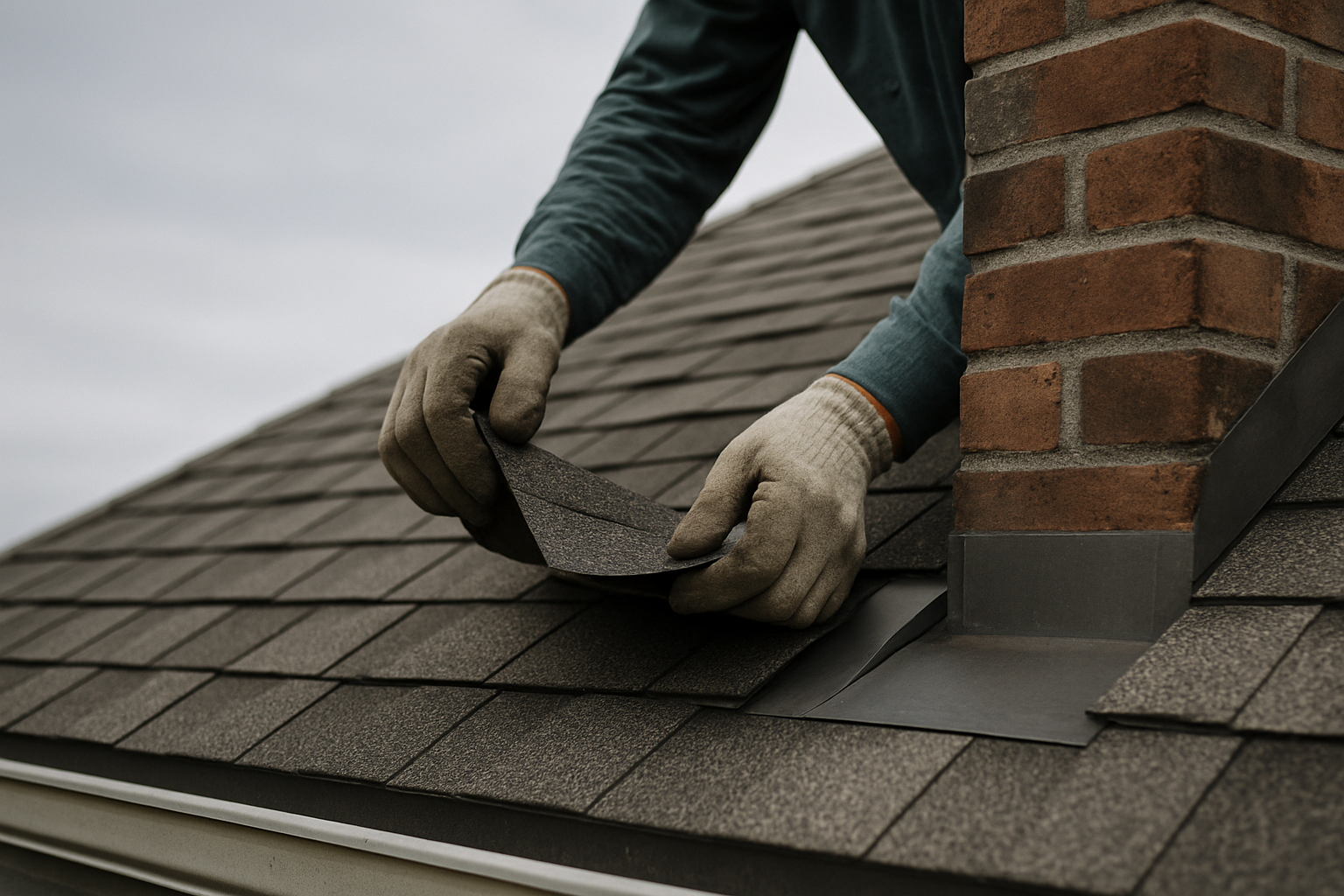
Roofing Linwood NJ means planning for three local conditions at once: older mainland roof systems reaching replacement age, wind-driven rain off Egg Harbor Bay, and mature trees that load valleys and gutters. HappyRoof serves Linwood with free photo inspections, upfront written pricing, and repair or replacement recommendations based on what the roof actually needs.
Linwood is mainland Atlantic County, and that changes the roof conversation
Linwood is not a barrier-island roof problem, and it is not a deep-Pines roof problem. In the replacement work HappyRoof describes across the county, Linwood sits in the mainland ring with Pleasantville, Absecon, Northfield, Somers Point, and Egg Harbor Township. The stock there is mostly conventional pitched single-family homes across a wide age range, from postwar capes to recent construction.
That mix matters more than most homeowners realize. A roof on a postwar cape, a roof on an eighties colonial, and a roof on a recent two-story are three different jobs even when they sit on the same street. The common findings across that mainland ring are aging first-generation architectural shingles, attic ventilation that was never balanced, and skylight or chimney flashings that have been caulked repeatedly instead of rebuilt.
For a Linwood homeowner, the practical point is this: the question is rarely whether the roof has a problem. It is which of the local failure patterns the house has and what the right repair sequence is. A free inspection with photos answers that before any money is spent, and the answer is sometimes that the roof has years left and no work is needed yet.
Older Linwood homes: what age does to a roof
The mainland ring spans a wide age range, from postwar capes to recent construction, and that range is the whole point. A Linwood home built in the middle of the last century was framed for a simpler roof: often a modest pitch, a single ridge, maybe a dormer, and ventilation that depended more on gaps than on designed airflow. A newer Linwood home was built under different code, different insulation levels, and different material expectations. Neither is automatically worse; the difference shows up in what fails first.
The aging shingle layer
On the older end, the recurring finding is aging first-generation architectural shingles. First-generation means the layer the house was built with or its first architectural upgrade, and it is now reaching the end of its service life. The visible signs are granule loss, curling at the eaves, and cracked tabs on the sun side. The less visible sign is a deck that has been holding moisture at the fasteners for years.
Ventilation that was never balanced
The second recurring finding is attic ventilation that was never balanced. Intake at the eaves and exhaust at the ridge have to work together. When one side was never provided, or was blocked later by insulation, the attic runs hotter than it should, and the shingles age from below. A replacement is the one moment when that imbalance can be corrected without tearing into a finished attic.
Flashings that got caulked instead of rebuilt
The third is flashing. Skylights and chimneys on older Linwood homes have often been caulked repeatedly instead of rebuilt. Caulk is a temporary seal over a moving joint. The correct fix is step or counter flashing that sheds water the way the roof plane does, not a bead of sealant that fails again the next season.
Roof pitch changes the material conversation. HappyRoof's roof replacement service covers architectural asphalt, metal, and flat membrane, and the right choice follows the measured slope of each plane, not a guess from the street. A steep gable may handle architectural asphalt well; a low-slope addition or a shallow porch section may need a different system. Guessing from the curb is how a quote goes wrong.
Additions, dormers, and the roof intersections that leak first
Houses that have grown over time — an original cape plus a family-room addition, a dormer added later, a converted garage — share one weak point. Each addition creates a roof intersection, and each intersection is a place where two roof planes of different ages, pitches, and drainage meet.
The intersection is the weak point. The valley where the addition meets the original roof, the step flashing where the new wall meets the old roof, and the pipe boot where the new vent came through are the details that leak before either roof plane fails. The fix is not more caulk. It is valley metal and step and counter flashing installed so water sheds from the higher plane onto the lower one without being driven back up by wind.
A replacement on an added-on house is also the moment to reconcile ventilation. The original attic and the addition attic were often not designed to breathe together. A full tear-off lets intake and exhaust be balanced across the whole footprint instead of leaving the addition as a hot pocket that cooks its own shingles.
The inspection should note every roof transition, because a proposal that treats an added-on house as one simple rectangle is underpricing the detail work that keeps the intersections dry.
Bay influence and wind-driven rain: underlayment and flashing decisions
Linwood is not on the beach, and a Linwood roof does not need to be built like a bayfront house in Margate. But Linwood sits close enough to Egg Harbor Bay that wind-driven rain is a real design input, not a theoretical one. Wind-driven rain is water moving sideways, not falling straight down. It finds the uphill side of a shingle lap, the back of a chimney flashing, and the inside edge of a ridge vent.
Two choices follow.
First, underlayment. A full replacement should include the underlayment the exposure calls for, not the minimum a fair-weather roof needs. The replacement service is described in specific terms: a roof must be sized, vented, and flashed correctly for a coastal climate. The underlayment is the layer that catches the water the shingles shed, and on a Linwood roof it is doing more work than a homeowner can see from the ground.
Second, flashing. Wind-driven rain punishes the transitions: the rake edge, the drip edge, the valley, the pipe boots, and the step and counter flashing at walls and chimneys. These are the points where the roof changes direction or meets something vertical. When they are old, they leak before the field shingles fail. On a Linwood replacement, the flashing details are not an add-on. They are the part of the job that keeps the roof dry in a nor'easter.
Salt air is less aggressive in Linwood than on the barrier islands, but the wind is not. A nor'easter that sits offshore pushes rain against the same face of the house for hours. That is the condition the underlayment and flashing are being asked to survive.
Gutter installation Linwood NJ: mature trees, leaf load, and shade
Linwood's mature trees are part of the town's character, and they are part of the roof's workload. On a tree-covered lot, the roof and gutter system deal with three things at once: leaves and needles, shade that keeps sections damp, and the occasional limb.
Leaf load is a gutter and valley problem before it is a roof problem. Debris collects in valleys, blocks the path to the downspout, and holds water against the roof edge. A full gutter backs up and spills against the fascia and the foundation. HappyRoof's gutter service is built around this: seamless gutters, guards, and downspout runs that move Pine Barrens leaf load and heavy shore rain away from the foundation. Pine Barrens is not decoration in that sentence. It names the actual debris load Atlantic County roofs carry, and Linwood lots with mature trees carry plenty of it.
Shade changes the roof's drying cycle. A slope that never sees direct sun stays damp longer after rain. That is where moss and organic growth get a start, where granules loosen, and where the deck stays wet longer than it should. On a shaded Linwood slope, the inspection should look at the moss on the surface, but it should also ask what the moss is telling you about moisture and drainage.
Gutter sizing should follow roof area and pitch, not habit. A steep roof with a large footprint sheds water fast, and a downspout that was adequate for the original house may be undersized for a full roof replacement. Seamless gutters remove the seams where most leaks start, and guards reduce the twice-a-season cleanout that tree-covered lots otherwise require. Gutter installation on a Linwood home is not a bolt-on; it is the drainage half of the roof system.
Limb strikes are a repair issue as much as a tree issue. A dropped limb can crack a shingle, dent a valley, or tear a section of gutter. When a limb comes down, the roof should be checked the same week, not after the next rain finds the hole.
Choosing among architectural asphalt, metal, and flat membrane in Linwood
HappyRoof replaces Linwood roofs in architectural asphalt, metal, or flat membrane, and the choice is made roof by roof, not neighborhood by neighborhood. Each material has a job.
| System | Typical use on a Linwood home | Why a homeowner chooses it |
|---|---|---|
| Architectural asphalt | Conventional pitched single-family roofs | Matches the existing look and sheds water on a proper slope |
| Metal | Steep or wind-facing slopes | Fewer joints, better uplift resistance, longer service cycle |
| Flat membrane | Low-slope additions and porch roofs | Continuous system where gravity drainage is limited |
Architectural asphalt shingles are the workhorse for conventional pitched single-family roofs. They match the look most Linwood homes were built with, they shed water well on a proper slope, and they are the system most homeowners recognize when they read an estimate.
Metal roofing is the choice when the roof needs to shed water fast, resist uplift, and outlast the shingle cycle. On a Linwood home with a steep wind-facing slope or a history of wind-driven leaks, metal changes the failure mode from shingle lifts to a roof that holds. The installation is different, and the quote reflects that, but the logic is simple: fewer joints mean fewer leak paths.
Flat membrane applies to the low-slope sections, the addition roof, the porch, the section over a family room, where shingles were never the right system. A low-slope roof cannot rely on gravity the way a steep roof does; it needs a continuous membrane system that is properly terminated at the edges.
The pitch measurement decides which system is even an option. The inspection measures each plane, and the proposal follows the measured slope. A homeowner should be suspicious of any quote that names a material before anyone has stood on the roof.
Roof replacement Linwood NJ: what the job should include
A roof replacement in Linwood should be a full tear-off, not a layover. HappyRoof's service is explicit: full tear-off and replacement in architectural asphalt, metal, or flat membrane, sized, vented, and flashed correctly for a coastal climate. Tear-off matters because it is the only way to inspect the deck and replace the flashings. A second layer hides what is underneath and shortens the life of the new material.
What should the job include? At minimum, these items, and they should be line items on the written proposal.
| Item | Why it matters |
|---|---|
| Full tear-off | Exposes the deck and allows every flashing to be replaced |
| Deck inspection and repair | Finds rotten sheathing before new materials go on |
| Underlayment sized for the exposure | Catches water in wind-driven rain |
| Flashing at every transition | Seals the joints where leaks start |
| Ventilation correction | Balances intake and exhaust and extends shingle life |
| Permit and municipal inspection | Confirm who pulls the permit and who meets the inspector |
| Written price before work starts | Locks the scope so the number is known up front |
The deck is the item people cannot see from the street. Once the old shingles are off, the sheathing gets inspected, and rotten or water-damaged sections are replaced before new materials go on. What happens if the deck is rotten under the shingles is one of the most common questions HappyRoof fields, and the honest answer is that it gets repaired at the deck level, not covered over. A homeowner should also confirm the per-sheet price if decking has to be replaced, so that number is not a surprise later.
Ventilation is the item people forget. A replacement is the one moment when intake and exhaust can be corrected without tearing into a finished attic. If the old roof had unbalanced ventilation, the new roof should not inherit it.
The permit is the item that protects the homeowner. A replacement involves a municipal permit and inspections, and the written proposal should make clear who pulls the permit and who meets the municipal inspector.
HappyRoof installs to manufacturer-certified standards, which is one of the credentials listed on the site alongside the license and insurance.
The actual schedule is set after the inspection, because deck repairs and weather change the timeline.
Roof repair Linwood NJ: the failures that show up first
Roof repair in Linwood usually starts with a stain on a ceiling and ends with a flashing or a pipe boot that was never the obvious suspect. HappyRoof's roof repair service is plain about this: find the actual source instead of patching the stain. A stain on a bedroom ceiling under a front eave may be coming from a rake flashing far away, running down a rafter and showing up where the drywall is weakest.
The recurring repair list on mainland homes is short and specific.
Failed flashing is the most common leak source. Step and counter flashing at walls and chimneys, valley metal, and pipe boots fail before the field shingles because they are joints, and joints move with temperature and wind.
Missing or damaged shingles come next. A nor'easter lifts a shingle at the rake, a limb cracks a tab, or wind-driven rain works its way under a lifted edge.
Caulked skylights and chimneys are the tell. Repeated caulk is a sign the flashing was never rebuilt, and caulk is not flashing.
Ventilation-related wear is the one people miss. A roof that runs hot ages its shingles from below, and the repair may be straightforward while the cause is in the attic, not on the surface.
The repair decision is an age-and-damage-spread question. If the damage is localized and the roof has life left, a repair is the right call. If the same flashings fail one after another and the shingles are near the end of their life, a series of small repairs costs more than one replacement. The free inspection is how HappyRoof separates the two, with photos you keep either way.
The Linwood permit process and what it means for the homeowner
A roof replacement involves a municipal permit and inspections. The questions HappyRoof's replacement guidance tells homeowners to ask are the right ones here: who pulls the permit, and who meets the municipal inspector. The written estimate should answer both before any work starts.
For the homeowner, most of the permit work is handled as part of the job: the permit, the scheduling, and the required inspections. The homeowner's responsibility is to confirm the written proposal addresses the permit and to keep the approved documents with the house records for a future sale.
The current Linwood requirements, the fee schedule, the inspection points, and any local amendments come from the Linwood construction office, and they change. The right move is to have the contractor confirm the current requirements as part of the written estimate rather than rely on a figure quoted from memory. An offer that avoids the permit process altogether should raise a red flag.
What a Linwood NJ roof inspection should tell you
A Linwood roof inspection should produce three things: photos of your own roof, an honest answer on whether it needs replacing, and a written price if work is needed. That is the standard HappyRoof states: free, no-pressure inspection with photos of what was actually found, whether that means a repair, a replacement, or nothing at all.
The photos matter. A homeowner should not be asked to take a roofer's word for a deck that looks rough. The photos should show the granule loss, the lifted flashing, the moss line, the cracked pipe boot. HappyRoof's approach is that the photos are yours to keep, and the honest answer includes the case where the roof has ten good years left and no work is needed yet. That is the opposite of a sales call, and it is the reason the inspection is free.
A useful inspection covers the field shingles, the flashings at every transition, the valleys, the pipe boots, the ridge and eave ventilation, the gutters and downspouts, and the deck and attic where visible. On a Linwood lot with trees, it should also note leaf load in the valleys and moss or shade on the slopes that stay damp.
The output is not a vague "you need a new roof." It is a written price covering the scope of the work, so the number is visible before any work starts. That is the standard HappyRoof promises across Atlantic County: a written price before anything starts, and an honest answer even when the answer is that the roof has years left.
Written pricing: how to compare Linwood roofing estimates
Every Linwood roofing estimate should be written down before work starts, and HappyRoof's pricing is: the price is written down before anyone touches your roof. That is the only way to compare two bids fairly.
Two estimates can look close in total and be completely different jobs. One includes full tear-off; the other is a layover. One includes new flashing at every transition; the other reuses what is there. One includes the permit and inspections; the other leaves them off the paper to look cheaper. The line items are what expose the difference.
The comparison questions are specific. Is this a full tear-off or a layover? Is the underlayment sized for the exposure, and where is it specified? Are the flashings replaced, including drip edge, rake, valley, step and counter flashing, and pipe boots? Who pulls the permit, and are inspections scheduled? What happens to the number if the deck has rotten sheathing once the old roof is off?
The last question is the one most people skip. A responsible estimate tells you how deck repairs will be handled if the sheathing is found to be damaged, rather than leaving it as a surprise change order. HappyRoof's replacement guidance tells homeowners to ask the per-sheet price for decking, what ventilation work is included, and who pulls the permit — all before signing.
A roofing contractor in Linwood cannot honestly quote a binding price from the street. HappyRoof writes the price after the roof is inspected, because the deck condition, the pitch, the layers to be removed, and the flashing details are only knowable from the roof itself. That is the honest way to price a Linwood roof.
Storm and wind damage in Linwood: tarping, documentation, and the claim
Linwood does not take the full ocean hit that the barrier islands take, but a nor'easter or a hurricane remnant still brings wind-driven rain and flying debris far inland. Shingles lift at the rakes, a limb comes down, a valley backs up, and a leak appears on a bedroom ceiling.
The first step is to stop the water. HappyRoof offers emergency tarping for active leaks and storm damage. A tarp is not a repair. It is the bridge that prevents the damage from spreading while the claim and the repair are sorted out.
The second step is documentation. HappyRoof documents the damage to support your insurance claim, and the homeowner files the claim. The documentation should include the wind-facing slopes, the rakes, and the valley debris, because those are where the wind-driven rain actually gets in.
Exteriors on older Linwood homes: soffit, fascia, and trim
Roof work often exposes the next job up: the fascia and soffit the old drip edge was nailed to, the trim the flashing was supposed to shed water past, and the siding the downspouts have been splashing against. HappyRoof's siding and exteriors service means the roof edge and the wall below it can be addressed as one system.
On older Linwood homes, the soffit is often the intake side of the attic ventilation equation. If a replacement corrects the ridge exhaust but the soffit is blocked or undersized, the system is only half-fixed. That is why roof and soffit are not separate conversations.
Fascia carries the drip edge and the gutters. A soft fascia means the gutter will pull away, and the water that was supposed to reach the downspout runs down the wall instead. The same applies to trim: it is the last line of defense below the drip line, and once it is soft, the sheathing behind it is usually next.
The sequencing is simple. Fix the roof and the edge metal first, then the fascia and soffit, then the gutters, then the siding and trim below the drip line. Doing it out of order means paying twice to protect the same wall.
Warning signs on a Linwood roof: when to call before the next storm
Some Linwood roofs announce their problems; others wait for the next nor'easter. The signs worth acting on are specific.
Granules in the gutter or at the downspout mean the shingle surface is wearing away, and the wear accelerates on the sun side. Curling or lifting tabs at the eaves and rakes mean the wind has a place to get under the next storm. A ceiling stain that moves or darkens after rain means the leak is rarely directly above the stain. Moss on a shaded slope holds moisture against the surface and points to a drainage or shade problem. Daylight through the attic at the ridge or around a pipe boot means the weather barrier is open. Soft fascia or gutters pulling away means water has been running where it should not.
None of these signs is a diagnosis by itself. Together they form the case for a free inspection with photos, which is the difference between catching a flashing failure early and replacing decking later.
How to prepare for a Linwood roof project
Before the inspection, there is little to prepare. HappyRoof needs access to the roof and the attic, and it helps to clear the driveway and the area around the downspouts. Past leak history matters more than anything: which room, which wall, what the weather was doing, and whether it has happened more than once. A homeowner who can say the roof leaks only when the wind is out of the northeast has just narrowed the search.
During the work, the homeowner's main job is to keep the driveway clear and to keep children and pets away from the work area.
After the work, keep the written proposal, the permit record, and the photos. They are the documentation for the work that was done and for the next buyer.
HappyRoof's Linwood service area and what local means here
HappyRoof serves every town in Atlantic County, and Linwood is named in the mainland ring the company describes for replacement work. Local here is not a sales word. It means a county-based crew is minutes from Linwood, not hours away.
The practical benefit is scheduling and weather. A coastal roof job is weather-dependent, and a contractor based in the county can move a crew between a Linwood roof and an Egg Harbor Township roof without losing a day to travel. It also means the permit office, the supplier yard, and the job site are all in the same county.
The number is (609) 525-4521. The first step is a free inspection, and the output is a written price, not a pressure pitch.
Frequently asked questions about roofing Linwood NJ
What is the permit process for a Linwood roof replacement?
A roof replacement involves a municipal permit and inspections, and the written proposal should make clear who pulls the permit and who meets the municipal inspector. The current Linwood fee and inspection checklist come from the Linwood construction office and should be confirmed as part of the written estimate rather than quoted from memory.
How do I know if my Linwood roof needs replacement or repair?
The free inspection answers that with photos. Localized damage on a roof with life left is a repair; aging first-generation shingles, failing flashings across the roof, and unbalanced ventilation are replacement signals. HappyRoof shows you what it found and tells you honestly if you have years left.
What should a Linwood roof replacement include?
A full tear-off with replacement in architectural asphalt, metal, or flat membrane, sized, vented, and flashed correctly for a coastal climate. The scope should also cover deck inspection and repair, underlayment sized for the exposure, flashing at every transition, corrected ventilation, the municipal permit and inspections, and a written price before work starts.
Why does wind-driven rain matter for a Linwood roof?
Linwood is close enough to Egg Harbor Bay that rain arrives sideways during nor'easters. Wind-driven rain finds the uphill side of shingle laps and the backs of flashings. Underlayment and flashing details are what keep that water out, which is why they are part of the replacement conversation rather than optional add-ons.
Do I need to be home for the inspection?
It helps but is not always necessary. The inspection is free, and HappyRoof needs access to the roof and the attic. You get the photos either way. Being present helps because you can point to past leak locations and hear the findings while looking at the same photos.
Does HappyRoof serve all of Linwood?
Yes. HappyRoof serves every town in Atlantic County, and Linwood is named in the mainland ring the company describes for replacement work. The first step is a free inspection, and the output is a written price.
Call (609) 525-4521 to schedule a free Linwood roof inspection. You get photos of your own roof, an honest answer on what it needs, and a written price before anything starts.