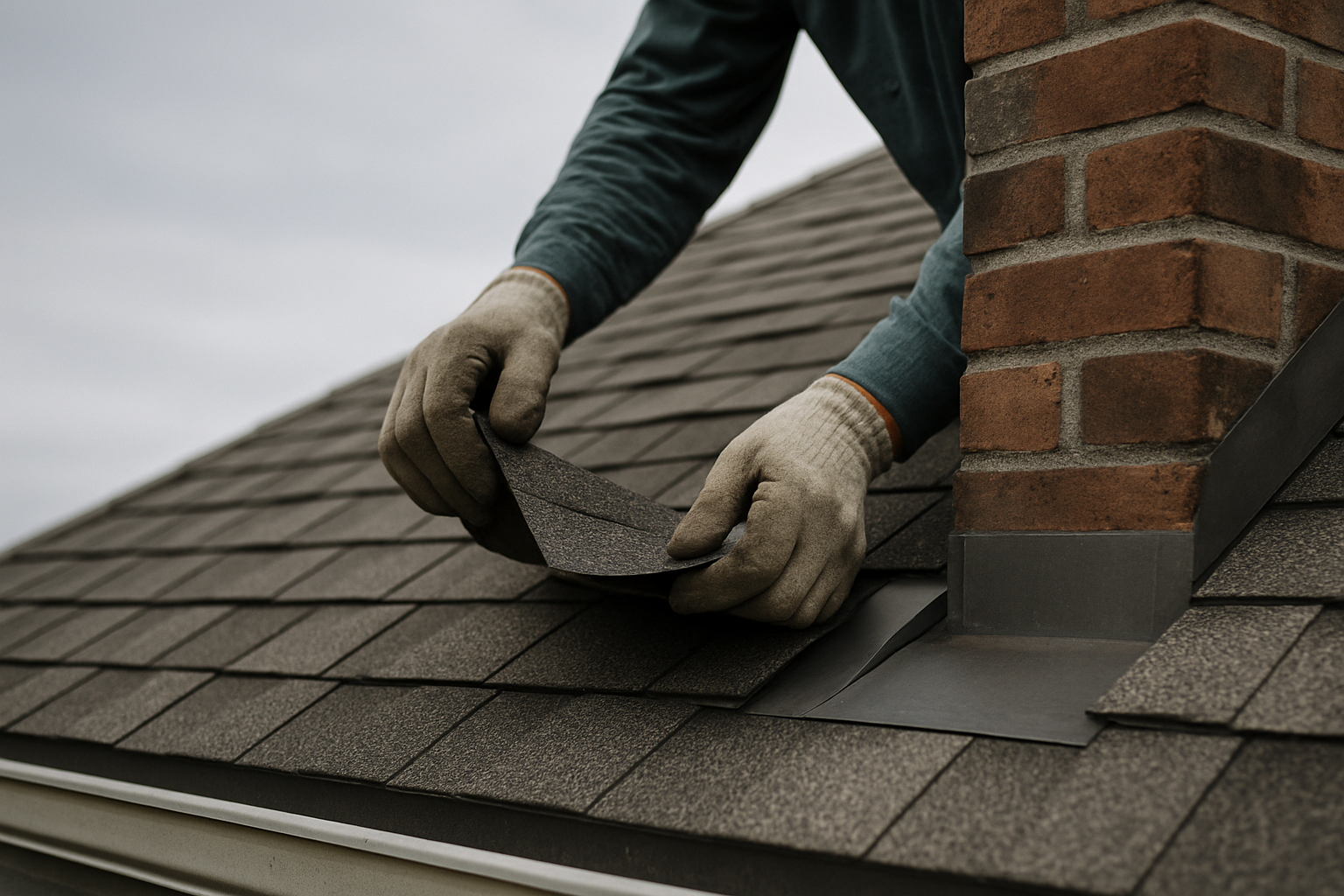
Roofing Somers Point NJ means designing for wind-driven rain off Great Egg Harbor Bay, not just salt air. Near-bay bungalows, ranchers, and split-levels need ice-and-water shield at eaves and valleys, correctly lapped flashing, and a replacement scope written from a real inspection before work starts.
What makes roofing Somers Point NJ different from the barrier islands
Somers Point is a mainland bay town, not a barrier island, and the roof problems here are different in kind, not just degree. On oceanfront homes in Margate, Longport, Brigantine and Ventnor, the discussion starts with salt spray, high sustained wind, and uplift on exposed ocean-facing elevations. In Somers Point, the discussion starts with wind-driven rain off Great Egg Harbor Bay hitting older roofs, and with flashing and membrane details that have to be checked before a scope is final.
That changes what a roofer should emphasize. Oceanfront roofs lean toward corrosion-resistant metal and flashing plus uplift-rated connections. Bayfront Somers Point roofs lean toward water control: self-adhering underlayment at eaves, valleys and rakes; step and counter flashing at every wall intersection; drip edge that is lapped correctly; and a tear-off that exposes the deck before anyone quotes a final number. Salt air is present, but it is a secondary driver here, not the primary one.
The housing stock reinforces the difference. Somers Point mixes older bungalows, ranchers and split-levels near the water with newer construction. The older stock was not designed for the rain angles a bay storm produces, and many of those roofs carry patches from several owners. A useful Somers Point roof scope starts from that reality rather than from a generic Atlantic County template.
Why Great Egg Harbor Bay wind drives rain where the ocean does not
Fetch, shallow lots, and horizontal rain
Wind crossing open water picks up moisture and drives it at a low angle. Great Egg Harbor Bay may not produce the open-ocean wave spray of the barrier islands, but it offers enough fetch for wind to build and for rain to arrive nearly horizontal. Horizontal rain does not fall onto the roof field the way a vertical rain does. It strikes the eave, the rake, the sidewall, the chimney, and every vertical transition.
Shallow lots make this worse. Homes near the bay are often close together, so wind funnels between structures instead of passing over. A roof that sheds a normal rain perfectly can still take water at the gable edge, under the drip edge, and behind step flashing during a bay storm, because the water is being pushed sideways rather than downward.
Low pitch compounds the problem. A steep roof drains quickly and relies on gravity. A low-pitched bungalow or rancher roof drains slowly and gives wind-driven water more time to find a lap, a nail line, or a termination. On those roofs, the underlayment is doing more of the waterproofing work, and any gap in the membrane or flashing is a leak waiting for the next storm.
Nor'easters, tropical remnants, and the rain angle
The storms that test Somers Point roofs tend to be nor'easters and the remnants of tropical systems. Both produce sustained wind over the bay, and both deliver rain in long bands rather than a short downpour. The duration matters: a roof can shed a fast thunderstorm, but a storm that drives rain at the same eave and rake for hours finds every small gap.
Wind-driven rain entry is not always visible from the ground. The shingles can look intact while water is working behind the flashing and under the edges. That is why a post-storm inspection in Somers Point should look at the perimeter and the transitions, not just count missing shingles. The Great Egg Harbor Bay roof wind problem is mostly about water entry, not blow-off.
Where bay-driven rain actually enters a roof
Wind-driven rain rarely enters through the middle of a shingle field. It enters at terminations and transitions:
- Eave edges, where water backs up behind a gutter or under the starter course.
- Rake edges, where wind pushes water sideways under the gable-edge shingles.
- Valleys, where two roof planes concentrate flow and wind can push water across the valley metal.
- Sidewall step flashing, where the roof meets a dormer, an upper wall, or a chimney.
- Pipe boots and vent collars, where a cracked or pulled boot opens a direct path.
- Chimney and skylight intersections, where counter flashing has pulled away or was never lapped correctly.
A ceiling stain inside a Somers Point home is often not directly above the leak. The water entered at the eave or rake, ran sideways along the deck or a rafter, and showed up feet away. That is why a repair that patches the stain and caulks the nearest shingle fails, and why the inspection has to start at the perimeter and the intersections rather than at the wet spot.
Underlayment and flashing priorities for bayfront roofing in Atlantic County
Ice-and-water shield at eaves, valleys, and rakes
Ice-and-water shield is a self-adhering membrane that seals around fasteners and stops water that gets past the shingles from reaching the deck. On a bayfront Somers Point roof, placement matters more than brand. The emphasis belongs at:
- Eaves, where wind-driven rain and gutter backup force water under the starter course.
- Valleys, where two planes concentrate the flow of a heavy shore rain.
- Rakes, where sideways rain works under the gable-edge shingles.
- Penetrations and sidewalls, where boots, chimneys, skylights, and dormers interrupt the roof.
On older Somers Point bungalows and ranchers, the original roof may have had little or no membrane, or a narrow felt strip at the eave. A full tear-off is the only way to correct that properly. Laying new shingles over old felt leaves the same weak perimeter in place.
Step and counter flashing at walls and chimneys
Flashing is where bay wind finds a roof. Step flashing at a sidewall must be woven with each shingle course so water running down the wall is directed out onto the shingle, not behind it. Counter flashing laps over the step flashing and ties it into the wall. If either is missing, short, or nailed incorrectly, wind-driven rain climbs the lap and enters.
Chimneys in Somers Point get hit from several directions in a bay storm. They need counter flashing set into the masonry, a cricket or saddle on the high side where practical, and step flashing along the sides. Caulk is not a flashing system. A chimney sealed with a bead of caulk is a future leak, and the stain will show up on a ceiling far from the flue.
Drip edge, pipe boots, and valley metal
Drip edge is a small detail that fails loudly when omitted. At the eave it directs water into the gutter instead of behind it; at the rake it closes the gap the wind exploits. Pipe boots degrade from sun and movement, and a bayfront roof needs boots that are seated and sealed correctly, not simply caulked over. Valley metal, where used, must be sized for the concentrated flow of a heavy shore rain and lapped so water cannot run sideways under the metal.
The general rule for Somers Point is that the membrane keeps water off the deck and the flashing keeps water moving off the roof. Both have to be right, because a bay storm tests both at once.
The lapping order matters more than the material brand
| Layer | Where it belongs on a Somers Point roof | What it defends against |
|---|---|---|
| Ice-and-water shield | Eaves, valleys, rakes, penetrations | Wind-driven rain and backup under shingles |
| Underlayment | Full roof field | Secondary defense between deck and shingles |
| Drip edge | Eave and rake perimeters | Water running behind the gutter or gable edge |
| Step and counter flashing | Sidewalls, dormers, chimneys | Water climbing wall-to-roof intersections |
| Valley metal or woven valley | Roof valleys | Concentrated flow across two planes |
| Pipe boots and collars | Plumbing vents and stacks | Direct entry at penetrations |
Each layer has to lap the one below it so water always drains outward and down. A roof with premium shingles and backwards laps will leak before a roof with basic shingles and correct laps.
Somers Point housing stock and what it means for a roof
Bungalows and ranchers
Bungalows and ranchers near the bay tend to be low and wide, with low-pitched roofs, large eave overhangs, and shallow or no attic. The low pitch is the controlling fact. Gravity drainage is weak, so water lingers and wind-driven rain has more time to work. The wide eaves help shed water away from walls, but they also present a large edge to horizontal rain.
These roofs often carry multiple penetrations — plumbing stacks, vents, maybe a chimney — and the original flashing is usually the first thing to fail. When the roof is opened, the deck at the eaves and around penetrations is where rot tends to appear. That is what the tear-off reveals, and the proposal should include a per-sheet decking price so the finding is not a surprise.
Split-levels
Split-levels create the most flashing-intensive roofs in the housing stock. A short upper roof drains onto a lower roof, a sidewall meets a roof plane, and every one of those intersections is a place wind-driven rain can enter. Step flashing at the sidewalls, a properly sized valley or cricket where the upper roof drains, and membrane at the transitions matter more than the shingle selection.
Split-levels also concentrate water at the short upper roofs, where an undersized gutter or downspout overflows onto the lower roof and the wall below. A Somers Point split-level scope has to look at the roof and the drainage together, because the two fail together.
Newer construction near the bay
Newer construction near the bay generally starts from a better position: steeper pitches, code-era underlayment, and roof-to-wall connections that reflect current coastal construction practice. That does not make newer roofs exempt from bay wind. Flashing details can still be wrong, a boot can still fail, and a valley can still be undersized for a heavy shore rain.
The advantage of newer construction is that the deck and connections are usually sound, so a replacement or repair can focus on the water-control layer rather than structural correction. The disadvantage is complacency: a newer roof flashed for a vertical rain can still leak when the bay delivers horizontal rain.
Housing type and roof emphasis at a glance
| Housing type | Typical roof profile | Primary bay exposure | Roof scope emphasis |
|---|---|---|---|
| Bungalow | Low pitch, wide eaves, multiple penetrations | Wind-driven rain at eaves and rakes | Membrane at perimeter, flashing, deck repair |
| Rancher | Low pitch, long eaves, shallow attic | Horizontal rain, gutter backup | Eave membrane, drip edge, drainage |
| Split-level | Multiple planes, wall-to-roof intersections | Water at step flashing and upper-to-lower roof drains | Step/counter flashing, valleys, gutter sizing |
| Newer construction | Steeper pitch, code-era underlayment | Flashing and boot details under bay wind | Water-control corrections, connection review |
Roof replacement Somers Point NJ: what the process actually looks like
Inspection and written scope
The process starts with a free inspection and photos of the actual roof, not a drive-by. The inspector looks at the perimeter, the valleys, the flashing, the penetrations, and the attic if accessible, then gives an honest remaining-life assessment. If the roof has years left, that is the answer. If it needs work, the scope is written and priced before anything starts.
For a Somers Point roof, the written scope should name the underlayment placement, the flashing work, and the decking replacement terms. A scope that says only "new shingles" is not a scope for a bayfront roof.
Tear-off and what gets replaced
A proper Somers Point roof replacement is a full tear-off. The old shingles come off, the deck is inspected, and rot is replaced before the new system goes on. The underlayment goes down at the eaves, valleys, rakes, and penetrations; drip edge, flashing, boots, and ventilation go in as part of the system, not as line items to negotiate later.
The guidance on the site is blunt about decking: nobody can see the sheathing until the old shingles come off, so an honest proposal includes a per-sheet price rather than pretending the number is zero. Rot clusters at eaves, chimneys, skylights, valleys, and shaded north slopes — exactly where bay wind-driven rain has been working for years.
What drives scheduling
The schedule for a Somers Point replacement depends on the size and pitch of the roof, the number of layers being removed, and what the tear-off reveals. The honest answer is that the date is set once the scope is fixed, not before.
Repair or replace a Somers Point bayfront roof
The decision between roof repair and replacement on a bayfront roof comes down to age, the spread of damage, and the condition of the water-control layer. A localized flashing failure or a single failed boot can be a repair. Widespread wind-driven rain entry, an exhausted underlayment, or rot at the eaves usually points to replacement, because the membrane and flashing are already failing.
The repair-versus-replacement test for Somers Point is not whether the shingles look worn. It is whether the perimeter and the transitions are still doing their job. If the eaves, rakes, valleys, and sidewalls have been patched repeatedly, another patch does not restore the water-control layer. An inspection with photos is the honest way to make that call.
Salt air in Somers Point: a secondary corrosion driver
Salt air exists in Somers Point, but it is not the same exposure as an oceanfront house in Margate or Longport. The bay is a different water body, and the primary roof driver here is wind-driven rain, not salt-laden spray. Flashing and fasteners should still be selected for a coastal environment, but the reason to emphasize them is water entry, not corrosion.
Treating Somers Point like the barrier islands leads to the wrong fix: a homeowner spends the budget on corrosion-resistant materials while the actual leak is a poorly lapped step flashing or a missing eave membrane. Treating it like an inland subdivision is the opposite error: the wind-driven rain is real, and the roof has to be built for it.
The practical position is that corrosion resistance is a supporting requirement, not the headline. Water control at the edges and transitions is the headline. Get the membrane and flashing right first, then choose materials appropriate for a coastal bay environment.
Gutters and downspouts: moving bay rain and Pine Barrens leaf load
A bayfront roof only works if the water that leaves it is carried away. Somers Point roofs feed gutters that must handle heavy shore rain plus the leaf load that blows in from the Pine Barrens. A clogged or undersized gutter backs water up under the eave, which is exactly where the ice-and-water shield has to defend.
The gutter system deserves to be scoped with the roof, not as an afterthought. Downspout runs should move water away from the foundation, because a low, flat lot near the bay has nowhere for that water to go. On split-levels, the upper roof drains onto lower roofs and walls, so the upper gutter and downspout sizing matters as much as the lower one.
Storm response and insurance documentation
Somers Point sits in the path of nor'easters and the remnants of tropical systems, and the damage pattern is usually wind-lifted shingles, failed flashing, and wind-driven rain entry rather than a single catastrophic hole. The first job after a storm is to stop the water: emergency tarping keeps further damage out of the house while the claim and the repair are sorted out.
Documentation matters. Photos of the damage, the tarp, and the interior stains build the claim file. The roofer should document the condition of the roof and be prepared to meet the adjuster on site. The goal is a claim that reflects the actual scope, not a patch job that hides the wind-driven rain entry until the next storm.
What to have ready before a Somers Point roof inspection
- The age of the roof and any repair history you know.
- A list of every stain, drip, or damp spot you have seen, even if it seemed minor.
- Access information for the attic or crawl space, if there is one.
- Any prior inspection reports or insurance letters.
Having these ready turns the inspection into a scoping conversation instead of a discovery exercise. The inspector can check the stain locations against the roof transitions and write a scope that addresses the bay exposure rather than a generic replacement.
Materials, certification, and what "coastal climate" means here
The site describes its replacements as architectural asphalt, metal, or flat membrane, sized, vented, and flashed correctly for a coastal climate. For Somers Point, "coastal" means bay-driven rain, not oceanfront salt spray. The material choice follows the roof's pitch, the structure, and the exposure, and the installer should be manufacturer-certified so the material warranty stays valid.
The brand names are not the deciding factor on this page. The deciding factors are the underlayment placement, the flashing details, and the roof-to-wall connections. A manufacturer-certified installation matters because it keeps the material warranty intact, but the warranty does not substitute for correct water control on a low-pitched bayfront roof.
Working with HappyRoof in Somers Point
HappyRoof serves every town in Atlantic County, including Somers Point. The inspection is free and comes with photos of your actual roof and an honest answer on whether it needs replacement, repair, or nothing. The written price comes before work starts.
To start, call (609) 525-4521 for a free inspection. Emergency tarping is available for storm damage.
Somers Point roofing questions, answered directly
Why does my Somers Point roof leak during a bay storm but not a normal rain?
Because bay storms deliver wind-driven rain that strikes the roof horizontally, not vertically. Water is pushed sideways under eaves, rakes, valleys, and flashing where a normal rain would never reach it. The entry point is often at the perimeter or a wall intersection, and the stain appears somewhere else inside.
Do I need ice-and-water shield on a Somers Point roof?
Yes, at the places bay wind attacks: eaves, valleys, rake edges, and around penetrations and sidewalls. The membrane seals around fasteners and keeps wind-driven water off the deck. On older low-pitched bungalows and ranchers, it is doing much of the waterproofing work, so placement matters more than brand.
How does a Somers Point roof inspection work?
It is free and comes with photos of your actual roof. The inspector looks at the perimeter, valleys, flashing, penetrations, and attic, then tells you honestly whether the roof needs replacement, repair, or nothing. The written price and scope come before any work starts.
Should I repair or replace a bayfront roof in Somers Point?
It depends on age, the spread of damage, and whether the water-control layer — underlayment, flashing, drip edge — is already failing. A localized flashing failure can be a repair. Widespread wind-driven rain entry, an exhausted underlayment, or rot at the eaves usually points to replacement. An inspection with photos is the honest way to decide.
Frequently asked questions
Does a roof replacement in Somers Point NJ require a permit?
Yes. New Jersey requires a construction permit for a roof replacement, and it is not optional. Somers Point, like every Atlantic County municipality, runs its own construction office. The path is application, permit issued, work performed, municipal inspection, and a closed permit. A proposal that skips the permit leaves the homeowner exposed.
Will a roof replacement change my elevation certificate or flood insurance?
Usually not by itself, because a replacement that keeps the same roof structure and building envelope does not change the lowest floor or finished floor elevations. If the scope adds a dormer, rooftop deck, or structural change, the floodplain administrator may review it. Confirm the scope against the elevation certificate before work starts.
Why does my Somers Point roof leak during a bay storm but not a normal rain?
Because bay storms deliver wind-driven rain that strikes the roof horizontally, not vertically. Water is pushed sideways under eaves, rakes, valleys, and flashing where a normal rain would never reach it. The entry point is often at the perimeter or a wall intersection, and the stain appears somewhere else inside.
Do I need ice-and-water shield on a Somers Point roof?
Yes, at the places bay wind attacks: eaves, valleys, rake edges, and around penetrations and sidewalls. The membrane seals around fasteners and keeps wind-driven water off the deck. On older low-pitched bungalows and ranchers, it is doing much of the waterproofing work, so placement matters more than brand.
How does a Somers Point roof inspection work?
It is free and comes with photos of your actual roof. The inspector looks at the perimeter, valleys, flashing, penetrations, and attic, then tells you honestly whether the roof needs replacement, repair, or nothing. The written price and scope come before any work starts.
Should I repair or replace a bayfront roof in Somers Point?
It depends on age, the spread of damage, and whether the water-control layer — underlayment, flashing, drip edge — is already failing. A localized flashing failure can be a repair. Widespread wind-driven rain entry, an exhausted underlayment, or rot at the eaves usually points to replacement. An inspection with photos is the honest way to decide.