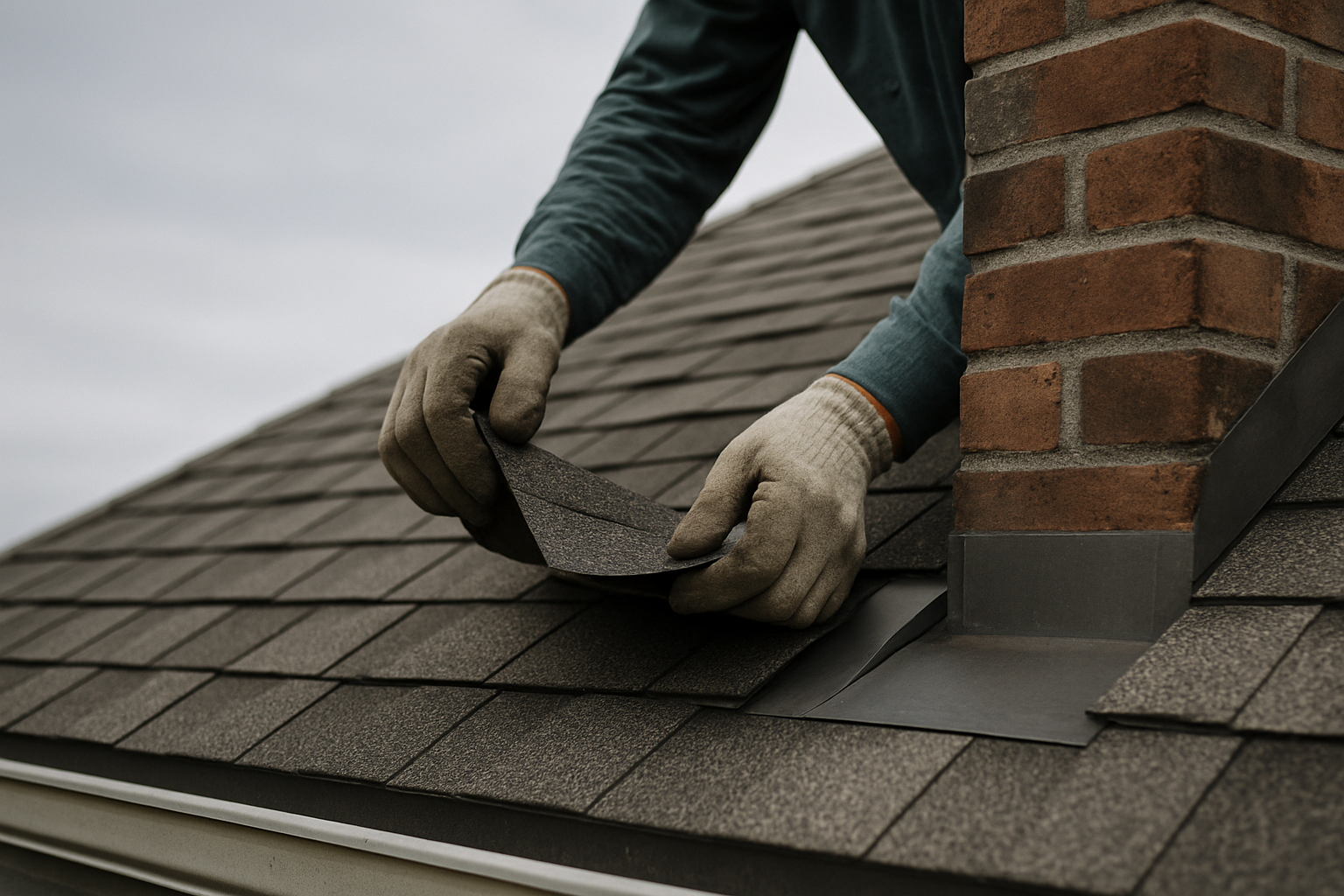
FORTIFIED Roof is a designation some New Jersey homeowners ask about, and the only safe rule is to verify its requirements with the program itself. HappyRoof does not claim that designation. What its published site does document is verifiable: full tear-offs, wind-rated shingles, enhanced nailing patterns, municipal permits, and itemized pricing.
What to verify before believing a FORTIFIED roof claim in New Jersey
The first thing to verify is who is making the claim and what evidence sits behind it. A roofer can install wind-rated shingles and an enhanced nailing pattern, and those are real, documented choices. A designation is a separate matter: it belongs to a specific program and a specific verification record, not to the installer's description of the work.
HappyRoof's published site does not claim a FORTIFIED designation. It claims narrower, checkable things: licensed and insured status, manufacturer-certified installation, full tear-offs to the bare deck, and wind-rated shingles with enhanced nailing patterns chosen for the exposure a specific street gets. Those are the facts this page relies on.
Before you accept any FORTIFIED claim from any contractor, ask for the certificate, ask who issued it, and confirm it with the issuing program. If the answer is that the roofer's word is enough, that is not verification.
Why Atlantic County wind exposure matters to a roof
Atlantic County's coastal and inland areas put different stress on a roof. HappyRoof's published storm-damage material describes what coastal wind and hail do to a roof, and its recent-work examples include wind-lifted shingles reworked after a nor'easter. Wind resistance is not one-size: HappyRoof's published process states that wind-rated shingles and enhanced nailing patterns are chosen for the exposure a specific street gets.
That exposure decision is the part a homeowner should press on. A coastal street and an inland street need different answers, and the roofer should be able to say which one applies to your address and why.
What HappyRoof documents on every replacement
The published process on the roof replacement page is specific, and it is the right checklist for comparing any wind-mitigation scope:
- Full tear-off to the bare deck, so every square foot of sheathing gets inspected before new material goes down.
- Written, itemized pricing that separates labor, materials, disposal, and the per-sheet rate for any decking replaced.
- Manufacturer-certified installation, so the shingle warranty stays valid.
- A municipal permit pulled and the township inspection scheduled as part of the job.
- Wind-rated shingles and enhanced nailing patterns chosen for the street's exposure.
- Full-property cleanup, including a magnet sweep of the lawn, beds, and driveway for stray nails.
These details either happen or do not happen once the roof is opened. Itemized pricing matters because nobody can see the condition of the sheathing until the old shingles come off. That is why an honest proposal includes a per-sheet decking rate rather than pretending the number is zero.
| HappyRoof documents in writing | You verify independently |
|---|---|
| Itemized pricing with labor, materials, disposal, and a per-sheet decking rate | Any wind-mitigation designation and who issued it |
| Municipal permit and township inspection as part of the job | Any insurance premium credit, in writing from the insurer |
| Wind-rated shingles and enhanced nailing patterns for your street | The shingle warranty terms, from the manufacturer |
Tear-off vs. overlay, and the New Jersey layer limit
New Jersey's adopted building code limits a roof to two layers of covering. An overlay means nailing new shingles directly over the existing ones. It is cheaper because nobody removes and hauls away the old roof, and some contractors push it hard for that reason. Once a second layer is on, the next roof has to be a full tear-off no matter what, so an overlay does not avoid the cost of removal. It defers it and adds the weight of an extra layer.
For a homeowner thinking about wind resistance, the overlay question matters for a second reason: you cannot inspect or upgrade the deck underneath if you never remove the old covering. Wind-rated shingles nailed over a hidden deck are only as strong as the deck they are nailed to.
Permits and municipal inspection are not optional
New Jersey requires a construction permit for a roof replacement, and the requirement is not optional or negotiable based on how busy the township is. Each Atlantic County municipality runs its own construction office, so filing details and lead times vary between, say, Egg Harbor Township and Atlantic City, but the shape of the process is the same: application, permit issued, work performed, inspection by the municipal inspector, permit closed.
A municipal inspection confirms code compliance. Any above-code designation or wind-mitigation detail is a separate matter with its own documentation, and the homeowner should understand which is which before the roof is closed up.
What a replacement actually costs in Atlantic County
HappyRoof's published cost guide gives a working range. For an average Atlantic County home, most homeowners pay somewhere between $9,000 and $25,000 for a complete asphalt replacement. The spread is that wide because it tracks square footage, roof pitch, the number of stories, how many valleys and penetrations exist, how much decking needs replacing, and whether the old roof is one layer or two.
Architectural asphalt shingles are what go on the overwhelming majority of homes here, and the wind-rated lines handle coastal exposure well. No honest contractor can quote a firm number without an inspection, because the deck condition is invisible until the old roof is off.
Storm damage, evidence, and the deductible line
Storm damage claims are won or lost on evidence. An adjuster standing on your roof three weeks after the wind event is looking for signs that damage was sudden and storm-caused rather than gradual and age-related. The homeowner with dated photographs, a written contractor assessment, and a record of the mitigation steps they took is in a completely different position from one who has a memory and a wet ceiling.
There is one hard line HappyRoof states it will never cross: nobody may lawfully absorb or waive a homeowner's deductible in New Jersey. Any proposal built on that offer should be walked away from.
Questions to ask before you sign
- Will the municipal permit and inspection be handled as part of the job?
- Will the pricing separate labor, materials, disposal, and a per-sheet decking rate?
- Is the installation manufacturer-certified, and what does that mean for the shingle warranty?
- Are wind-rated shingles and an enhanced nailing pattern specified, and why are they right for this street?
- If anyone is claiming a wind-mitigation designation, who issued it, where is the certificate, and can I verify it independently?
- Is anything being promised about an insurance premium credit, and is that promise in writing from the insurer?
A contractor who answers these precisely is worth talking to. A contractor who waves them off is telling you the details will not be documented, and undocumented details are the ones that disappear when the roof is closed up.
Where to start
HappyRoof serves every town in Atlantic County and offers a free inspection with real photos of your own roof, an honest answer on whether it needs replacing, and a written price before anything starts. The starting point for any wind-mitigation conversation is knowing exactly where your roof stands. Call (609) 525-4521.
Frequently asked questions about FORTIFIED roofs in New Jersey
Does HappyRoof claim a FORTIFIED designation?
No. HappyRoof's published site does not claim a FORTIFIED designation. It states licensed and insured status, manufacturer-certified installation, full tear-offs, and wind-rated shingles with enhanced nailing patterns. Those are not the same as a designation, which must be verified with the issuing program.
Is FORTIFIED required by New Jersey building code?
This page does not describe FORTIFIED's requirements from memory; confirm them with the program itself. What is documented here is that New Jersey requires a construction permit and municipal inspection for a roof replacement, and code limits a roof to two layers of covering. Anything above code is separate and must carry its own documentation.
Will a wind-mitigation roof lower my insurance premium?
Premium treatment varies by carrier and policy. Ask your insurer what documentation they require and whether any credit applies at renewal or only to a new policy. Get the answer in writing from the insurer, not the roofer.
What is a full tear-off, and why does it matter?
A full tear-off removes the old covering to the bare deck so every square foot of sheathing can be inspected before new material goes down. It matters because deck condition is invisible until the old shingles are off, and because New Jersey's two-layer rule means an overlay only defers a tear-off rather than avoiding it.
Are wind-rated shingles the same as a designation?
No. Wind-rated shingles and an enhanced nailing pattern are real, documented material choices. A designation is a separate verification record issued by a specific program, and this page does not claim one for HappyRoof.
What should I get in writing before signing?
Itemized pricing that separates labor, materials, disposal, and a per-sheet decking rate; confirmation that the municipal permit and inspection are included; and, if anyone is claiming a wind-mitigation designation or an insurance credit, the certificate and the insurer's answer in writing.