On Atlantic County roofs, moss and lichen shorten shingle life while algae is mostly a stain. Moss lifts shingle edges, holds water, and speeds granule loss on shaded north slopes. Safe removal uses low-pressure washing, soft brushing, and labeled roof cleaners, not pressure washing. Zinc or copper strips help prevent regrowth on cleaned roofs.
Roof moss and algae removal in NJ has to account for what Atlantic County gives these organisms: humid summers, frequent rain, mature trees, and thousands of roofs with a shaded north slope that never fully dries. On the barrier islands, the problem often shows up as dark algae streaking carried by coastal moisture. Inland around the Pinelands towns, it shows up as moss beds that form under tree cover and spread through the shingle courses. Homeowners often call all of it a stain. The distinction matters because one of these organisms is mostly cosmetic, one is slow and manageable, and two of them physically shorten the life of an asphalt roof.
Moss, algae, and lichen are three different problems
Moss is a plant. It has no true roots, but it anchors to the shingle surface with fine rhizoids and grows in thick, spongy mats. Algae, and specifically the black-streak algae Gloeocapsa magma, is a microorganism that forms a dark biofilm on the shingle surface. Lichen is a composite organism, a fungus and an alga or cyanobacterium living together, and it attaches far more firmly than either moss or algae.
| Organism | What it looks like | What it does | Risk to the roof |
|---|---|---|---|
| Moss | Green, spongy clumps and mats, usually in shade | Holds water, lifts shingle edges, traps debris | Physical damage over time |
| Algae (Gloeocapsa magma) | Black or dark green streaks running down the slope | Colonizes the shingle surface; mostly cosmetic | Low; hurts appearance and can hold moisture |
| Lichen | Flat, crusty or leafy gray-green patches | Bonds tightly to granules; can pit and lift them | Moderate physical damage |
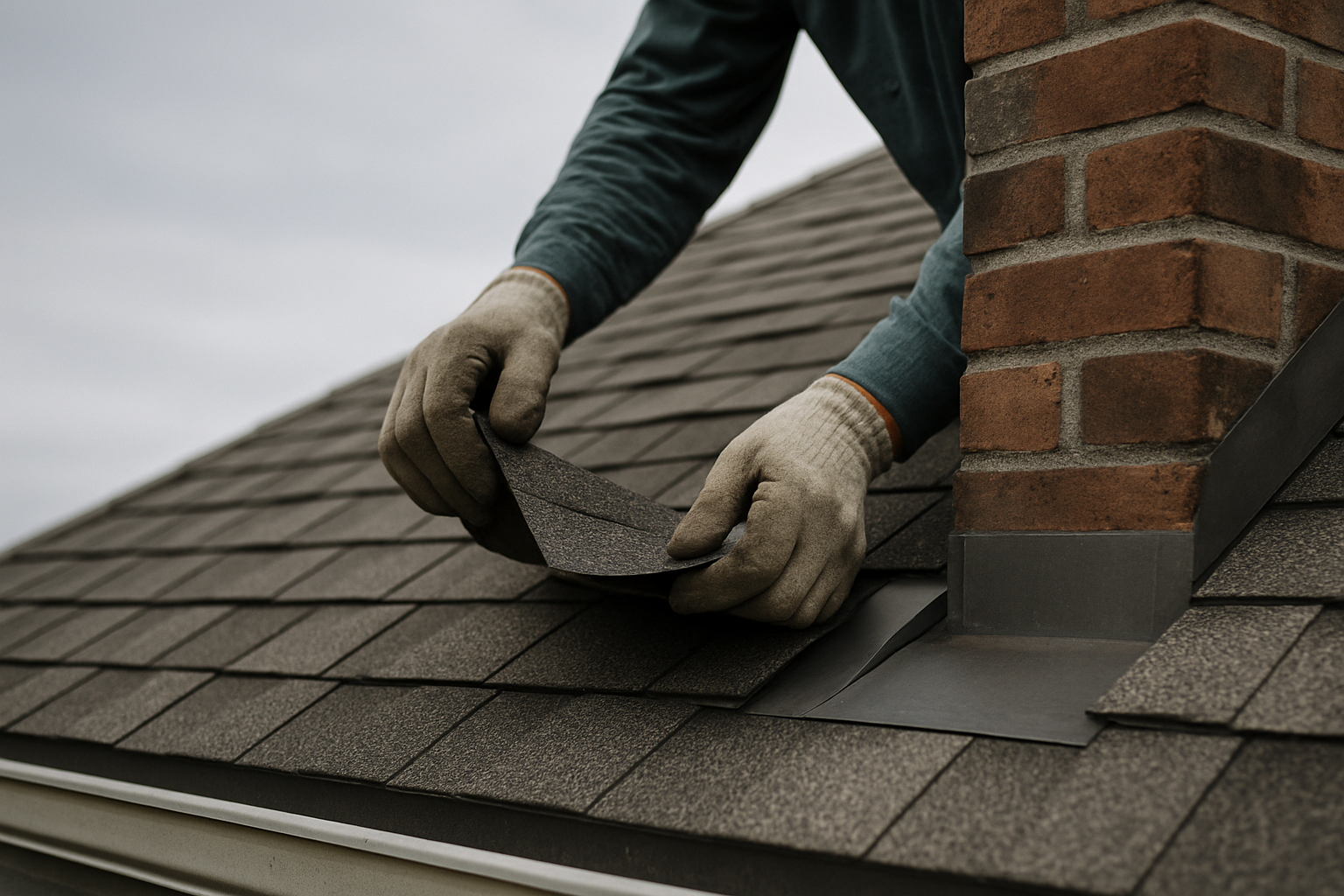
Moss is not cosmetic. It grows in the spaces between shingle tabs, along butt edges, in valleys, and under the drip line of overhanging branches. It holds moisture against the shingle surface for days after rain, and its fine rhizoids work into the gaps at shingle edges. As the mat thickens, it pries the edges upward. On a roof with three-tab or architectural asphalt shingles, a lifted edge is exactly where wind-driven rain gets under the roof covering. The company's roof repair page states it plainly: moss is not merely cosmetic; its roots work under shingle edges and lift them.
Gloeocapsa magma is the organism behind most of the black streaking on roofs in humid parts of New Jersey. It spreads by airborne spores, colonizes the shaded side of the roof first, and produces the dark protective pigment that gives the streaks their color. The streaks follow the path of rainwater down the slope. Algae does not lift shingles the way moss does, and on its own it rarely causes a leak. It is primarily a visual problem, but the dark biofilm holds moisture and makes a roof look far older than it is.
Lichen is the one most often missed. It grows slowly, sometimes taking years to become obvious, and it grips the granule surface. Some crusty lichens bond tightly enough that removing them pulls granules off the shingle. Lichen is usually a sign the roof has been damp and shaded for a long time, which means the shingle underneath has probably aged more than its calendar age suggests.
Black streaks are algae, not mold or soot
Homeowners often misread the black streaks on a roof as mold, soot, or shingles going bad. On most asphalt roofs in New Jersey, the streaks are Gloeocapsa magma, a blue-green algae that thrives in warm, humid conditions. The streaks are heaviest on the north and west slopes because those surfaces stay damp longest and receive less direct sun to dry them out.
The algae colonizes the surface rather than eating the asphalt, but a rinse that removes the visible film does not kill the organism, so the streaks return. Understanding that the black stain is a living biofilm, not soot, changes the treatment. Washing with soap and water removes the visible film for a short time but does not kill the spores, so the streaks come back. A proper algae treatment kills the organism and leaves a residual that slows recolonization.
How a shaded roof goes from stain to failure
There is a predictable progression on shaded Atlantic County roofs.
- Algae first. Spores land on a damp, shaded slope and form dark streaks. At this stage the roof looks bad but the shingles are still sound.
- Moss follows. Where debris and shade hold moisture, moss spores germinate and form mats at the shingle edges and in valleys.
- Granule loss begins. Moss and lichen pry granules loose, and the trapped moisture weakens the granule bond.
- The asphalt is exposed. Without granules, ultraviolet light dries and cracks the asphalt coating.
- The deck gets wet. Water follows the cracks and lifted edges into the roof deck. In Atlantic County, deck rot clusters along eaves, valleys, chimneys, and shaded north slopes that never fully dry out.
- The roof fails. The signs move from cosmetic to structural: sagging, flexing decking, daylight visible from the attic, and leaks on the ceiling below.
The useful conclusion is that early action is cheap and late action is not. Cleaning a roof at stage one or two preserves the remaining life. Treating a roof at stage five or six is a waste of money because the covering and the deck are already compromised.
How moss actually damages asphalt shingles
Moss damages an asphalt roof through four separate mechanisms, and they compound each other.
- Lifting shingle edges. Moss rhizoids grow into the lap joints and along the butt edges. As the mat thickens, it wedges the shingle edges upward and breaks the roof's first line of defense against wind-driven rain.
- Holding water. Moss acts like a sponge. A shaded roof under moss can stay wet long after the rest of the roof has dried. Asphalt shingles are designed to shed water; they are not designed to sit under a permanent moisture layer.
- Trapping debris. Moss catches pine needles, leaves, and grit. In the Pinelands towns, pine needles pack into the moss bed and hold even more moisture against the surface.
- Freeze-thaw cycling. Water trapped in and under the moss expands when it freezes. Repeated freeze-thaw cycles through a South Jersey winter pry granules loose and widen the gaps at shingle edges.
The end result is granule loss, then exposed asphalt, then cracking, then leaks. A moss bed that looks like a minor cosmetic issue from the ground is often sitting on shingles that have already lost part of their protective granule layer underneath.
Why granule loss is the real roof killer
Asphalt shingles are built in layers: a fiberglass mat, an asphalt coating, and a surface of ceramic-coated mineral granules. The granules are not decoration. They are the roof's ultraviolet shield. Asphalt breaks down under ultraviolet light, and the granules shade the asphalt from that exposure. When granules come off through moss lifting, lichen bonding, pressure washing, or simple age, the asphalt underneath is exposed to the sun. It dries, cracks, and eventually lets water through.
Granule loss is often noticed first in the gutters. If a downspout outlet is collecting grit, or if the shingles look smooth and glassy in patches, the granule layer is failing. The glassy appearance is the exposed asphalt coating beginning to weather, and it is a warning that the shingle has passed into the late stage of its service life. On shaded north slopes, the combination of moss and slow drying concentrates granule loss exactly where leaks are hardest to spot from the ground. This is why the same shaded slope that grows moss is often the first slope to rot.
Why Atlantic County roofs are prone to moss and algae
Atlantic County has the climate and the tree cover that moss and algae need. Humid summers, nor'easter-driven rain, and coastal moisture keep surfaces damp, while mature trees inland shade the roof and drop organic debris.
Three local factors drive the problem.
- Tree cover inland. Towns like Hammonton, Folsom, Mullica Township, Estell Manor, Weymouth Township, Buena, Egg Harbor City, and Port Republic sit in or near the Pine Barrens. Mature trees shade roofs, drop needles, and keep the surface cool and damp long after rain stops.
- Pine needle load. Pine needles are small enough to pack tightly, slow to decompose, and excellent at holding moisture against whatever they sit on. They fill valleys, bury gutter outlets, and create damp beds on north-facing slopes where algae and moss establish.
- Shaded north slopes. A north slope receives less direct sun and dries more slowly after rain. Moss and algae colonize the north and west slopes first, and the resulting shingle damage clusters there.
On the barrier islands, including Atlantic City, Ventnor, Margate, Longport, and Brigantine, algae streaking is common because of coastal humidity and salt air, even on roofs with little tree cover. Moss is less common there because wind and sun dry the roof surface, but shaded eaves and north-facing sections still hold moisture and can grow moss in sheltered spots.
The county is not one climate. A roof specified for an open, windy bayfront lot behaves differently from a roof under a canopy of pines near the Pinelands. The cleaning and prevention plan has to match the actual site, not a generic checklist.
How to remove roof moss and algae safely
The goal of safe removal is to eliminate the growth without removing granules or driving water under the shingle laps. A safe cleaning works from the ground or from a ladder where possible, uses low pressure, and treats the cause rather than blasting the surface.
The safe sequence is:
- Inspect first. Before cleaning, confirm the roof is structurally sound enough to work on and identify whether the growth is moss, algae, or lichen. A roof with widespread lifted shingles or exposed decking should not be cleaned; it should be assessed for replacement.
- Clear debris. Remove pine needles, leaves, and branches from valleys, gutters, and the areas behind the moss. Debris removal alone often dries out the surface and slows regrowth.
- Apply a labeled roof cleaner. Use a product formulated for the organism present. Algae treatments kill the biofilm; moss-specific treatments are applied and allowed to dwell so the moss releases from the surface. Follow the label's dilution and dwell time. The label matters more than the brand.
- Soft-brush or low-pressure rinse. Remove loosened moss with a soft brush or a low-pressure rinse, working from the top of the slope downward. Working downward keeps water and debris from being driven under the shingle laps. Never rinse upward into the laps.
- Rinse and re-inspect. After the surface dries, check for remaining lichen, damaged shingles, exposed fasteners, and compromised flashing.
| Method | What it does | Safe on asphalt shingles | Notes |
|---|---|---|---|
| Low-pressure wash (soft wash) | Applies cleaning solution at garden-hose or low-pressure pump level | Yes, when used as directed | The chemical does the work; pressure is only for rinsing |
| Soft brushing | Physically removes moss and loose lichen | Yes, when done downward with a soft brush | Avoid stiff or wire brushes that scrape granules |
| Chemical treatment | Kills moss, algae, or lichen so it releases | Yes, when using a labeled roof cleaner | Dwell time matters; protect plants below |
| Pressure washing | Blasts the surface with a high-pressure stream | No | Strips granules and drives water under laps |
The order matters. Debris first, then treatment, then gentle removal, then rinse. Skipping the debris step means the cleaner cannot reach the surface and the moss bed keeps holding water. Skipping the dwell time means the moss is torn off instead of releasing, and tearing pulls granules with it.
Why pressure washing is the wrong tool for shingles
Pressure washing feels effective because it removes the visible stain fast. The problem is what it removes along with the stain. A pressure washer aimed at asphalt shingles can strip the ceramic granules that protect the asphalt from ultraviolet light, leaving bare, dark patches. It can also force water under the shingle laps, into the underlayment, and down the roof deck. On a roof that already has lifted edges from moss, the pressure stream finds those gaps and drives water straight through.
Even a pressure washer that appears to leave the shingles intact can loosen the granule bond and shorten the remaining life of the roof. The damage may not show for a season or two, by which time the connection to the cleaning is hard to prove. This is also the cleaning method most likely to conflict with a shingle manufacturer's care requirements. Check the care document that came with your shingles before any cleaning method is chosen; that document, not the cleaning contractor, is the authority on what the manufacturer allows.
A low-pressure soft wash is a different tool entirely. It relies on the cleaning solution to kill the organism and loosen the bond, and it uses only enough water pressure to rinse the loosened material away. If a contractor proposes a pressure washer for an asphalt shingle roof, the right question is not the price. It is whether the proposal protects the granule layer, and whether the method matches what the shingle manufacturer allows.
Chemical treatments: what to use and what to avoid
Roof cleaners fall into two broad categories: mildewcide and algaecide treatments, and oxygen-based cleaners.
Mildewcide and algaecide treatments target the living organism. They kill algae, moss, and lichen and often leave a residual that slows recolonization. They are usually applied with a low-pressure sprayer and either rinsed after a dwell time or left to weather off as the label directs.
Oxygen-based cleaners, often built around sodium percarbonate, lift organic staining and loosen moss and algae. They are generally gentler on surrounding plants than strong chlorine-based treatments when used at the labeled dilution.
What to avoid:
- Full-strength chlorine bleach. It can damage plantings, corrode gutters and flashing over time, and may not kill the structure that anchors moss to the shingle.
- Dish soap and water. It cleans nothing on a roof and leaves a residue that can encourage streaking.
- High-pressure equipment used to help the chemical work. The chemical does the work; pressure does the damage.
- Metal scrapers, wire brushes, and stiff brooms. They gouge the shingle and remove granules.
Runoff management is part of the job, not an afterthought. Cover plantings below the roof, keep people and pets off the treated surface until it dries, and follow the product label for runoff and disposal. Some treatments can stain siding or harm plants, so the label and the site protection matter as much as the application.
Zinc and copper strips: prevention with realistic expectations
Zinc and copper strips work by metal ion runoff. A strip of zinc or copper is installed near the ridge, or along a course below the ridge. When rain runs over the metal, it picks up trace metal ions that inhibit moss and algae growth on the roof surface below the strip. The principle is real and well documented, but the expectations need to match how the strips actually behave.
Realistic expectations:
- Strips prevent regrowth; they do not remove existing moss or algae. The roof should be cleaned first.
- A strip protects only the area in the runoff path below it. A single ridge strip does not treat every slope equally, especially on roofs with valleys, dormers, or complex geometry.
- They work slowly. Results show over months and years, not days.
- Copper runoff can stain light-colored siding, concrete, and downspouts. It is also a real consideration for homes that collect rainwater or drain toward ponds and wetlands. Zinc is generally milder but is still a metal runoff.
- Strips are not a substitute for clearing debris and keeping valleys and gutters free of pine needles.
A zinc or copper strip is a reasonable add-on for a shaded roof that has been properly cleaned and keeps growing algae back. It is not a magic fix, and it does not remove the underlying cause, which is shade and retained moisture.
Prevention beyond chemicals: shade, debris, and ventilation
The cheapest roof treatment is the one that keeps the surface dry. On a shaded Atlantic County lot, prevention is mostly about reducing the moisture the organisms need.
Trimming overhanging branches lets more sun reach the roof and shortens the drying time after rain. This is usually the single most effective step on a tree-covered lot, because shade is what turns a clean roof into a moss bed. Clearing valleys and gutters of pine needles twice a season prevents the damp beds that algae and moss colonize first. On Pinelands lots, gutter outlets can pack solid in a single autumn, so a twice-a-season clearing is a maintenance rhythm, not an optional chore.
Attic airflow and ridge ventilation do not remove surface shade, but they help keep the roof deck dry from below. A deck that stays dry on both sides is slower to rot, even where the shingle surface grows moss. None of these measures replaces cleaning, but they make the cleaning last longer and reduce the odds that the same slope grows the same moss bed again within a year or two.
What cleaning and neglect mean for your material warranty
Shingle warranty coverage varies by manufacturer and by the specific care and maintenance document that came with the shingles. Two things belong in the record before any cleaning decision is made. First, read the manufacturer's care and maintenance document and use a cleaning method it permits. Second, keep proof of how and when the roof was cleaned and by whom, so the record matches whatever the warranty asks for.
The same discipline applies to installation. HappyRoof describes itself as a manufacturer-certified installer, and the practical effect is that installation and maintenance both have to follow the manufacturer's requirements rather than the fastest way to get a stain to disappear. If you need to know exactly what your shingle warranty covers, the manufacturer's document — or an installer who works to it — is the authority, not a cleaning method picked off a label.
When cleaning is too late: signs you need a replacement
Cleaning can restore the surface only if the shingle itself still has life. If moss and moisture have already done the damage, treating the surface is spending money on a roof that needs to come off. These signs point toward replacement rather than treatment:
| Condition | Likely next step |
|---|---|
| Black algae streaking only, shingles intact | Cleaning |
| Patch of moss with sound shingles underneath | Debris removal and gentle cleaning |
| Widespread moss lifting shingle edges | Inspection; possible replacement |
| Bare, glassy shingles from granule loss | Replacement likely |
| Sagging roof line or flexing deck | Replacement |
| Daylight visible through the roof deck from the attic | Replacement |
| Repeated leaks below a shaded slope | Inspection for deck rot and replacement |
The structural signs are not subtle. A sagging or wavy roof line, decking that flexes when walked, and daylight visible through the roof deck from the attic are all indications that the roof has moved past cleaning. In Atlantic County, deck rot clusters in predictable places: along eaves where wind-driven rain has backed up under the shingles, around chimneys and skylights, in valleys, and on shaded north slopes that never fully dry out. For how decking is found and handled during a tear-off, see the roof replacement page.
If any of those signs are present, cleaning is the wrong first step. The right first step is an inspection that tells you whether the roof has remaining life. Paying for a cleaning on a roof that should have been replaced does not buy time; it delays the tear-off while the deck keeps rotting underneath.
DIY vs. professional removal and inspection
Roof cleaning looks simple and is easy to do wrong. The DIY risks include working on a pitched, wet surface, reaching for a pressure washer out of habit, damaging shingles with the wrong brush, and treating the algae while missing the moss that is actually lifting the shingles. The cost of a mistake is not just a poor result; it can be a granule-stripped roof and a shortened roof life.
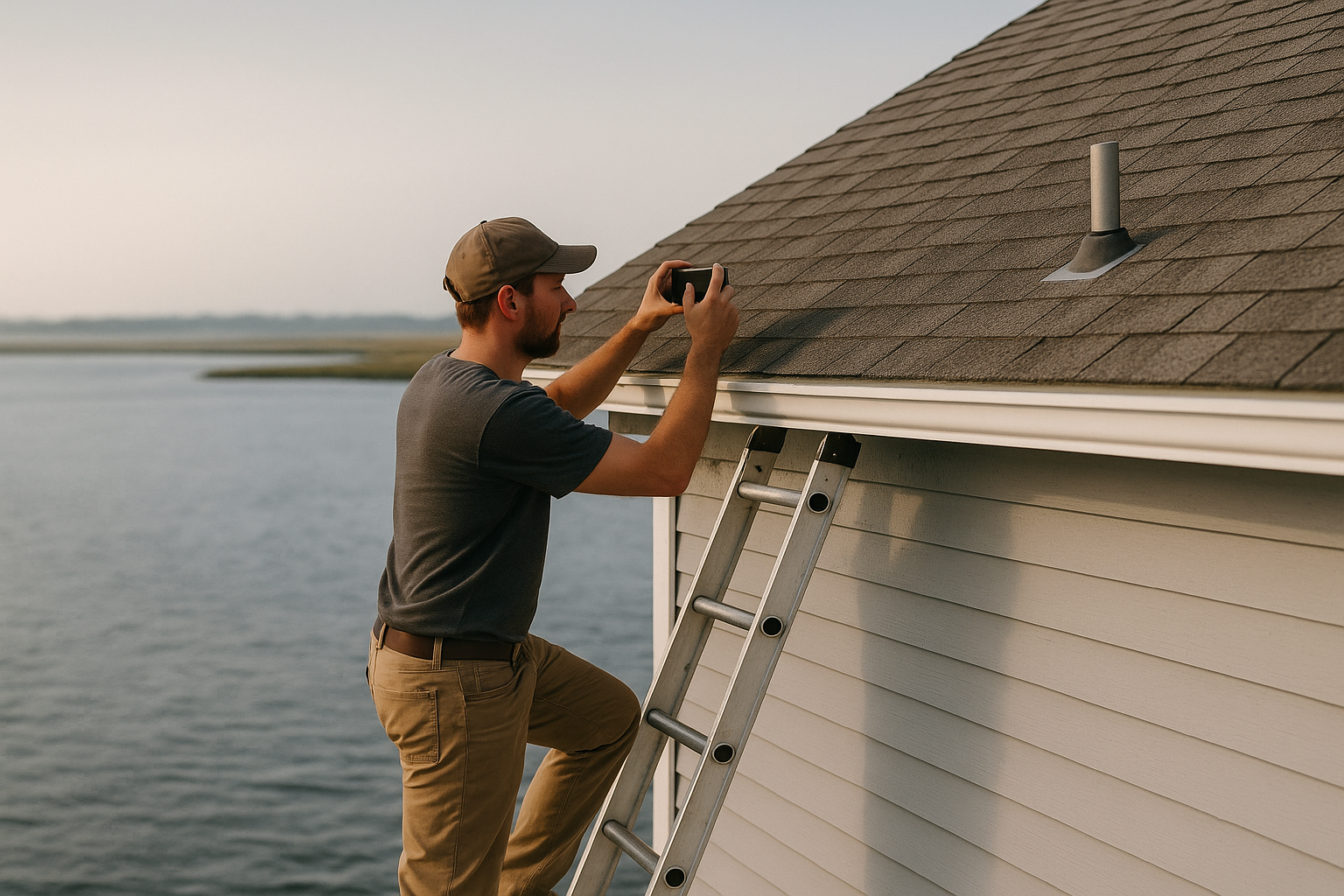
A professional removal starts with the same question this page starts with: is this a cleaning job or a replacement job? That answer requires looking at the actual roof, not the roof from the street. The inspection should come with photos and a written assessment, and the price should be itemized and in writing before any work starts. If the answer is cleaning, the method should be specified: low pressure, soft brushing, labeled chemicals, and plant protection.
HappyRoof's free inspection comes with photos of what is actually up there. If the roof has good years left, the company's stated policy is to say so and leave the report. If it needs work, the proposal is itemized and written before anything begins. That is the difference between a cleaning quote and a diagnosis. To schedule one, call (609) 525-4521. The company serves every town in Atlantic County. For the full repair-or-replace decision framework, see the company's roofing guides.
Frequently asked questions
Does algae damage my roof, or is it just a stain?
Algae, including the black-streak organism Gloeocapsa magma, is mostly cosmetic. It darkens the roof and hurts curb appeal, but it does not lift shingles or cause leaks on its own. Moss and lichen are the physical threats: moss wedges shingle edges upward and holds water, while lichen bonds to the granule surface. If you see only black streaking, cleaning is reasonable. If you see moss or lichen, the roof needs closer attention.
Can I pressure wash moss off my asphalt shingles?
No. High-pressure washing strips the granules that protect asphalt from ultraviolet light and can drive water under the shingle laps. The visible stain may disappear while the roof's remaining life drops. Check the manufacturer's care document that came with your shingles before choosing any cleaning method; it is the authority on what the manufacturer allows.
Do zinc or copper strips remove moss that is already there?
No. Zinc and copper strips prevent new moss and algae from establishing on the surface below the strip, but they do not kill or remove existing growth. Clean the roof first, then add a strip if regrowth keeps coming back. The strip protects only the runoff path below it and works slowly, over months and years rather than days.
How do I know whether my roof needs cleaning or replacement?
Look for widespread granule loss, curled or missing shingles across multiple slopes, moss that has lifted edges in many places, a sagging roof line, decking that flexes, daylight visible from the attic, or repeated leaks below a shaded slope. If those signs are present, cleaning is the wrong first step. A free inspection with photos is the reliable way to get an honest remaining-life answer before spending on treatment.
Will my material warranty cover moss or algae damage?
Coverage varies by manufacturer and by the care document that came with your shingles. Damage from neglected moss, packed debris, or plugged gutters, and granule loss from aggressive cleaning, are exactly the situations where that document decides the outcome. Clean gently, follow the manufacturer's care document, and keep records of the cleaning so the record matches whatever your warranty asks for. Your installer can confirm what your specific warranty covers.
How often should a shaded Atlantic County roof be cleaned?
There is no fixed schedule that fits every roof. A heavily shaded, tree-covered lot in the Pinelands may need attention more often than a sun-exposed roof on the barrier islands. Inspect the roof annually, clear pine needles and debris from valleys and gutters, and act when moss becomes visible or algae streaks spread across a slope. Annual photos make the pattern easy to track.