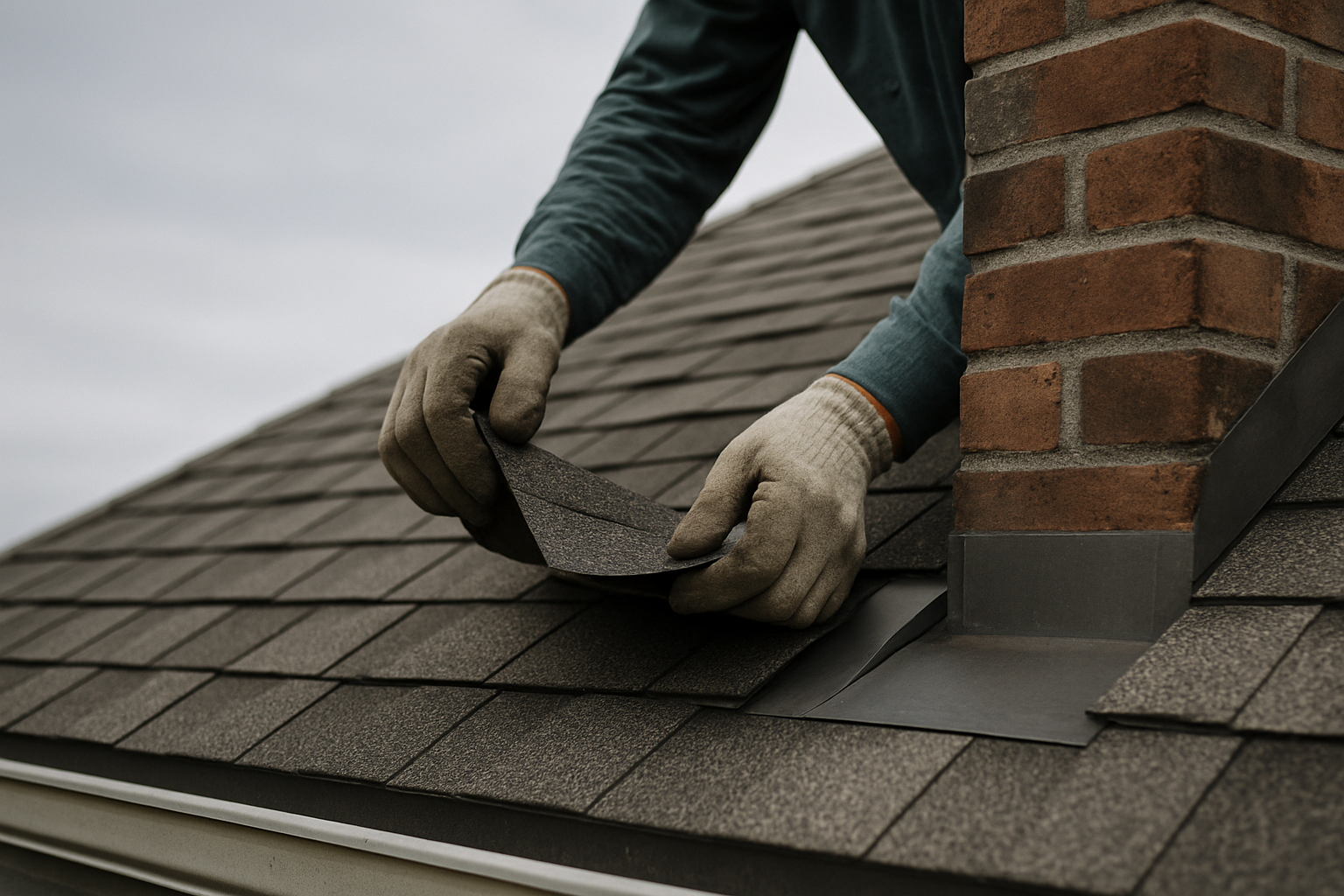
Roofing in Pleasantville NJ means working with older homes: low-slope porch and rear roofs that need membrane repair rather than shingle work, chimneys with aging flashing, and asphalt shingle roofs exposed to mainland wind and heavy rain. HappyRoof works from a shop on Doughty Road and provides free photo inspections, emergency tarping, and itemized written pricing.
Why Pleasantville roofing is different
Pleasantville is not a generic Atlantic County suburb, and its roofs are not generic either. The town is HappyRoof's home base. The company works out of the same shop on Doughty Road in Pleasantville that houses its sister business, HappyVac Heating & Air, and it serves every town in Atlantic County from that location.
What a Pleasantville NJ roofing contractor actually finds on the roof is shaped by the housing stock. Much of the older core predates the 1970s, and the company says that in the older neighborhoods of Atlantic City and Pleasantville, it frequently encounters low-slope rear and porch roofs that need membrane work rather than shingle work. That is a different repair entirely, and it uses a different material than the architectural asphalt shingles most people picture when they hear the word "roof."
The exposure is different, too. Pleasantville sits on the mainland, set back from the barrier islands. A roof specified for a bayfront house in Margate is specified for salt spray and open-water wind. A roof a few miles inland in Pleasantville is specified for a different set of stresses: nor'easter wind gusts, wind-driven rain, standing stormwater, and heavy tree debris. The materials may overlap, but the failure points do not.
The practical takeaway for a homeowner is that generic advice fails here. A contractor who treats every roof like a central Jersey subdivision job, or who only knows island work, will miss the membrane problems and flashing failures that actually cause leaks on older Pleasantville homes. HappyRoof positions itself against that pattern: same in-house crew inspecting and installing, a free inspection with photos, and an honest answer about remaining life even when the answer is that no replacement is needed.
The consequence of an older housing stock is that a roof inspection in Pleasantville is as much about the roof the house was built with as the roof it has now. Original framing, shallow porch slopes, chimneys that have never been re-flashed, and decking that predates modern sheathing standards all show up. A good contractor earns its keep by knowing which of those conditions is active and which is simply old.
Roof types and failure points on Pleasantville homes
Three roof conditions come up most often on Pleasantville homes: aging asphalt shingle roofs on the sloped main sections, low-slope membrane roofs on porches and rear additions, and chimneys with flashing that has outlived its seal. Each fails differently, and each needs a different repair approach.
Older asphalt shingle roofs
Most sloped roofs in Pleasantville are asphalt shingle, either the older three-tab style or architectural shingles installed during a past replacement. On an older home, the common failure points are predictable. Granules wash off over time and collect in the gutters. Shingles curl at the eaves where heat and moisture work on the edges. Nails back out and leave small openings for wind-driven rain. Flashing at dormers, valleys, and sidewalls loses its seal and lets water travel sideways before it ever shows up as a stain on the ceiling.
The diagnostic rule the company states is simple: find the actual source instead of patching the stain. A brown ring on a bedroom ceiling may be a failed pipe boot two slopes away, not the shingle directly above the stain. That is why repair calls begin with before-and-after photographs of the actual defect and a clear statement of what the repair does and does not address.
When replacement is the right call, the work is a full tear-off to the bare deck so every square foot of sheathing gets inspected before new material goes down. Wind-rated shingles and enhanced nailing patterns are chosen for the exposure the specific street gets. Ventilation and flashing are corrected at the same time, because a new shingle field over old flashing is a future leak waiting for the next nor'easter.
Two details separate a correct replacement from a cover-up on an older home. The first is ventilation. Older roofs were often under-ventilated, and ridge ventilation is part of a properly sized replacement rather than an add-on. The second is the underlayment at the eaves. Ice-and-water shield protects the vulnerable edge where wind-driven rain and ice damming push water under the starter course, and it belongs in a coastal replacement rather than being skipped to save a line item.
Flat and low-slope porch roofs
The porch roof is the quiet failure point on many older Pleasantville homes. A sloped shingle roof sheds water by gravity. A low-slope roof sheds water slowly, and when it does not shed water at all, the water sits. Low-slope rear and porch roofs need membrane work rather than shingle work. That is a different repair entirely and a different material, as the company puts it.
On a flat or low-slope porch roof, the failures are seams, wall flashings, and penetrations. The membrane may be sound across most of its area but split at the seam where the porch roof meets the house wall. Water ponds in a low spot, works into a hairline crack, and travels into the framing. The homeowner sees a stain on the porch ceiling and assumes the whole roof is gone, when in many cases the repair is a resealed seam or a replaced wall flashing.
Flat roof porch repair in Pleasantville NJ starts with identifying whether the membrane still has life. If the membrane is pliable and the failure is local, the repair is local. If the membrane is brittle, cracked across its surface, or holding standing water for more than a day after rain, replacement of the porch roof membrane becomes the honest recommendation.
The company treats the flat roof as a separate scope of work from the shingle roof, with its own material, its own flashing details, and its own line item in a written proposal. That distinction matters, because a porch membrane that is torn off as part of a shingle replacement has to be detailed back to the house wall correctly. The wrong detail leaves the same ponding problem in a newer wrapper.
Chimneys, dormers, and flashing
Chimneys are the other recurring failure point on older Pleasantville homes. A masonry chimney passes through the roof plane, and every place it passes through is a joint that has to be sealed and flashed correctly. Step flashing laps up the side of the chimney, counterflashing covers the step flashing, and the seal between them breaks down with age, temperature swings, and wind movement. The result is a leak that runs down the chimney chase and shows up far from the actual entry point.
The same applies to dormers. A dormer wall meets a sloped roof at two sidewalls and a front wall, and each junction needs step and counter flashing. When the original flashing was nailed in place and never counterflashed, the nails rust and the seal fails. Pipe boots around plumbing vents are smaller but just as reliable at causing a leak. Valley metal, drip edge, and rake metal complete the edges, and any of them can fail independently of the shingle field.
Chimney and flashing work is listed as a core roof repair service, and the repair is different from a shingle patch. The flashing is removed, the joint is inspected, and the new flashing is lapped so water runs over it rather than behind it. A chimney repair may also involve the masonry itself, which is a separate trade. The roofing scope is the roof-to-chimney junction and the flashing that keeps water out of the chase.
| Roof condition | Repair approach | When replacement is honest |
|---|---|---|
| Sloped shingle roof with one leak | Find the source, replace flashing, pipe boot, or shingles | Curling and granule loss across multiple slopes |
| Low-slope porch membrane with one seam | Reseal the seam or replace the wall flashing | Brittle membrane or persistent ponding |
| Chimney junction leak | Reset step and counter flashing | Flashing reset plus masonry work in a separate trade |
Mainland wind, rain, and leaf load
Pleasantville's roof damage does not come from ocean spray the way it does on the barrier islands. It comes from wind, rain volume, and trees.
Nor'easters drive rain horizontally. Wind-driven rain enters places that vertical rain never touches: under shingle edges, behind step flashing, through nail holes, and up under ridge caps. Uplift tries to peel the roof off from the edges, which is why drip edge and rake metal matter and why enhanced nailing patterns are part of a coastal replacement. A shingle that lies flat in calm weather can lift at the edges in a sustained blow and let water underneath.
Rain volume is the second factor. Heavy shore rain has to get off the roof and away from the foundation. A low-slope porch roof that ponds water is already failing its drainage test before the next storm. A gutter system packed with Pine Barrens leaf load overflows at the corners and pours water against the foundation instead of moving it to the downspouts.
Trees are the third factor, and they distinguish mainland Pleasantville from the open island towns. Pine needles, oak leaves, and small branches load the gutters, hold moisture against the roof edge, and back water up under the starter course. The company's gutter and downspout work is described specifically as moving Pine Barrens leaf load and heavy shore rain away from the foundation. A roof inspection in Pleasantville should therefore include the gutters, because the roof and the drainage system fail together.
Repair or replace: the decision for an older home
Older homes make the repair-or-replace decision harder than it is on a new subdivision house. The roof may have been installed before current materials and nailing patterns were standard. The decking may be original. The porch roof may be a membrane the homeowner did not know was there. The wrong decision wastes money in both directions: replacing a roof with years of life left, or repairing a roof that has already failed structurally.
The honest test is not the calendar alone. It is where the damage sits, how much of the roof is failing, and what the decking looks like under the shingles. A single failed flashing point, pipe boot, or valley is usually a repair. Curling and granule loss across multiple slopes is usually the roof telling you it is at the end of its service life. The company's stated position is that a free inspection includes an honest remaining-life assessment, and that it has told homeowners they had five or six good years left rather than selling a replacement.
| Factor | Points to repair | Points to replacement |
|---|---|---|
| Where the leak is | One flashing point, one pipe boot, one valley, one chimney junction | Interior stains in multiple rooms or water at several roof penetrations |
| Shingle condition | Localized missing or torn shingles | Curling, granule loss, or bare spots across the roof |
| Decking | One sheet of soft sheathing at the leak | Widespread rot found across the deck |
| Flat porch membrane | Sound membrane with one failed seam or wall flashing | Brittle, cracked membrane or standing water after the roof dries |
| Roof age and history | A newer roof with a single defect | An older roof reaching the end of its realistic life |
For an older Pleasantville home, replacement is also the moment to fix the things that were never right: inadequate ventilation, missing ice-and-water shield at the eaves, wrong flashing at the porch roof, and a chimney junction that has leaked for years. A repair fixes the defect you found. A replacement resets the whole system.
There is also a test for repeated repairs. If the same area has been patched twice and still leaks, the repair is no longer the cheaper option. The money spent on successive patches adds up against the cost of doing the area correctly once, and the hidden damage continues while the cycle repeats. The company's repair-versus-replacement guidance is built around that arithmetic: a repair is the right call when it actually ends the leak, not when it merely postpones the next call.
What a roof replacement includes, and what it does not
A roof replacement in Pleasantville NJ is a full tear-off, not a cover-over. The company's stated scope is a tear-off to the bare deck so every square foot of sheathing gets inspected before new material goes down. That matters on older homes because the decking under the shingles is often original and can hide rot that no one can see from the ground.
What the replacement includes, from the company's own description:
- Full tear-off to the bare deck and inspection of the sheathing
- Written, itemized pricing that separates labor, materials, disposal, and the per-sheet rate for any decking that gets replaced
- Manufacturer-certified installation so the material warranty stays valid
- A municipal permit pulled and the township inspection scheduled as part of the job
- Wind-rated shingles and enhanced nailing patterns chosen for the specific street's exposure
- Full cleanup including a magnet sweep of the lawn, beds, and driveway for stray nails
- Roof systems in architectural asphalt, metal, or flat membrane, sized, vented, and flashed for a coastal climate
What the replacement does not include is just as important. It does not include laying new shingles over old ones as a way to cut the price; the work is specified as a tear-off. It does not include a specific shingle brand, because the company does not name a single manufacturer and instead describes itself as a manufacturer-certified installer. It does not include a waived deductible, which is not lawful in New Jersey. It does not include a fixed price before an inspection, because the written price follows the inspection and separates every line item.
Sized, vented, and flashed is not marketing language. On an older home, the replacement is the one chance to correct the original roof's shortcomings: add ridge ventilation where the attic was suffocating, run ice-and-water shield where the eaves take wind-driven rain, and re-flash the chimney and porch wall so the new roof does not inherit the old roof's leaks.
What roof repair includes, and what it does not
Roof repair in Pleasantville New Jersey is a diagnostic job before it is a patching job. The company lists leaks, missing shingles, failed flashing, valley and chimney work, and pipe boots as its repair scope, and it states the method plainly: find the actual source instead of patching the stain.
A repair call includes before-and-after photographs of the actual defect, a clear statement of what the repair does and does not address, and proof of current New Jersey licensing and insurance on request. For a low-slope porch or rear roof, the repair is membrane work rather than shingle work, which is a different repair entirely.
What a repair does not include is a guarantee about the rest of the roof. If one pipe boot is replaced, the repair addresses that penetration and nothing else. If the shingle field is failing across three slopes, the honest repair report says so rather than selling another patch. The repair also does not include cosmetic work: the point is to stop water entry at its source, not to make a stain disappear.
The company's stated discipline is that the same in-house crew that inspects also installs, so the person who diagnoses the leak is the person who fixes it. That continuity is the difference between a repair that holds and a patch applied by someone who never saw the roof dry.
How the process works, step by step
HappyRoof's process is four steps, and each step depends on the one before it.
- Inspection. A free inspection produces photos of the actual roof and an honest answer about whether it needs replacing, repairing, or nothing at all. This is the step where the company states it will tell you if you have years of life left, rather than manufacturing urgency.
- Written proposal. If work is needed, the proposal is itemized: materials, layers, tear-off, permits, disposal, and cleanup. The number is on paper before anyone picks up a nail gun, and the pricing separates labor, materials, disposal, and any per-sheet decking rate. A homeowner can compare three bids on the same scope instead of comparing three vague totals.
- Permits and scheduling. New Jersey requires a permit for a roof replacement. The company pulls the municipal permit, schedules around the weather, and tells the homeowner what to expect on install day. The township inspection is scheduled as part of the job, not left to the homeowner to chase.
- Install and cleanup. Most homes are a one- to two-day job. The landscaping is tarped, the yard and driveway are swept with a magnet for stray nails, and everything is hauled away.
The sequence matters because the written price depends on the inspection, and the permit depends on the written scope. A process that skips the inspection and jumps straight to a number is guessing, and a process that leaves the permit to the homeowner is offloading the hard part.
Permits and inspections in Pleasantville
Roof replacement in Pleasantville requires a municipal permit. That is not a company policy; it is a New Jersey requirement the company states plainly and builds into its process. The permit is pulled through the municipality, and the township inspection is scheduled as part of the job.
For a homeowner, this means two things. First, the permit and the inspection are line items in the written proposal, not surprises at the end. Second, the homeowner does not have to manage the construction office. The contractor handles the application, the inspection scheduling, and the follow-up.
For repairs, the permit question depends on the scope, and it is resolved in the written proposal rather than left to the homeowner to guess. A localized repair is documented with before-and-after photos and a written scope either way. When in doubt, the inspection is where the distinction gets made, because the inspection determines whether the job is a repair or a replacement in the first place.
What to have ready before you call
The inspection is free, but a little preparation makes it more useful. You do not need measurements, drawings, or roof access; the crew handles that. What helps is history.
- Where you have seen stains or water, and when they appeared
- Whether the leak happens in every storm or only in wind-driven rain
- The roof's age and any past repair or replacement paperwork
- Whether a home inspection flagged the roof when you bought the house
- Your insurance policy information if the damage is storm-related
- Photos you have already taken of interior stains or missing shingles
None of this is required to book the inspection. But a homeowner who can say "it leaks at the chimney only when the wind comes off the bay" gives the inspector a head start on the actual source, which is the whole point of the diagnostic approach.
Why a shop on Doughty Road matters
HappyRoof is not a contractor that drives in from another county when a storm hits. The company works out of a shop at 611 Doughty Road in Pleasantville, the same location as its sister business, HappyVac Heating & Air. That changes how the company can respond to a Pleasantville homeowner.
Proximity matters most during emergencies. Emergency tarping is offered outside normal hours, and the listed hours are Monday through Saturday from 7:00 AM to 7:00 PM. A crew that is already in town can often reach a Pleasantville roof within hours rather than after a cross-county drive. The purpose of the tarp is specific: stop further interior damage while an insurance claim is being processed.
It also matters for ordinary work. The same in-house crew that inspects also installs, and the company presents that as a deliberate choice to avoid day-labor crews and disappearing subcontractors. A shop in town means materials are staged locally, the crew knows the town's older housing stock, and the person who wrote the proposal is reachable if a question comes up after the job.
Older core vs newer edges
Pleasantville is not one housing type. The older core, near the town's established street grid and commercial center, tends toward pre-1970s Cape Cods and rowhouses with original framing, lower pitches, flat or low-slope porch roofs, and chimneys that have been through decades of weather. Those homes are where membrane porch roofs, original flashing, and aging decking show up most often.
The newer edges of town tend toward more recent construction: steeper pitches, architectural shingles, ridge ventilation, and decking that is not yet at the end of its life. Those roofs fail differently, more often from a specific storm event, an installation error, or a single flashing defect than from age alone.
| Characteristic | Older core | Newer edges |
|---|---|---|
| Typical roof | Lower pitch shingle plus a flat porch membrane | Steeper architectural shingle |
| Primary failure | Age: membrane, flashing, decking | Event or defect: lift, valley, pipe boot |
| Inspection focus | Remaining life of old materials | Finding the specific defect |
The practical difference is in the inspection. On an older-core home, the inspector looks for age-related failures: brittle membranes, failed chimney flashing, soft decking, and ponding on low slopes. On a newer-edge home, the inspector looks for the defect: a lifted shingle, a poorly lapped valley, a pipe boot that was never sealed. The same crew does both, but the checklist starts in a different place.
Gutters, downspouts, and drainage
A Pleasantville roof does not end at the drip edge. It ends where the water leaves the property, and the gutters are the middle of that system. The company's gutter and downspout work is described for this exact environment: seamless gutters, guards, and downspout runs that move Pine Barrens leaf load and heavy shore rain away from the foundation.
The leaf load is not a cosmetic problem. Pine needles and oak leaves pack a gutter, hold water against the fascia, and overflow at the corners during heavy rain. Water that spills over the gutter lands at the foundation line, and on an older home with a shallow foundation that is exactly where you do not want it. Guards slow the loading; downspout runs carry the water out rather than dropping it at the corner.
Gutter work is usually priced and scheduled alongside roof work because the two share the same edge. A new roof with old, undersized gutters still dumps water at the foundation. An inspection that checks the roof but not the drainage is only half an inspection.
Storm damage and insurance claims
Pleasantville's mainland location does not spare it from nor'easters and hurricane remnants; it changes the damage pattern. Wind-driven rain, lifted shingles, fallen branches, and overloaded gutters are the common results. The company's storm response is built around two things: stopping the damage and documenting it.
The first step is emergency tarping to stop further interior damage while the claim is processed. The second is documentation. The company provides detailed photo documentation of wind, hail, and impact damage organized for a claim file, a written repair scope that can be handed directly to an adjuster, and it can meet the adjuster at the property and walk the roof with them.
Two warnings belong in any storm section. The first is that the company gives straight answers about what is storm damage and what is ordinary wear before a claim is filed, because filing for pre-existing wear is not a claim strategy. The second is the deductible scam: no one may lawfully absorb or waive a deductible in New Jersey, and any contractor who offers to do so is a red flag. HappyRoof does not act as a public adjuster or legal advisor; it documents the damage and supports the claim.
Frequently asked questions
Do I need a permit to replace my roof in Pleasantville?
Yes. New Jersey requires a permit for a roof replacement, and HappyRoof pulls the municipal permit and schedules the township inspection as part of the job. You do not manage the construction office yourself. The permit appears in the written proposal along with materials, tear-off, disposal, and cleanup.
My porch roof is leaking but the main roof looks fine. Can you repair just the porch?
Yes. Low-slope porch and rear roofs are common on older Pleasantville homes, and they are repaired with membrane work rather than shingle work. The repair targets the failed seam, wall flashing, or penetration, with before-and-after photos and a clear statement of what the repair does and does not address.
How do I know whether my older roof needs repair or replacement?
The test is where the damage sits and how much of the roof is failing. One failed flashing point, pipe boot, or valley usually calls for a repair. Curling shingles, granule loss across multiple slopes, or widespread soft decking usually calls for replacement. A free inspection with photos answers the question without a sales push.
How fast can you tarp a roof in Pleasantville during a storm?
Because HappyRoof works out of a shop on Doughty Road in Pleasantville, the crew is already in town. Emergency tarping is available outside normal hours, Monday through Saturday from 7:00 AM to 7:00 PM, and the purpose is to stop interior damage while a claim is processed.
Do you work on both shingle roofs and flat porch roofs?
Yes. HappyRoof replaces roofs in architectural asphalt, metal, and flat membrane, and repairs everything from missing shingles and failed flashing to low-slope porch and rear roofs that need membrane work. The flat roof is treated as a separate scope with a different material, not an afterthought.
What should I have ready before I call for an inspection?
Know the history: where stains have appeared, whether the leak happens in every storm or only wind-driven rain, the roof's age if you know it, and any past repair paperwork. For storm damage, have your insurance policy information nearby. The inspection is free and comes with photos.
Next step: get a free inspection with photos
The useful next step is not a quote; it is a look at your own roof. HappyRoof offers a free inspection with photos and an honest answer about remaining life, whether that means a repair, a replacement, or nothing at all. Call (609) 525-4521 to book it. If the damage is active, say so. Emergency tarping is a separate conversation.